
- Shop Products
- Animal/Vivarium Equipment & Supplies
- Anesthesia Systems
- Animal Transport
- Animal Watering
- Automated Cage Wash Systems
- Bedding Fill and Disposal Systems
- Bulk Trucks
- Cage Change and Transfer Stations
- Cage, Rack and Bottle Washers
- Dry Heat Sterilizers
- Enrichment
- Euthanasia Systems
- Ferret Caging
- Large Animal Caging
- Isolators
- Marmoset Caging
- Material Handling
- Necropsy Tables and Procedure Hoods
- Procedure Lights
- Rabbit Caging
- Rodent Caging
- Steam Sterilizers
- Tree Shrew Caging
- Vivarium Dry Heat Sterilizers
- Zebrafish and Aquatics Washers
- Benchtop Instruments
- Aspiration Systems
- Cell Counters
- Centrifuges
- Dry Baths
- Homogenizers
- Hotplates and Stirrers
- Micro Incinerators
- Microplate Readers
- Microplate Washers
- Moisture Analyzers
- PCR
- pH Meters
- Pipettes
- Scales and Balances
- Shakers
- Spectrophotometer and Fluorometers
- Rockers & Tube Rotators
- Vortex Mixers
- Water Baths
- Cannabis Processing
- Clean Air & Containment
- Cold Storage
- Decontamination
- Environmental Monitoring
- Environmental Test Chambers
- cGMP
- Incubators
- Ovens
- Pathology & Mortuary Equipment
- Personal Protective Equipment
- Sterilizers and Autoclaves
- Tables, Storage and Carts
- Washers and Dryers
- X-Rays and Irradiators
- Inventory Outlet
- Animal/Vivarium Equipment & Supplies
- Featured
- Industries
- Manufacturers
- Animal Care Systems
- Avante Animal Health
- Baker
- Benchmark Scientific
- Caron Scientific
- Consolidated Sterilizer Systems
- Corepoint Scientific
- DeNovix
- Envisys
- Euthanex
- Flow Sciences, Inc.
- Gruenberg
- Haier
- Hettich
- KUBTEC Scientific
- Lenderking
- Metro
- Miele
- Mopec
- Ohaus
- Park Bio
- SE Lab Group Inc.
- Sentry Air Systems
- Steelco
- Sychem
- TOMI Environmental Solutions, Inc.
- Visron
- Resources
- About
- Contact
- Quote
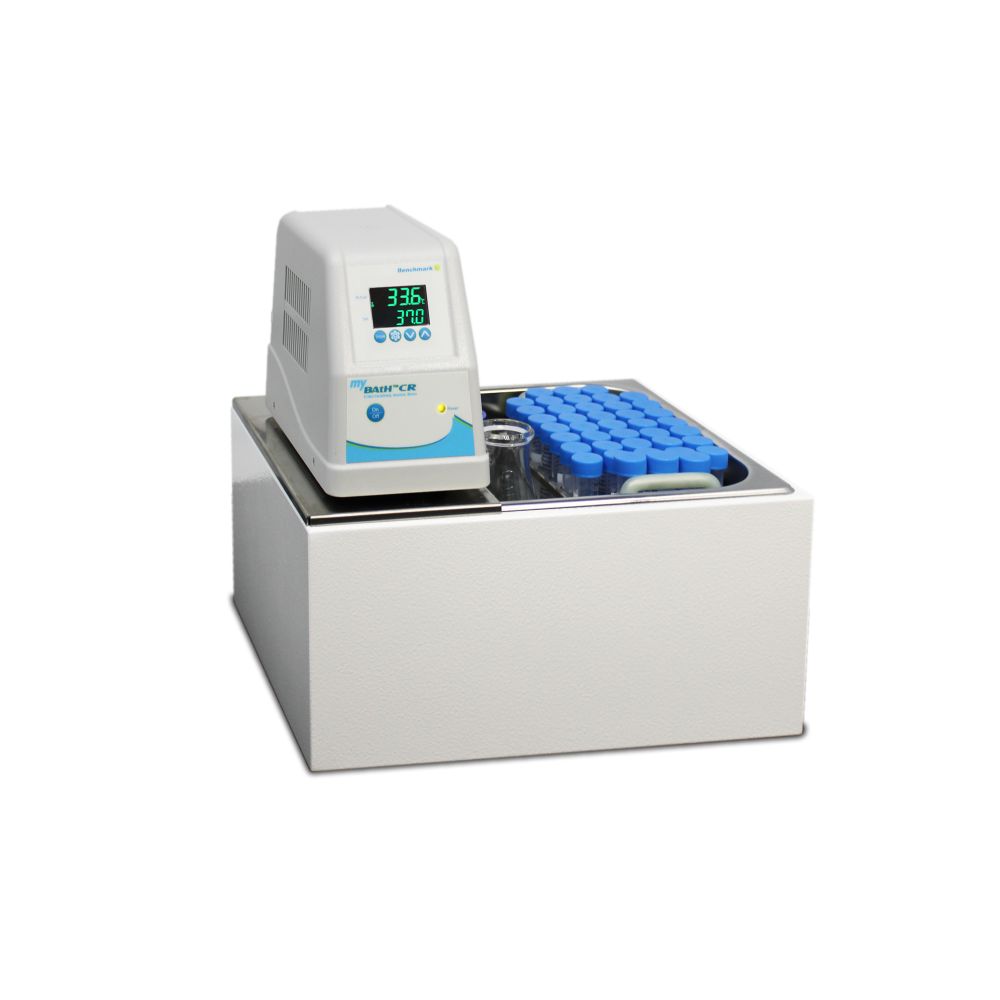
Water Baths

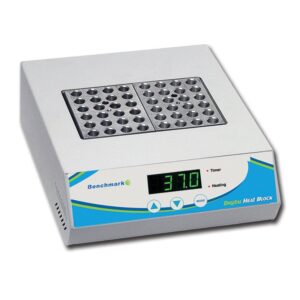


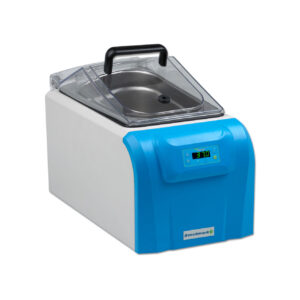
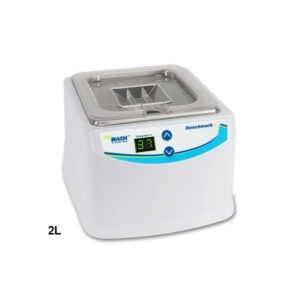
Laboratory Water Baths for Incubation, Warming, and Temperature Holding
Laboratory water baths are essential temperature-control tools used to gently and uniformly warm samples, maintain setpoint temperatures, and support repeatable workflows across research, clinical, and QA/QC environments. Compared to direct heat sources, a laboratory water bath provides stable, evenly distributed heating that helps protect sensitive samples and improve consistency in incubation, thawing, reagent warming, and temperature conditioning procedures.
On this page you’ll find benchtop and high-capacity water baths designed for routine daily use, along with options that emphasize precision control, durability, easy cleaning, and user-friendly operation. This category includes standard digital water baths, higher-performance circulating water baths, and dry baths and block heaters for workflows that require contamination-free heating. If you need help selecting the right configuration (capacity, temperature range, and workflow features), our team can recommend a best-fit model based on your application and throughput.
Common Water Bath Applications
- Sample thawing and warming: Controlled, gentle warming for blood products, reagents, media, and temperature-sensitive samples.
- Incubation and temperature holds: Stable setpoints for enzymatic reactions, microbiology workflows, and general lab incubation tasks.
- Reagent conditioning: Pre-warming buffers, media, and solutions to reduce variability between runs.
- Quality control and validation workflows: Temperature conditioning and routine checks where repeatability matters.
- Educational and general lab use: Straightforward temperature control for teaching labs and shared facilities.
Water Bath Types and How to Choose
Digital General-Purpose Water Baths
Digital water baths are the standard choice for most laboratories. They provide simple, accurate setpoint control and are well-suited for daily warming, incubation, and temperature holding. Look for a clear digital interface, consistent performance at common setpoints (e.g., 37 °C), and features that support easy operation and maintenance. For many routine workflows, a digital water bath paired with other benchtop instruments provides a flexible, scalable temperature-control solution.
Circulating Water Baths
Circulating water baths use active circulation to improve temperature uniformity and recovery time—ideal when tighter control is required, when the bath is frequently opened, or when you are working with larger volumes and heavier thermal loads. These models are commonly selected for demanding QC processes, validation protocols, and temperature-sensitive assays where uniformity and fast recovery are critical.
Shaking Water Baths
Shaking water baths combine temperature control with controlled agitation for applications that benefit from mixing during incubation. If your workflow requires both heat and motion, verify platform size, motion type, and load capacity to ensure compatibility with your vessels and throughput. In some labs, shaking baths complement separate orbital and platform shakers used for room-temperature mixing.
Tissue Flotation and Specialty Baths
Specialty baths are designed for specific workflows—such as tissue flotation in histology—where surface stability and application-specific design features can improve repeatability and ease of use. When applications call for strictly dry, contamination-free heating rather than water-based baths, consider pairing this category with dedicated dry bath incubators and block heaters.
Key Features to Compare Before You Buy
- Capacity and footprint: Match bath volume to vessel count and workflow throughput while staying within bench-space constraints.
- Temperature range: Confirm the unit supports your target setpoints (commonly ambient +5 °C up to ~100 °C).
- Stability and uniformity: Important for repeatable outcomes, especially at frequently used temperatures like 37 °C.
- Lid design: Helps reduce evaporation and improve temperature stability; condensation management can protect samples during longer holds.
- Chamber construction: Stainless-steel interiors support durability and easier cleaning.
- Drain and serviceability: Integrated drains simplify water changes and routine maintenance.
- User calibration options: Helpful for labs that want added confidence in displayed temperature over time.
- Safety and alarms: Evaluate over-temperature protection and status visibility where operational risk is higher.
Best Practices for Water Bath Operation and Maintenance
- Use clean water and change regularly: Routine water changes reduce buildup and improve day-to-day reliability.
- Control evaporation: Keep the lid closed when possible to improve stability and reduce refill frequency.
- Keep the chamber clean: Regular cleaning helps prevent residue accumulation and supports contamination control.
- Verify setpoints periodically: For temperature-critical workflows, confirm performance using a traceable thermometer per your lab SOP.
- Prevent “overfilling” issues: Maintain an appropriate water level for vessel immersion without risking spillover when loading.
Water Bath Buying Guide
If you want the fastest path to the right selection, start with these questions:
- What is your target temperature and tolerance? (e.g., 37 °C routine warming vs. tighter QC requirements)
- How many vessels will you run at once? (determines capacity and shelf/rack needs)
- How often will the lid be opened? (impacts recovery time; consider circulating water baths for higher-traffic use)
- Do you need agitation? (shaking water bath vs. standard digital bath)
- What are your maintenance preferences? (drain, easy-clean chamber, calibration tools)
If you share your application and vessel types (tubes, bottles, flasks), we can recommend a configuration optimized for performance and usability.
Frequently Asked Questions
What size water bath do I need?
Choose a bath that supports your maximum vessel count and provides adequate immersion depth while leaving room for circulation and safe loading. When in doubt, size up to avoid crowding and to improve day-to-day usability.
What’s the difference between temperature accuracy and uniformity?
Accuracy describes how close the bath is to the setpoint; uniformity describes how consistent the temperature is throughout the chamber. Uniformity becomes more important when you have multiple vessels placed across the bath or when tighter tolerance matters—for example in validation workflows that may benefit from a dedicated circulating water bath.
Do I need a lid?
Yes in most cases. A lid reduces evaporation, improves temperature stability, and supports safer operation. Some lid designs also help manage condensation to reduce droplet-related risks near samples.
How often should I change the water?
Frequency depends on usage and your contamination-control expectations, but regular changes and routine cleaning help maintain performance and extend equipment life. Many labs align water changes with weekly or biweekly maintenance SOPs.
Can a water bath be used for thawing?
Yes—controlled warming is a common use case. For sensitive samples, use appropriate containment and follow your lab SOPs to avoid contamination risk and to ensure consistent outcomes. Where liquid-based workflows are not acceptable, consider transitioning those protocols to dry baths and block heaters.
Explore Related Temperature Control Equipment
- Incubators – temperature-controlled growth and incubation workflows
- Dry Baths & Block Heaters – contamination-free temperature control for PCR, enzyme assays, and clinical workflows
- Homogenizers – sample prep tools for consistent processing prior to incubation or analysis
- Hot Plates & Stirrers – direct heating and mixing for general lab prep
- Vortex Mixers – rapid mixing for tubes and small vessels during sample prep workflows
Need Help Selecting the Right Water Bath?
Tell us your target temperature, vessel types, and throughput. We’ll help you shortlist the best-fit water bath options for your workflow, budget, and facility requirements.
Browse Circulating Water Baths Browse Dry Baths & Block Heaters