Cage, Rack and Bottle Washers for Vivarium Facilities
Cage, rack, and bottle washers are specialized equipment designed for high-volume cleaning and thermal disinfection of rodent cages, IVC racks, water bottles, feeders, and animal care accessories in research animal facilities. These robust washing systems eliminate manual scrubbing, ensure consistent thermal disinfection preventing disease transmission between animal cohorts, and dramatically improve workflow efficiency freeing vivarium staff to focus on direct animal care and research support. Biomedical research institutions, pharmaceutical development facilities, contract research organizations, and academic vivarium operations depend on validated cage washing equipment meeting IACUC standards and supporting animal welfare protocols.
ARES Scientific offers comprehensive cage washing solutions from Steelco and Visron, ranging from compact cabinet washers processing 180-320 cages per hour for small facilities to high-capacity rack washers and automated cage washing systems handling entire IVC racks and achieving throughputs exceeding 650 cages per hour. Our vivarium washing specialists help facilities evaluate census requirements, space constraints, and biosecurity protocols to specify optimal equipment configurations supporting research integrity and regulatory compliance.
Common Applications and Use Cases
- Rodent Cage Washing: High-throughput cleaning of mouse and rat cages including microisolator tops, filter tops, solid tops, and wire bar lids used in rodent housing systems. Removes organic soils, bedding debris, and biological contaminants while achieving thermal disinfection preventing pathogen transmission.
- IVC Rack Processing: Complete washing of individually ventilated caging (IVC) racks including rack frames, blower assemblies, water manifolds, and integrated components. Maintains system cleanliness essential for proper airflow and optimal animal microenvironments in environmentally controlled caging systems.
- Water Bottle and Accessory Cleaning: Automated washing of polycarbonate and polysulfone water bottles, sippers, stoppers, feeders, enrichment devices, and cage accessories. Eliminates biofilm formation and ensures water quality supporting animal hydration and health in facilities using bottle watering systems.
- Rabbit and Large Animal Equipment: Processing of larger caging systems, feeders, water crocks, and accessories used for rabbit housing, ferret caging, and other specialty species requiring custom washing configurations.
- Transport Cart and Material Handling: Cleaning of animal transport carts, bulk trucks, and material handling equipment used for cage distribution and dirty equipment return from animal rooms.
- Specialized Species Housing: Washing equipment for unique caging systems including marmoset caging, tree shrew housing, and other non-traditional laboratory animal species requiring specialized cleaning approaches.
- Barrier and SPF Facility Operations: Passthrough barrier washers supporting strict biosecurity protocols in specific pathogen-free (SPF) facilities, separating clean and dirty workflows while maintaining environmental barriers preventing contamination introduction into research colonies.
Types of Cage, Rack, and Bottle Washers
Compact Cabinet Cage Washers
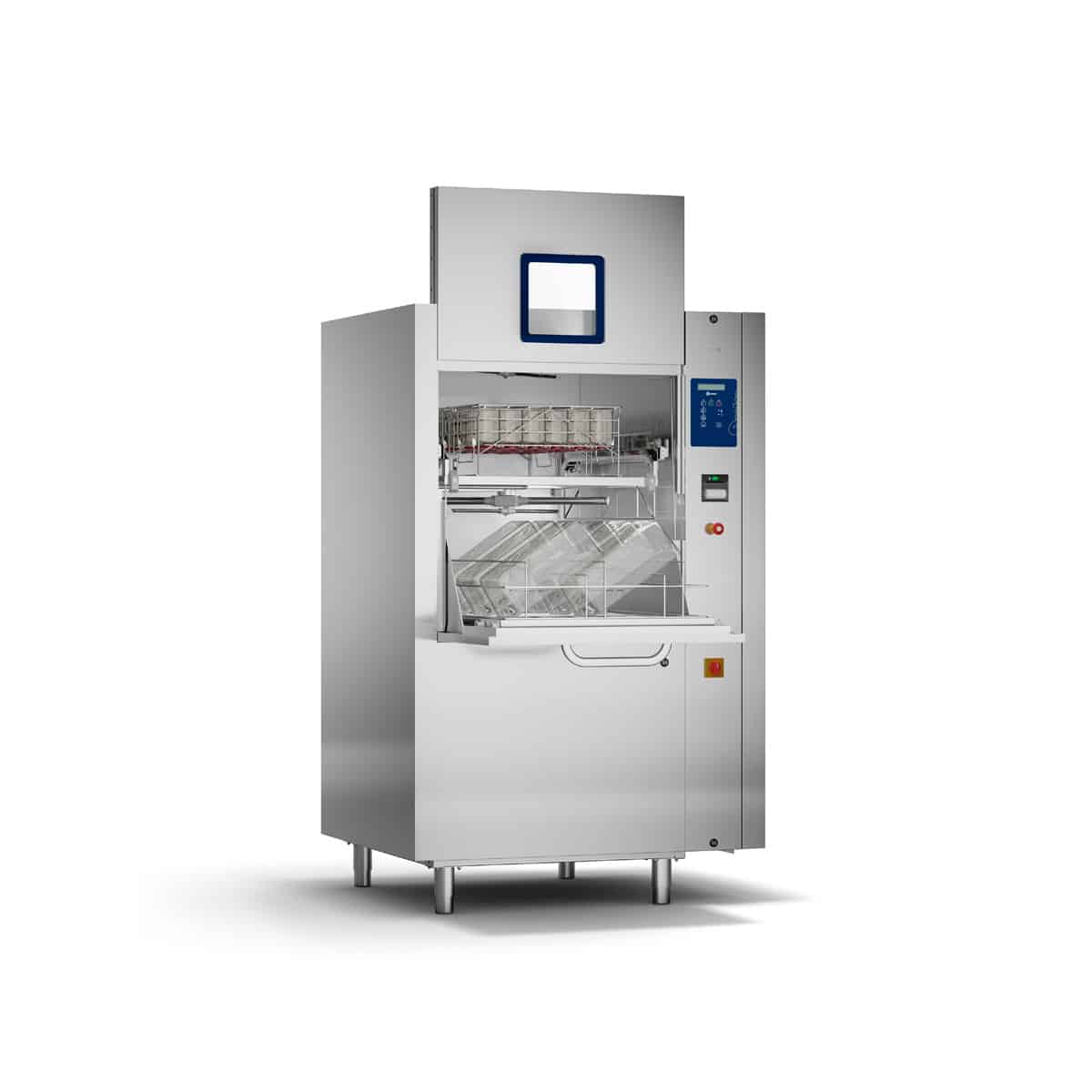
Compact cabinet cage washers provide automated cleaning for small to medium vivarium facilities, fitting within standard cage wash areas while delivering professional-grade thermal disinfection. The Steelco AC 1200 processes up to 180 mouse cages per hour, offering steam or electrical heating with 316L stainless steel chamber construction ensuring decades of reliable service in demanding vivarium environments.
Mid-capacity units like the Steelco AC 1300 and AC 1400 feature vertical sliding doors providing excellent ergonomics and visibility during loading operations. These cabinet washers accommodate varied cage sizes from mouse microisolators to rat shoebox cages, with flexible wash rack configurations adapting to changing facility needs. Single or passthrough barrier configurations support both open and SPF facility designs.
The Steelco AC 1500 represents the optimal solution for facilities requiring maximum capacity in cabinet washer format, processing up to 320 mouse cages per hour. This workhorse unit serves as primary equipment for small to medium vivariums or backup capacity for larger facilities, featuring automated vertical sliding double-glass doors providing complete cycle visibility and ensuring proper loading verification before cycle initiation.
Large Capacity Rack Washers
Large capacity rack washers accommodate complete IVC racks, process carts, and high-volume cage processing requirements for medium to large biomedical research facilities. The Steelco AC 7500 features hinged door design with floor or pit-mounted installation options, processing full-height IVC racks along with hundreds of cages per cycle. Available in single or double-door passthrough configurations, these heavy-duty washers support facilities maintaining strict clean/dirty separation for biosecurity compliance.
The Steelco AC 8500 sliding door rack washer represents the pinnacle of vivarium washing technology, featuring environmental sustainability innovations reducing operating costs up to 95% compared to conventional designs. Advanced water recovery systems capture final rinse water for reuse in pre-wash cycles, while heat recovery transfers thermal energy to incoming cold water, dramatically reducing utility consumption. Running cost savings include 75% time reduction, 95% water savings, and 95% energy savings compared to traditional cage washing approaches.
Large rack washers accommodate specialized loading systems including multi-level wash racks, automated indexing systems, and custom configurations matching specific facility cage inventory and workflow requirements. Flexible hydraulic configurations support single-tank or multi-tank designs optimizing cycle times for different soil loads and cage types.
Automated Cage Washing Systems
Automated cage washing systems from Visron eliminate manual cage handling through robotic loading, washing, and unloading sequences. These high-throughput systems process 240-650 cages per hour depending on configuration, dramatically reducing labor costs while improving ergonomics and worker safety by eliminating repetitive lifting and handling of dirty cages.
Visron VACH systems integrate seamlessly with tunnel washers or large-capacity cabinet washers, providing complete automation from dirty cage input through clean cage stacking. Automated indexing moves cages through washing chambers without manual intervention, while robotic stacking systems organize clean cages on racks ready for immediate redeployment to animal rooms. These systems are essential for large vivariums processing thousands of cages daily, where manual handling becomes physically demanding and time-consuming. Learn more about automation in vivariums.
Tunnel Cage Washers
Tunnel washing systems provide ultimate throughput for high-census vivarium facilities, processing cages continuously through sequential washing, rinsing, and drying zones. The Steelco AC 3500 modular tunnel washer achieves processing rates exceeding 1,000 cages per hour in larger configurations, eliminating loading/unloading downtime characteristic of batch cabinet washers.
Tunnel systems maintain continuous production flow essential for facilities managing 10,000+ cages requiring weekly or biweekly change schedules. Modular design allows customization to facility requirements, space constraints, and specific cage types. Integration with automated handling systems creates completely automated cage processing from dirty cage input through clean cage storage without human intervention in the washing process.
How to Choose the Right Cage Washer
- Census and Change Frequency: Calculate total cages requiring washing weekly based on animal census and change schedule. Small facilities (8,000 cages) should consider automated systems or tunnel washers. Factor in peak demand during cage changes rather than average weekly volume.
- Cage Types and Sizes: Inventory all cage styles in use including mouse microisolators, rat shoebox cages, IVC assemblies, rabbit cages, and specialty housing. Verify washer compatibility with largest cages and most difficult geometries. Mixed cage inventories may require multiple wash programs or adjustable rack configurations. Consider future needs if expanding species diversity or transitioning to different caging systems.
- IVC Rack Processing Requirements: Determine whether complete IVC rack washing is necessary or if rack frames can be cleaned separately from cages. Some facilities disassemble racks for component washing, while others prefer intact rack processing requiring large-capacity washers with specialized rack handling capabilities. Rack washing frequency (typically monthly or quarterly) affects sizing decisions differently than daily cage washing.
- Space and Facility Layout: Measure available cage wash area dimensions including door widths, ceiling heights, and access for equipment delivery. Passthrough installations require wall penetrations and dual-sided room access but provide optimal clean/dirty separation. Pit-mounted washers reduce ceiling height requirements but necessitate below-floor drainage and access. Ensure adequate clearance for door operation, maintenance access, and wash rack maneuvering.
- Utility Infrastructure: Verify water supply capacity (typically 40-80 PSI at 20-60 GPM for large washers), drainage volume handling (3-4 inch drains minimum for high-capacity units), electrical service (typically 208V-480V three-phase for large equipment), and steam supply if specified. Facilities lacking adequate infrastructure may require costly upgrades before washer installation. Consider water softening systems if hardness exceeds 3 grains per gallon to prevent scale buildup.
- Biosecurity and Barrier Requirements: SPF and barrier facilities mandate passthrough configurations preventing back-contamination from dirty side to clean side. Double-door interlocking systems prevent simultaneous door opening maintaining environmental separation. Single-door washers suffice for conventional facilities without strict barrier protocols but may limit future flexibility if upgrading to SPF operations.
- Labor and Automation: Evaluate current staffing levels and cage wash labor costs. Manual loading/unloading requires 2-4 full-time staff for large facilities, while automated systems reduce labor to equipment monitoring and maintenance. Higher equipment costs for automation may be offset by labor savings within 2-3 years depending on facility size and local wage rates. Consider ergonomic improvements and worker safety benefits beyond pure cost calculations.
Key Features to Compare
- Washing Technology: High-pressure rotary spray arms ensure complete coverage from multiple angles, while specialized bottom wash systems remove bedding debris and heavy soils. Variable-speed pumps optimize water flow and spray pressure for different wash phases, reducing energy consumption without compromising cleaning effectiveness. Multi-phase washing with pre-wash, main wash, and multiple rinse cycles ensures thorough soil removal and complete detergent elimination.
- Thermal Disinfection Capability: Validated thermal disinfection cycles achieve A0 values ≥600 (typically 80°C for 10 minutes or 90°C for 3 minutes) meeting international standards for pathogen inactivation. Precise temperature monitoring with multiple sensors ensures uniform heat distribution throughout the chamber and load. Programmable temperature holds accommodate different material sensitivities from heat-resistant polycarbonate to temperature-sensitive polysulfone.
- Chamber Construction: 316L stainless steel provides superior corrosion resistance compared to 304-grade steel, essential for long-term durability in harsh washing environments with alkaline detergents and high temperatures. Seamless welded construction eliminates crevices harboring contaminants and simplifies cleaning validation. Sloped floors ensure complete drainage preventing water pooling and bacterial growth between cycles.
- Loading Flexibility: Modular wash rack systems accommodate varied cage sizes and types without dedicated custom racks for each cage style. Quick-change rack configurations allow rapid adaptation to changing inventory. Mobile loading trolleys enable ergonomic loading outside the washer chamber, improving workflow efficiency and reducing physical strain on staff. Multiple rack positions maximize chamber utilization for different load sizes.
- Drying Performance: Integrated HEPA-filtered hot air drying eliminates residual water from cages, bottles, and accessories preventing bacterial growth during storage. Adjustable drying temperatures (typically 80-110°C) and durations (10-30 minutes) accommodate different materials and load densities. Forced-air circulation accelerates drying while maintaining uniform temperature distribution, ensuring all items are thoroughly dry before removal.
- Water and Energy Recovery: Advanced systems capture final rinse water (typically 140°F/60°C) for reuse in pre-wash cycles, reducing consumption by 30-60% compared to single-pass designs. Heat exchangers transfer thermal energy from drain water to incoming cold water, recovering 40-70% of heating energy. These sustainability features support LEED certification for vivariums while reducing operating costs.
- Process Monitoring and Documentation: Digital controls log critical process parameters including temperatures, pressures, wash times, and detergent volumes with tamper-evident electronic signatures. Network connectivity enables integration with facility management systems and automated alerting for cycle failures or maintenance requirements. Data export capabilities support IACUC documentation and SOP compliance verification during regulatory inspections.
- Detergent Systems: Automated detergent dispensing ensures consistent dosing across all cycles, eliminating variability from manual chemical handling. Separate tanks for alkaline cleaner, acid neutralizer, and rinse aid optimize chemistry for different wash phases. Conductivity monitoring verifies proper detergent concentrations and complete rinse cycles. Compatible with various detergent formulations from mild animal-safe cleaners to aggressive alkaline formulations for heavily soiled equipment.
- Safety Features: Door interlocks prevent opening during high-temperature cycles protecting staff from burns and steam exposure. Automatic pressure relief systems safely vent steam before door unlocking. Low-water cutoffs prevent dry running and heating element damage. Emergency stop buttons provide immediate cycle interruption if safety concerns arise. Compliance with OSHA and facility safety standards ensures worker protection.
Integration with Vivarium Workflow
Cage washers function as central components within comprehensive vivarium operations, integrating with upstream and downstream processes for optimal efficiency. Cage change stations provide ergonomic workspaces where technicians transfer animals to clean cages, with dirty cages then conveyed to washing areas via transport carts or automated conveyor systems.
After washing and drying, clean cages move to vivarium sterilizers for terminal sterilization if required for specific pathogen-free colonies, or directly to bedding dispensing systems for automated bedding filling. Clean, filled cages then stage in clean storage areas awaiting deployment to animal rooms for scheduled cage changes.
Modern vivariums increasingly adopt automation throughout the workflow, with cage washers serving as the foundation. Integration of automated handling before and after washing creates continuous flow systems minimizing manual labor while improving consistency and reducing contamination risks. Facilities planning comprehensive automation should consider cage washers with automation-ready features including robotic interface capability and synchronized control systems.
Maintenance and Best Practices
- Daily Operational Checks: Inspect door gaskets for damage, debris, or deterioration compromising sealing during cycles. Verify spray arms rotate freely without obstruction from bedding debris or cage components. Clean mesh filters at chamber drain removing accumulated bedding and organic debris preventing drainage blockages. Check detergent reservoir levels and refill before start of daily operations ensuring adequate supply for scheduled wash loads. Run an empty cleaning cycle weekly removing detergent buildup from spray arms and chamber surfaces.
- Proper Loading Techniques: Position cages allowing complete water circulation and drainage—avoid nesting or overlapping cages that trap air pockets and prevent cleaning solution contact. Orient cages, bottles, and feeders with openings facing downward or sideways facilitating drainage and preventing water pooling during drying. Load heavy items like IVC rack components on lower wash racks for stability, placing lighter cages and bottles on upper racks. Avoid overloading beyond recommended capacity as overcrowding reduces cleaning effectiveness and extends cycle times.
- Bedding Management: Pre-dump excessive bedding from cages before loading washers, using bedding disposal stations to minimize bedding entering wash chamber. Excessive bedding clogs drain filters, reduces spray pressure, and extends cycle times. Some facilities implement dedicated bedding disposal systems integrated with cage dumping stations preventing bedding from ever reaching wash areas.
- Detergent Selection and Management: Use detergents specifically formulated for automated cage washers that are animal-safe, effective on organic soils at high temperatures, and rinse completely without residues. Alkaline detergents effectively remove proteins and fats typical of vivarium soils. Avoid household dishwashing soaps that generate excessive foam and may leave residues harmful to sensitive animal species. Store detergents in temperature-controlled areas away from direct sunlight preventing degradation.
- Preventive Maintenance Schedule: Perform quarterly maintenance including pump inspection, valve testing, temperature sensor calibration, and spray arm bearing lubrication. Annual professional service should include complete system verification, gasket replacement, heating element inspection, and performance qualification testing. Maintain detailed maintenance logs documenting all service activities supporting regulatory inspections and warranty claims. Schedule maintenance during periods of lower census or cage change activity to minimize operational disruption.
- Water Quality Monitoring: Test inlet water monthly for hardness, pH, and contaminant levels affecting equipment longevity and cleaning performance. Install water softeners if hardness exceeds 3 grains per gallon, preventing scale buildup on heating elements, spray arms, and chamber surfaces. For facilities with municipal water quality fluctuations, implement continuous monitoring systems alerting to conditions requiring intervention before equipment damage occurs.
- Validation and Documentation: Establish routine biological indicator testing verifying thermal disinfection effectiveness. Document all wash parameters (temperatures, times, pressures, detergent concentrations) for each cycle supporting IACUC protocol compliance. Investigate any cycle failures immediately, documenting root cause analysis and corrective actions. Maintain comprehensive records supporting regulatory inspections and demonstrating continued equipment qualification.
Regulatory Compliance and Animal Welfare
Cage washing equipment plays a critical role in maintaining animal health, research integrity, and regulatory compliance in biomedical research facilities. The Guide for the Care and Use of Laboratory Animals (The Guide) and IACUC protocols require adequate sanitation preventing disease transmission and maintaining animal welfare. Validated cage washing with documented thermal disinfection demonstrates compliance with these standards, providing verifiable evidence that sanitation procedures effectively eliminate pathogens between cage uses.
Facilities must maintain SOPs documenting cage washing frequencies, wash program parameters, validation testing schedules, and corrective action procedures for equipment failures or cleaning inadequacies. IACUC semiannual inspections review these documents and observe cage washing operations ensuring compliance with institutional animal care programs and federal regulations.
Beyond regulatory requirements, proper cage washing directly impacts animal welfare by maintaining clean, dry housing free from ammonia buildup, pathogen contamination, and environmental stressors. Clean caging supports optimal animal health, reduces variability in research outcomes, and demonstrates institutional commitment to humane animal care practices aligning with the 3Rs principles (Replacement, Reduction, Refinement).
For facilities pursuing accreditation from AAALAC International (Association for Assessment and Accreditation of Laboratory Animal Care), documented cage washing validation and equipment maintenance records are essential components demonstrating program quality. Modern validated washers with comprehensive data logging simplify documentation requirements and demonstrate due diligence in animal care program management.
Sustainability and Energy Efficiency
Modern cage washers incorporate numerous sustainability features reducing environmental impact and operating costs. Water recovery systems capture final rinse water—typically 140-160°F (60-71°C) after thermal disinfection—and reuse it for pre-wash cycles, reducing total water consumption by 30-60% compared to single-pass designs. This reclaimed water retains substantial thermal energy, further reducing heating requirements for subsequent cycles.
Heat recovery systems use heat exchangers transferring thermal energy from drain water to incoming cold water supply, recovering 40-70% of heating energy otherwise lost to drains. Combined water and energy recovery can reduce utility costs by 50-70% compared to conventional cage washers, with payback periods typically 2-4 years depending on local utility rates and usage intensity.
Variable-speed pumps adapt motor output to actual requirements during different wash phases, reducing electrical consumption by 20-40% compared to single-speed motors running continuously at maximum capacity. ECM (electronically commutated motors) provide additional efficiency gains while delivering more consistent performance across voltage fluctuations.
These sustainability features not only reduce operational costs but also support institutional environmental goals, green building certifications like LEED for vivariums, and corporate social responsibility initiatives. Documentation of water and energy savings provides quantifiable metrics demonstrating environmental stewardship supporting grant applications and public reporting requirements.
Frequently Asked Questions
How many cages per hour should a vivarium washer process?
Required throughput depends on total facility census and cage change frequency. Calculate weekly cages requiring washing, then divide by available wash hours per week (typically 40-50 hours accounting for loading/unloading time). As general guidance: facilities with <2,000 cages can use compact washers processing 180-320 cages/hour; facilities with 2,000-8,000 cages need equipment processing 400-800 cages/hour; operations exceeding 8,000 cages should consider automated systems processing 650+ cages/hour or tunnel washers exceeding 1,000 cages/hour. Always size equipment 20-30% above calculated minimum throughput accommodating peak demand, maintenance downtime, and future growth.
Can cage washers handle both mouse and rat cages?
Yes, most vivarium washers accommodate multiple cage sizes through adjustable wash rack configurations. Mouse and rat cages differ primarily in dimensions rather than requiring fundamentally different wash processes. Adjustable rack dividers, modular loading systems, and programmable wash cycles allow single washers to process varied cage inventories efficiently. Facilities with mixed rodent populations typically load cages by size (mice together, rats together) optimizing rack space utilization and ensuring proper cleaning. Very large rat cages or specialty housing (rabbits, ferrets) may require dedicated wash programs with extended cycle times and different detergent concentrations, though the same washer hardware typically accommodates these variations.
What's the difference between cabinet washers and rack washers?
Cabinet washers process cages individually or in stacks on wash racks, typically handling 180-400 cages per cycle depending on model and cage size. They're ideal for small to medium facilities and offer flexibility for varied cage types. Rack washers accommodate complete IVC racks (cages remain on rack frames during washing) plus hundreds of additional cages on separate racks, typically processing 500-1,200 cages per cycle. Rack washers suit medium to large facilities requiring maximum throughput and are essential for facilities washing entire IVC systems together rather than disassembling racks for cage-only washing. Rack washers require significantly more space and larger utility infrastructure but provide superior throughput efficiency for high-census vivariums.
Do cage washers need dedicated sterilizers afterward?
Not necessarily—thermal disinfection during washing (typically 80-93°C for 10+ minutes) effectively eliminates vegetative bacteria, fungi, and most viruses satisfying requirements for conventional research animal housing. However, SPF (specific pathogen-free) facilities housing immunocompromised animals or requiring absolute pathogen exclusion may mandate terminal sterilization via dry heat sterilizers after washing, achieving complete microbial kill including spore-forming organisms. The decision depends on institutional animal care protocols, research requirements, and specific pathogens requiring exclusion. Many facilities use washers for standard colonies and reserve sterilization for immunocompromised, gnotobiotic, or exceptionally sensitive research animals. See our article on steam and dry heat sterilization.
What maintenance costs should I expect for cage washers?
Annual operating costs typically include: detergents and chemicals ($2,000-$8,000 depending on throughput and formulation selection); preventive maintenance service contracts ($3,000-$8,000 for professional service including parts); replacement components like gaskets, filters, and spray arm bearings ($500-$2,000); water treatment systems if required ($800-$2,500); and utilities including water, electricity, and steam ($3,000-$15,000 based on usage intensity, local rates, and equipment efficiency). Total annual operating costs typically range from $8,800-$35,500 depending on equipment size, utilization, and local conditions. Energy-efficient models with heat recovery reduce utility costs by 50-70%. Proper preventive maintenance significantly extends equipment lifespan (15-25 years) and prevents costly unplanned downtime during critical cage changes. Budget 3-5% of equipment purchase price annually for maintenance and operating supplies.
How do I validate cage washer cleaning effectiveness?
Validation follows a systematic protocol demonstrating consistent pathogen elimination and soil removal: First, establish worst-case challenge conditions—typically the dirtiest cage type (heavily soiled rodent cages) with maximum loading density. Place biological indicators (heat-sensitive spore strips) in difficult-to-clean locations like cage corners and bottle threads. Run three consecutive wash cycles under normal operating parameters. Test biological indicators confirming complete spore kill (typically 6-log reduction). Perform ATP bioluminescence testing or similar rapid methods verifying organic soil removal from representative cages post-wash. Document all parameters (temperatures, times, pressures, detergent concentrations) throughout testing. If all cycles pass acceptance criteria, the wash program is validated. Re-validate annually, after equipment modifications, or when changing detergents or wash programs. Maintain detailed documentation supporting IACUC review and regulatory inspections. Many vivarium washers include built-in data logging simplifying validation documentation.
Can cage washers process IVC blower units safely?
Yes, but with specific considerations. IVC blower assemblies contain motors, electrical components, and sensors requiring careful handling. Remove electronic controls and any components marked water-sensitive before washing. Most washers accommodate blower housings, impellers, and intake/exhaust manifolds using specialized wash racks securing components preventing damage from high-pressure spray. Use moderate temperature programs (typically 70-80°C rather than 90°C+) preventing thermal damage to plastic housings and seals. Ensure complete drying before reassembly—trapped water damages motors and electronics. Some facilities prefer manual cleaning of blower assemblies to minimize risk, reserving automated washing for rack frames and cages only. Consult blower manufacturer specifications regarding water exposure and cleaning methods before implementing automated washing of IVC mechanical components. Our IVC system suppliers can provide specific cleaning guidance.
Related Categories and Equipment
Request a Quote for Cage, Rack, and Bottle Washers
Selecting the optimal cage washing equipment ensures efficient vivarium operations, animal welfare compliance, and cost-effective cleaning supporting your research mission. ARES Scientific's vivarium equipment specialists help biomedical research facilities evaluate census requirements, cage change schedules, space constraints, and biosecurity protocols to specify appropriate washer configurations meeting exact operational needs.
Our comprehensive support services include on-site facility assessments documenting available space and utilities, census analysis calculating required throughput capacity, equipment demonstrations at application laboratories, complete installation coordination including rigging and utility connections, operational training for vivarium staff, validation protocol development and execution support, and ongoing preventive maintenance ensuring maximum equipment uptime throughout the 15-25 year operational lifespan.
We represent industry-leading manufacturers Steelco and Visron, offering proven cage washing solutions trusted by leading biomedical research institutions, pharmaceutical companies, and academic vivariums worldwide. Our equipment delivers validated thermal disinfection, comprehensive documentation supporting IACUC compliance, and exceptional reliability minimizing downtime during critical cage change operations.
Contact ARES Scientific today for customized cage washer recommendations: Call (720) 283-0177 or email info@aresscientific.com. Our vivarium specialists will help you select the ideal washing solution for your facility, ensuring validated cleaning performance, regulatory compliance, operational efficiency, and long-term value supporting your animal research program.
Ready to upgrade your vivarium cage washing operations? Request your quote now and discover why biomedical research facilities nationwide trust ARES Scientific for cage washing equipment that delivers consistent disinfection, reduces labor costs, and supports the highest standards of animal welfare and research integrity.
Additional Resources