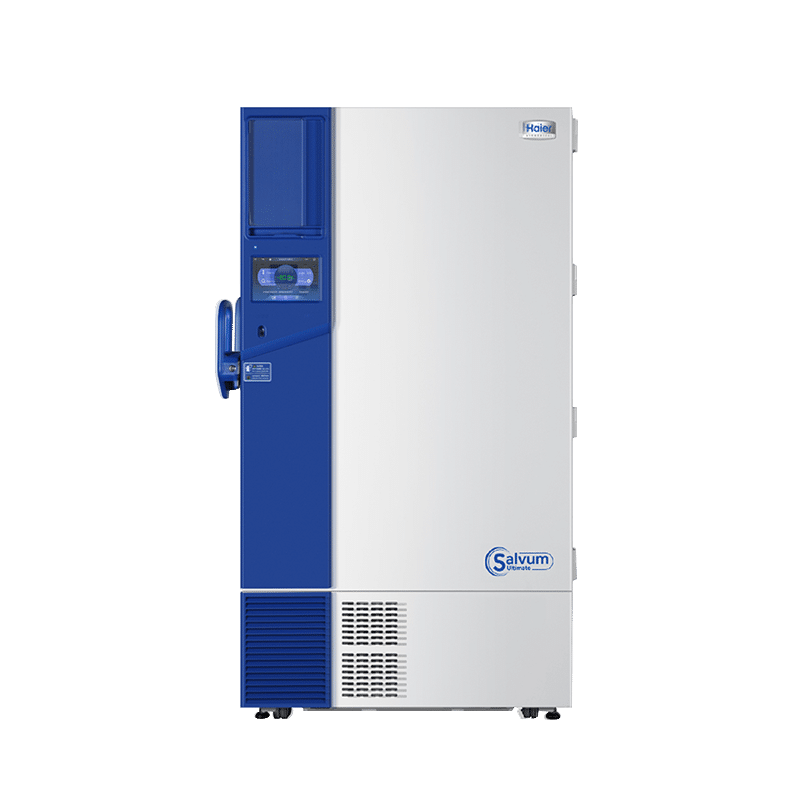
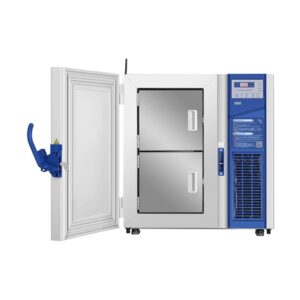
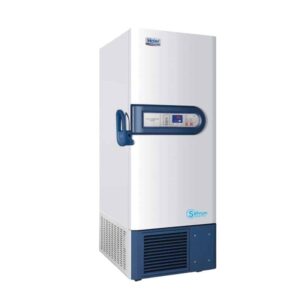
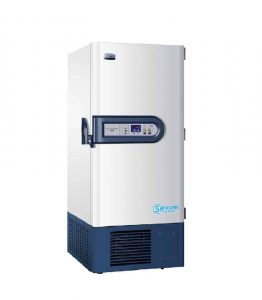
Ultra-Low Temperature (ULT) Freezers / -80 °C Freezers for Laboratory Cold Storage
When sample integrity is non-negotiable, ultra-low temperature (ULT) freezers — commonly referred to as **“-80 °C freezers”** or “minus-80 freezers” — deliver the environment your lab needs. ARES Scientific offers a wide selection of ULT/-80 °C freezers designed for rigorous scientific, biorepository, pharmaceutical, and vivarium applications—capable of maintaining temperatures down to -80 °C (and in many cases even cooler) with advanced performance features that protect your most valuable specimens.
Our ULT/-80 °C freezer portfolio includes upright and chest formats, multi-zone configurations, and models optimized for energy efficiency, space-saving layouts, and continuous-operation reliability. Whether you are storing cell lines, tissue banks, long-term research archives, vaccines or rare samples, these units are engineered to reduce temperature excursions, simplify monitoring, and meet demanding regulatory standards.
At ARES Scientific we help facilities compare key factors—such as retrieval footprint, recovery time, insulation quality, data-logging integration, and energy consumption—to select the right ULT/-80 °C freezer for your workflow. Back-up systems, alarm interfaces, and service support ensure that your cold-storage infrastructure is resilient, compliant, and ready for the future.
Selecting the Right ULT / -80 °C Freezer
- Temperature Set-Point Range: Confirm the unit’s capability—many industry models support **-40 °C to -86 °C**, but in life-science workflows the standard reference remains **-80 °C**. :contentReference[oaicite:0]{index=0}
- Format: Upright vs chest—upright models offer better accessibility, chest models often offer larger bulk capacity and improved thermal recovery. :contentReference[oaicite:1]{index=1}
- Energy Efficiency & Sustainability: Modern ULT/-80 °C freezers use vacuum-insulation panels, variable-speed compressors, and environmentally friendly refrigerants to lower long-term operating costs. :contentReference[oaicite:2]{index=2}
- Monitoring & Compliance: Ensure compatibility with your facility’s data logging/monitoring system, alarms, and that the unit supports your regulatory regime.
- Service & Maintenance: Consider ease of filter access, door gasket service, calibration records and warranty support—especially important for freezers operating at -80 °C. :contentReference[oaicite:3]{index=3}
Common Questions About ULT / -80 °C Freezers
What temperature range qualifies as “ULT” or “-80 °C” freezer?
ULT freezers typically operate at set-points of **-40 °C to -86 °C**, with many references specifically using **-80 °C** (also referred to as “minus-80”) as the standard life-science benchmark. :contentReference[oaicite:4]{index=4}
Which format is better: chest or upright for a -80 °C freezer?
Chest freezers often provide better long-term thermal retention and large-capacity storage, while upright models are space-efficient and provide easier access—choose based on your facility’s workflow, access frequency and spatial constraints. :contentReference[oaicite:5]{index=5}
What features matter most for a -80 °C freezer in research/biobank applications?
Key features include vacuum insulation, dual-cascade compressors, rapid recovery after door openings, low energy draw, and remote monitoring/alarm systems tailored for -80 °C sample protection. :contentReference[oaicite:6]{index=6}
Are -80 °C freezers used for vaccine or biobank storage?
Yes. For biobanking, vaccine programs and long-term sample storage, ultra-low and -80 °C freezers play an essential role. They provide the temperature stability and backup systems required for high-value materials. :contentReference[oaicite:7]{index=7}