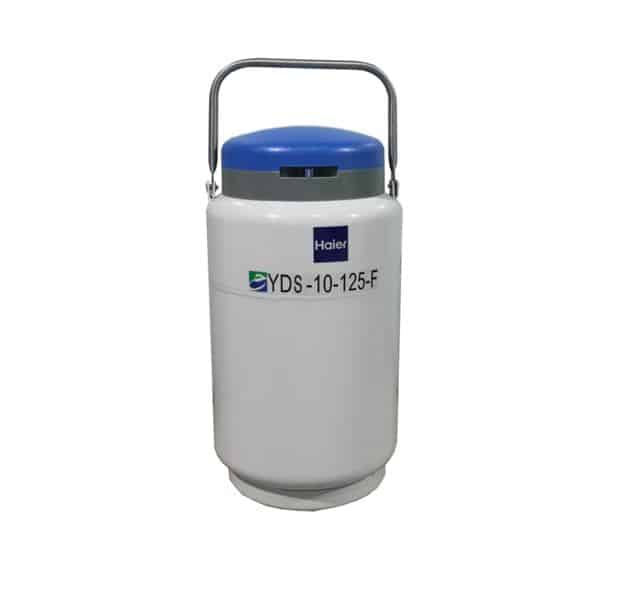
Liquid nitrogen storage systems provide reliable cryogenic preservation for biological specimens, cell cultures, tissue samples, and genetic materials requiring ultra-low temperature maintenance at -196°C. ARES Scientific supplies a comprehensive range of liquid nitrogen dewars and cryogenic storage vessels from leading manufacturers including Haier Biomedical, Chart Industries, and Taylor-Wharton, with capacities spanning 10 liters to 1,000+ liters to serve research laboratories, biobanks, IVF clinics, pharmaceutical facilities, and academic institutions. These vacuum-insulated LN₂ storage systems integrate with broader
cold storage infrastructure to protect irreplaceable biological materials, maintain sample viability during long-term preservation, and support critical research and clinical applications. From compact benchtop dewars for individual researchers to large-capacity automated biorepository systems for institutional biobanking programs, liquid nitrogen storage solutions deliver the temperature stability, sample protection, and operational efficiency essential for modern life science applications.
Types of Liquid Nitrogen Storage Solutions
Laboratory Cryogenic Dewars (10L-50L)
Compact liquid nitrogen dewars ranging from 10 liters to 50 liters capacity serve individual researchers, small laboratories, and specialized applications requiring portable cryogenic storage. These aluminum-construction vessels feature square rack configurations optimizing sample density, with capacities accommodating 1,500 to 6,000+ cryovials depending on canister and rack selection. Applications include backup storage for critical cell lines, transport between facilities, and procedures requiring portable liquid nitrogen access such as
assisted reproductive technology programs. Vacuum-jacketed construction minimizes LN₂ evaporation with hold times extending 70 to 200+ days between refills, reducing maintenance frequency and operational costs.
High-Capacity Research Dewars (65L-175L)
Large-capacity liquid nitrogen storage vessels from 65 liters to 175 liters accommodate biobanking operations, core facilities, and research programs managing extensive cryogenic specimen collections. These professional-grade systems support multi-level canister racks with color-coded handles enabling efficient sample retrieval. Smart Series models from Haier Biomedical integrate digital temperature displays, liquid nitrogen level indicators, IoT connectivity for remote oversight, and cloud-based management systems alerting staff to low LN₂ levels or temperature fluctuations. Extended hold times often exceeding 200 days reduce maintenance frequency while protecting irreplaceable biological materials in
research laboratories and clinical biorepositories.
Vapor-Phase LN₂ Storage Systems
Vapor-phase liquid nitrogen storage maintains cryogenic temperatures through controlled nitrogen vapor rather than direct liquid immersion, eliminating cross-contamination risks between samples. Samples reside in vapor phase above the liquid nitrogen reservoir, maintaining temperatures between -150°C and -190°C depending on chamber position. Critical applications in clinical cell therapy, cord blood banking, reproductive medicine, and GMP-compliant biobanking require vapor-phase technology to meet regulatory standards. Advanced systems incorporate automated liquid nitrogen delivery, continuous temperature monitoring, and validation capabilities supporting
pharmaceutical and clinical compliance requirements including 21 CFR Part 11 electronic record-keeping.
Large-Capacity Institutional Systems (300L-1000L+)
High-volume liquid nitrogen storage systems exceeding 300 liters serve institutional biobanks, pharmaceutical facilities, and academic medical centers managing collections of tens of thousands to millions of cryopreserved specimens. These floor-standing units feature multiple access ports, extensive rack systems, and integrated monitoring tracking temperature, liquid nitrogen levels, and access events. Many incorporate automated liquid nitrogen delivery from bulk storage tanks, eliminating manual refilling. Sophisticated inventory management integration connects storage locations with laboratory information management systems, enabling rapid sample location and compliance with ISBER biobanking standards. Systems include redundant monitoring, backup power capabilities, and comprehensive alarm systems protecting high-value specimen collections.
Key Features of Liquid Nitrogen Storage Technology
Superior Vacuum Insulation and Evaporation Control
Advanced vacuum-jacketed construction creates a near-perfect thermal barrier between the cryogenic interior and ambient environment, dramatically reducing heat transfer and minimizing liquid nitrogen evaporation rates. Double-wall aluminum construction with evacuated space eliminates convective heat transfer, while multi-layer radiation shields reduce radiative transmission. Superior vacuum integrity translates to extended hold times—premium units achieve static evaporation rates below 0.5% of capacity per day, meaning a 100-liter dewar maintains cryogenic temperatures for 200+ days without refilling. This reduces operational costs through decreased liquid nitrogen consumption and minimizes staff time for maintenance. Vacuum-integrity monitoring systems alert users to performance degradation, enabling proactive maintenance protecting specimens stored in
ultra-low temperature environments.
Smart Monitoring and Connectivity Systems
Modern liquid nitrogen storage systems integrate monitoring technologies providing real-time visibility into critical parameters including liquid nitrogen level, chamber temperature, vacuum integrity, and access events. Digital displays present immediate status, while embedded sensors trigger configurable alarms when parameters deviate from acceptable ranges. IoT-enabled Smart Series models connect to facility networks, enabling remote monitoring through web dashboards and mobile applications that alert staff via email, SMS, or push notifications. Cloud-based data logging creates permanent records supporting regulatory compliance, validation protocols, and quality assurance in GLP, GMP, and clinical laboratory environments. Integration with laboratory information management platforms enables centralized oversight and automated reporting demonstrating compliance across
biobanking operations.
Sample Organization and Security Features
Efficient specimen organization systems maximize storage capacity while enabling rapid sample retrieval without extended lid-open time. Multi-level canister and rack configurations provide systematic organization with color-coded handles, numbered positions, and customizable dividers supporting thousands of cryovials in organized arrays. Square rack geometry optimizes space utilization, increasing storage density in valuable laboratory footprint. Advanced systems incorporate inventory management integration with barcode or RFID tracking, enabling digital mapping of exact sample locations. Security features including locking lids with key or electronic access controls, tamper-evident seals, and access logging protect specimens from unauthorized access while maintaining chain-of-custody documentation required for clinical materials and regulated research across
laboratory workflows.
Applications for Liquid Nitrogen Storage
Biobanking and Biorepository Operations
Institutional biobanks and research biorepositories rely on liquid nitrogen storage to maintain extensive specimen collections including tissue samples, blood products, DNA/RNA, cell lines, and microorganisms requiring long-term preservation with guaranteed viability. Large-capacity LN₂ systems support organized specimen management across decades, with vapor-phase technology eliminating cross-contamination risks. Automated monitoring and documentation support compliance with ISBER biobanking standards, CAP accreditation requirements, and institutional review board protocols. Integration with laboratory information management systems enables efficient sample tracking and rapid retrieval supporting research programs, clinical trials, and collaborative studies requiring well-characterized biospecimens with documented storage conditions.
Assisted Reproductive Technology and Reproductive Medicine
IVF clinics, fertility centers, and reproductive medicine programs require reliable liquid nitrogen storage for cryopreservation of embryos, oocytes, and sperm samples. Vapor-phase LN₂ systems predominate in clinical reproductive medicine to eliminate cross-contamination risks while maintaining temperatures supporting long-term gamete and embryo viability. Precise temperature control, continuous monitoring with redundant alarms, and backup power protect irreplaceable reproductive materials. Inventory management systems track patient specimens through color-coded canes, barcode labeling, and database integration. Security features including restricted access and comprehensive audit trails support compliance with FDA tissue banking regulations, state licensing requirements, and ASRM professional guidelines in clinical embryology and andrology laboratory operations across
life science research.
Cell Culture and Cell Line Banking
Research laboratories, pharmaceutical companies, and academic institutions maintain master and working cell banks in liquid nitrogen storage to preserve valuable cell lines, primary cells, and genetically modified cultures requiring long-term stability. Cryopreservation at liquid nitrogen temperatures arrests all metabolic activity, preventing genetic drift, contamination, and senescence that occur during continuous passaging. Compact benchtop dewars serve individual research groups, while larger systems support institutional repositories providing characterized cells to multiple teams. Backup storage in separate dewars protects against catastrophic loss of critical cell lines representing years of development. Proper liquid nitrogen storage combined with systematic cell banking and documentation supports research reproducibility and maintains cell authenticity verified through STR profiling integrated with cold storage management protocols.
Pharmaceutical and Biotechnology Applications
Pharmaceutical R&D programs, biotechnology companies, and contract research organizations utilize liquid nitrogen storage for compound libraries, biological reference standards, clinical trial specimens, and master cell banks supporting biologics manufacturing. Temperature-validated LN₂ systems with comprehensive monitoring support GMP compliance, regulatory submissions, and quality assurance protocols. Vapor-phase systems eliminate cross-contamination concerns in clinical trial specimens and production cell banks where sample integrity impacts patient safety and regulatory compliance. Large-capacity systems accommodate specimen collections supporting stability studies and clinical trial biobanking spanning multi-year development timelines. Integration with electronic batch records and quality management platforms enables complete documentation supporting FDA, EMA, and regulatory authority inspections protecting pharmaceutical development programs across
vivarium and research operations.
Selecting the Right Liquid Nitrogen Storage System
Capacity Planning and Growth Projections
Determining appropriate liquid nitrogen storage capacity requires careful assessment of current specimen inventory, anticipated growth rates over 3-5 year planning horizons, and operational flexibility for unexpected research expansions or collaborative projects. Calculate total storage positions needed by considering sample types and their respective storage densities—standard 2mL cryovials versus larger sample tubes, straws for reproductive materials, or specialized containers for tissue specimens—each impacting the number of specimens accommodated per liter of storage capacity. Factor in organizational systems including canisters, racks, and canes that occupy chamber volume, typically reducing effective storage to 60-75% of nominal capacity depending on configuration efficiency. Consider growth projections: biobanks and core facilities should plan for 50-100% expansion capacity to avoid premature system replacement as collections grow, while also evaluating whether multiple smaller units provide operational advantages over single large-capacity systems through sample segregation, risk distribution, and maintenance flexibility. Assessment of physical space constraints, doorway access for delivery, and floor loading requirements influences system selection, particularly for large-capacity units exceeding 300 liters that may require facility modifications or specialized installation. Planning for adequate clearance around units supporting safe access, ventilation requirements in confined spaces, and proximity to liquid nitrogen supply infrastructure optimizes operational efficiency supporting long-term
laboratory cold storage management.
Monitoring, Alarms, and Compliance Requirements
Regulatory environment, facility risk tolerance, and specimen value dictate monitoring sophistication required in liquid nitrogen storage systems, ranging from basic liquid level indicators to comprehensive IoT-enabled platforms with cloud-based data logging and multi-channel alarm notification. Clinical laboratories, biobanks, and pharmaceutical facilities operating under GLP, GMP, CAP, or CLIA regulations typically require continuous temperature monitoring with calibrated sensors, automated data logging creating permanent records, and alarm systems with redundant notification methods ensuring rapid response to temperature excursions or liquid nitrogen depletion. Evaluate alarm capabilities including local audible alarms, remote notification via phone/email/SMS, integration with building management systems, and backup power for monitoring systems maintaining alarm functionality during power failures. Consider validation requirements: some regulatory environments mandate qualification protocols (IQ/OQ/PQ), ongoing performance verification, and temperature mapping studies documenting temperature distribution throughout storage chambers under loaded conditions. Determine documentation needs supporting audit trails, chain-of-custody records for clinical specimens, and compliance reporting to oversight bodies governing research or clinical operations. Budget for monitoring infrastructure beyond the dewar itself including calibrated temperature sensors, data logging systems, network connectivity, and ongoing sensor calibration supporting quality assurance protocols. Organizations storing high-value or irreplaceable specimens should evaluate redundant storage, backup systems, and emergency response plans as part of comprehensive risk management strategies protecting critical biological materials.
Liquid Nitrogen Supply and Infrastructure Considerations
Reliable liquid nitrogen supply logistics significantly impact operational efficiency and system selection, with considerations including delivery frequency, bulk storage versus periodic dewar refilling, and facility infrastructure supporting cryogenic gas handling. Facilities with multiple liquid nitrogen dewars or high-consumption applications should evaluate bulk LN₂ storage tanks with automated distribution systems reducing labor requirements and ensuring continuous supply, though this requires significant facility investment including cryogenic piping, vacuum-jacketed transfer lines, and appropriate ventilation. Smaller operations may rely on periodic delivery of liquid nitrogen in portable vessels for manual refilling, requiring consideration of refill frequency based on dewar hold times and staff availability for maintenance procedures. Assess facility ventilation requirements: liquid nitrogen evaporation displaces oxygen, requiring adequate room ventilation (typically 1 air change per hour minimum) and oxygen monitoring in confined spaces to prevent asphyxiation hazards. Consider accessibility for delivery personnel, pathway dimensions accommodating liquid nitrogen transport vessels, and proximity of storage locations to delivery access points minimizing transfer distances and spill risks. Evaluate total cost of ownership including liquid nitrogen consumption based on evaporation rates, delivery fees, and labor costs for refilling procedures when comparing systems with different insulation performance and hold time characteristics. Facilities in remote locations or areas with limited cryogenic gas suppliers should prioritize low evaporation rate systems maximizing hold times between refills, reducing vulnerability to supply chain disruptions that could compromise specimen integrity in
vivarium and research facility operations.
ARES Scientific serves as a trusted partner for liquid nitrogen storage solutions, offering expert guidance on system selection, professional installation services coordinating with facility requirements, and ongoing technical support ensuring optimal performance of cryogenic storage infrastructure protecting valuable biological materials across research, clinical, and industrial applications.