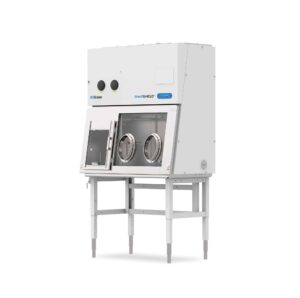
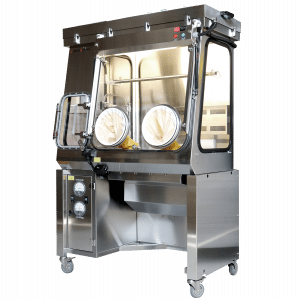
Compounding aseptic containment isolators (CACI) provide simultaneous personnel, product, and environmental protection during sterile hazardous drug compounding, making them a foundational primary engineering control in USP <800>-compliant pharmacy programs. Operating under sustained negative pressure with HEPA-filtered, unidirectional downward airflow, a CACI maintains an ISO Class 5 (Class 100) work zone inside a leak-tight glovebox enclosure that physically separates the compounder from cytotoxic, antineoplastic, and other hazardous agents. ARES Scientific distributes CACI platforms from Baker and Flow Sciences—manufacturers whose isolator designs address the dual demands of sterile compounding technique and hazardous drug containment within hospital pharmacies, outpatient infusion centers, oncology pharmacies, and 503B outsourcing facilities. Whether a program requires a dedicated negative pressure isolator for chemo compounding or a flexible system configurable for different compounding scenarios, our portfolio supports a range of pharmacy cleanroom designs and throughput requirements within the broader clean air and containment equipment category.
Types of Compounding Aseptic Containment Isolators
Negative Pressure CACIs for Hazardous Drug Compounding
Negative pressure CACIs are the primary equipment class for sterile hazardous drug compounding under USP <800>. These systems maintain a sustained negative pressure differential—typically in the range of −0.05 to −0.12 inches of water column relative to the surrounding room—so that any unintended breach of the isolator draws room air inward rather than allowing contaminated air to migrate outward. HEPA-filtered, unidirectional downward airflow sweeps aerosols, vapors, and particulates generated during vial reconstitution, syringe filling, and waste handling away from the work zone. Interior surfaces are typically constructed of 304 or 316 stainless steel for compatibility with sporicidal cleaning agents and routine disinfection cycles. The Baker ChemoSHIELD is a purpose-built example, tested to AGS standards for leak integrity, with sealed glove ports and a pass-through interchange chamber to support material transfer without compromising the pressure boundary. Negative pressure CACIs in this category integrate directly with the pharmacy workflow and are appropriate for any facility compounding antineoplastic agents, cytotoxic drugs, or other NIOSH-listed hazardous drugs that require a containment primary engineering control (C-PEC).
Positive Pressure Isolators for Non-Hazardous Sterile Compounding
Positive pressure isolators—often referred to as compounding aseptic isolators (CAI)—serve sterile compounding programs where product protection from environmental contamination is the primary concern and the drug being compounded does not present an inhalation or absorption hazard to personnel. These systems supply HEPA-filtered air into the work chamber at positive pressure, creating an outward airflow bias that prevents ambient particulates, microorganisms, and environmental contaminants from entering the ISO Class 5 work zone. The Baker SterilSHIELD uses a full-ceiling, front-loading HEPA supply filter rated at 99.99% efficiency to achieve better than ISO Class 5 air quality within both the pass-through and main working chambers, with unidirectional downward airflow that purges particulates continuously from the compounding area. Positive pressure isolators are well-suited for TPN preparation, ophthalmic compounding, antibiotic reconstitution, and other sterile preparations involving non-hazardous agents, and they complement biological safety cabinets in facilities managing both hazardous and non-hazardous sterile compounding workflows. For cGMP pharmaceutical manufacturing that requires validated isolator platforms beyond compounding-scale use, ARES also carries cGMP isolators designed to 21 CFR Part 211 and ISPE baseline guide requirements.
Closed Restricted Access Barrier Systems (cRABS)
Closed restricted access barrier systems represent a hybrid category that shares characteristics with both traditional isolators and open cleanroom workstations. A cRABS such as the Flow Sciences ChemoSphere provides a hard physical barrier between the operator and the work zone—including sealed glove ports and a continuous barrier surface—while being engineered for modular installation and flexibility in cleanroom environments. The ChemoSphere achieves ISO Class 4 (Class 10) air quality within the work zone, satisfies USP <797>/<800> and NIOSH requirements for chemo compounding, and features stainless steel construction with a negative pressure design that eliminates the need for dedicated cleanroom construction in qualifying facility layouts. The Flow Sciences MicroSphere RABs offers a complementary platform for sterile antibiotic, ophthalmic, intrathecal, and TPN compounding, with a MERV 8 prefilter and terminal HEPA filtration meeting USP <797> sterile compounding compliance standards. Both systems integrate into the pharma and bio-pharma manufacturing environments where modular containment and ease of decontamination are priorities.
Key Features and Technology in Compounding Aseptic Containment Isolators
HEPA Filtration and ISO Class Air Quality
Every CACI in a hazardous drug compounding program must maintain a work zone that meets or exceeds ISO Class 5 cleanliness—defined as no more than 3,520 particles ≥0.5 µm per cubic meter of air. This is achieved through 99.99%-efficient HEPA filters on both the supply and exhaust air streams, with unidirectional (laminar) downward airflow directing particulates and aerosols away from the product and the glove ports. Some cRABS platforms achieve ISO Class 4 conditions, providing a more conservative air quality margin for high-risk or high-volume compounding programs. Exhaust filtration is equally critical: in a properly configured CACI, all air leaving the work zone passes through a HEPA filter before either recirculating within the cabinet or exhausting to the facility duct system, preventing hazardous drug vapors and particulates from reaching the pharmacy environment. Facilities compounding highly volatile compounds may also require carbon adsorption modules upstream of the exhaust HEPA to capture vapor-phase hazardous agents that pass through particulate filtration. Integration with environmental monitoring systems provides continuous particle count and pressure tracking to support ongoing compliance documentation.
Pressure Monitoring, Alarms, and Containment Integrity
Sustained negative pressure is the defining protection mechanism of a CACI used for hazardous drug compounding. The isolator must maintain a pressure differential sufficient to ensure that any inadvertent breach draws inward air rather than allowing contaminated air to escape, and this differential must be continuously monitored and alarmed. Most CACI platforms include integrated pressure gauges, electronic pressure transducers, and audible/visual alarms that activate when pressure falls outside the validated setpoint range. Leak integrity testing—typically performed to AGS standards using a helium or tracer gas method—verifies that the isolator enclosure, glove ports, and pass-through seals meet the containment performance specification at installation, after relocation, and following any maintenance that disturbs the barrier. Annual certification by a qualified certification professional also includes verification of HEPA filter integrity using DOP or PAO aerosol challenge, airflow pattern visualization, and particle count measurements in both the work chamber and the pass-through area. These capabilities directly support compliance with USP <797> and USP <800> documentation requirements, as well as cGMP audit expectations for facilities operating under 21 CFR Part 211 or equivalent frameworks.
Glove Ports, Pass-Through Design, and Ergonomics
Operator interface design significantly affects both containment performance and compounder productivity during extended hazardous drug preparation sessions. Glove ports must be positioned at a height and reach distance that allows the pharmacist or technician to access the full depth of the work chamber without awkward postures that increase the risk of glove integrity failure. Continuous-liner glove systems—where the glove is bonded to a sleeve that remains attached to the isolator—provide a higher barrier assurance than removable glove systems and are standard on most pharmacy-grade CACIs. Pass-through chambers and transfer sluices are designed to allow materials, vials, syringes, and waste containers to move into and out of the work zone without opening the main chamber to room air: a properly designed interchange maintains the negative pressure boundary throughout the transfer process. Interior lighting, viewing window angle, and work surface height all contribute to session quality and must be evaluated alongside containment performance. Facilities should also assess compatibility with standard PPE including powered air purifying respirators (PAPR) when protocols require supplemental respiratory protection during high-hazard compounding tasks.
Applications for Compounding Aseptic Containment Isolators
Hospital and Oncology Pharmacy Programs
Hospital pharmacy departments and dedicated oncology compounding programs represent the primary use environment for negative pressure CACIs. These facilities compound large daily volumes of antineoplastic agents—including taxanes, platinum-based compounds, anthracyclines, and monoclonal antibody preparations—that require an enclosed hazardous drug containment environment to protect pharmacists, technicians, and support staff from occupational exposure. USP <800> defines these preparations as requiring a containment primary engineering control (C-PEC) with HEPA-filtered, negative pressure operation, and specifies that the C-PEC must be located within a negative pressure buffer room as part of the facility's secondary engineering control (SEC) design. CACIs satisfy this requirement while also providing the ISO Class 5 sterile work zone demanded by USP <797> for sterile compounding, making them the preferred solution for facilities that must simultaneously meet both standards. Large health systems managing centralized compounding services and clean air and containment infrastructure across multiple satellite locations benefit from standardizing on validated CACI platforms with consistent certification and maintenance protocols.
Outpatient Infusion and 503B Outsourcing Facilities
Outpatient infusion pharmacies and 503B outsourcing facilities operate under higher production volumes and more rigorous regulatory scrutiny than typical hospital compounding programs, making equipment selection and validation documentation particularly important. 503B facilities are registered with the FDA and subject to cGMP standards under 21 CFR Part 211, which requires validated primary engineering controls with documented qualification (IQ/OQ/PQ), environmental monitoring programs, and ongoing maintenance records. CACIs used in 503B environments must be capable of supporting full qualification protocols, including installation qualification that verifies pressure differentials, airflow velocities, and filter integrity against manufacturer specifications. The enclosed glovebox design of a CACI also simplifies the gowning and personnel flow requirements compared to open laminar flow workstations, reducing the risk of personnel-introduced contamination during high-volume production runs of chemotherapy, TPN, and specialty preparations. Sterile compounding programs in these settings may also benefit from the decontamination equipment needed for terminal sporicidal treatment of the CACI interior and the surrounding buffer room, and from temperature and humidity monitoring systems that document cleanroom conditions for compliance records.
Specialty and Independent Compounding Pharmacies
Independent and specialty compounding pharmacies serving pain management, intrathecal, ophthalmic, and veterinary markets may compound both hazardous and non-hazardous sterile preparations within the same facility, often requiring a combination of positive and negative pressure isolators or a flexible cRABS platform that can be configured for different drug classes. USP <797> establishes risk-based sterility requirements for all sterile compounding regardless of hazard classification, meaning that even non-hazardous compounding must occur in a verified ISO Class 5 environment with documented air quality monitoring. Facilities that compound preparations across multiple drug categories often find that a modular RABS approach—where individual isolator units can be configured for specific compounding types and cleaned between product changeovers—offers the operational flexibility needed to manage diverse formularies without duplicating the full cleanroom infrastructure. ARES Scientific works with compounding pharmacy operators and facility planners to identify CACI configurations compatible with their specific drug lists, throughput requirements, room pressure designs, and Board of Pharmacy compliance expectations, drawing on our broader portfolio of cleanroom laminar flow cabinets and contained vented enclosures for complementary cleanroom design support.
Selecting a Compounding Aseptic Containment Isolator
Pressure Regime and Regulatory Context
The first and most consequential selection decision is whether the application requires a negative pressure CACI for hazardous drug compounding, a positive pressure CAI for non-hazardous sterile preparations, or a system flexible enough to support both. Any facility compounding NIOSH-listed hazardous drugs in sterile form must use a negative pressure C-PEC per USP <800>—there is no regulatory pathway to substitute a positive pressure isolator or an open laminar flow device for hazardous drug sterile compounding. Facilities compounding only non-hazardous sterile preparations retain flexibility to use either positive pressure isolators or biological safety cabinets. Facilities compounding both hazardous and non-hazardous drugs in the same space must account for the pressure and air change requirements of both categories when designing the buffer room layout and selecting the CACI configuration, and should review applicable Board of Pharmacy rules alongside USP chapter requirements to confirm the most restrictive standard that applies to their program.
Exhaust Configuration and Facility Infrastructure
CACIs used for volatile or highly toxic hazardous drugs should exhaust 100% of cabinet air to the outside via a hard-duct connection to the facility's exhaust system, preventing any recirculation of vapor-phase compounds into the pharmacy. Fully ducted exhaust requires HVAC infrastructure capable of providing adequate exhaust airflow to the cabinet without compromising room pressure relationships, and represents a significant facility planning consideration for retrofit installations. Systems with HEPA-only recirculating exhaust may be acceptable for a subset of hazardous drug compounds where vapor generation is low and the NIOSH exposure band does not require full exhaust, but this determination requires a documented risk assessment. Facilities with existing ducted fume hoods or ductless fume hoods in adjacent laboratory spaces should assess the impact of adding CACI exhaust loads on building HVAC balance before finalizing equipment selection.
Certification, Maintenance, and Total Cost of Operation
CACI selection should account for the full lifecycle cost of the equipment, including initial qualification, annual certification, scheduled maintenance, glove and sleeve replacement, filter change intervals, and decontamination requirements. Annual certification by a CETA-credentialed technician is standard practice and includes pressure verification, airflow testing, HEPA integrity testing, and glove integrity checks—plan for certification costs as a recurring line item. Glove and continuous-liner sleeve replacement frequency depends on compounding volume and the chemical compatibility of the drugs being handled; high-hazard compounds may require more frequent glove inspection and replacement. Interior surfaces must be compatible with the facility's approved sporicidal agents, and vendors should provide documentation of material compatibility for all disinfectants and sterilants used in the program. Facilities integrating CACIs into regulated cleanroom programs can also benefit from decontamination chambers for treating materials entering the sterile compounding area and from comprehensive environmental monitoring programs that document ongoing ISO Class 5 performance between certifications.
ARES Scientific supplies compounding aseptic containment isolators from Baker and Flow Sciences to hospital pharmacies, oncology programs, 503B outsourcing facilities, and independent compounding pharmacies across the United States, supported by our broader portfolio of clean air and containment equipment for pharmacy cleanroom and sterile compounding environments.