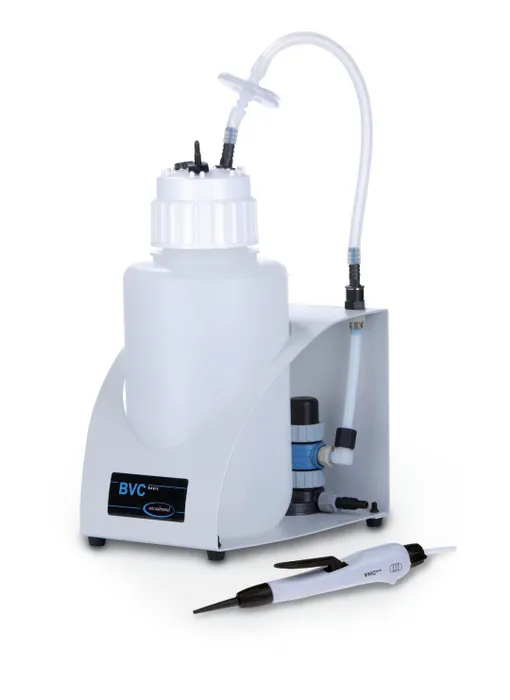
Benchtop Aspiration Systems for Cell Culture, Liquid Handling & Waste Removal
Efficient, safe, and precise fluid removal is critical for laboratories focused on cell culture, molecular biology, diagnostics, and automated workflows. ARES Scientific offers a wide selection of benchtop aspiration systems—also known as vacuum aspiration systems, lab vacuum aspirators, and fluid waste aspiration stations—designed to streamline liquid aspiration, supernatant removal, media exchanges, wash steps, and waste capture while protecting samples, users, and equipment.
Our aspiration system portfolio includes units with adjustable vacuum control, quiet or oil-free pumps, autoclavable components, hydrophobic/bacterial filters, and ergonomic handpieces suitable for both biosafety cabinets and open benches. Whether you are aspirating from microplates, multi-well plates, centrifuge tubes, conical tubes, flasks, culture dishes, or reservoirs, the right system improves throughput, reduces contamination risk, and integrates smoothly with your liquid-handling and sample-preparation processes.
Aspiration systems are essential in workflows such as cell culture media changes, wash steps in ELISA and immunoassays (coordinate with microplate washers for automated plate processing), DNA/RNA extraction supernatant removal (following centrifugation), protein purification, and biosafety-level waste disposal. They are particularly important for live-cell cultures maintained in CO₂ incubators. During routine media changes, wash steps, and feeding cycles, aspirators remove spent media and wash buffers without disturbing attached cell layers, helping maintain culture viability and reducing contamination risk. Proper pairing of a benchtop vacuum aspirator with a CO₂ incubator environment ensures consistent handling of sensitive iPSC, primary, and adherent cell lines.
At ARES Scientific, we help you compare key criteria such as vacuum range, flow rate, collection bottle size, filtration type, system footprint, noise level, and compatibility with biosafety cabinets, laminar-flow hoods, or clean-bench environments. Support for cell culture labs, high-throughput screening facilities, molecular diagnostics labs, microbiology and immunology labs, and general research media handling ensures that our aspiration systems deliver reliability, ease of use, ergonomic operation, and biosafety-focused performance.
Key Selection Factors for Benchtop Aspiration Systems
- Vacuum control & flow rate: Choose a system with adjustable suction and a flow rate matched to your vessel types (plates, tubes, flasks) and daily workflow volume, from gentle aspiration of monolayers to rapid emptying of large reservoirs.
- Autoclavable components & biosafety compatibility: For use in biosafety cabinets or tissue-culture hoods, prioritize autoclavable handpieces, tubing, and collection bottles, plus hydrophobic filters to block aerosols and protect the pump.
- Collection bottle capacity & overflow protection: Larger, clearly marked waste bottles reduce interruptions, while overflow valves, level sensors, and hydrophobic filters maintain safety and prevent liquid from entering the vacuum source.
- Compact footprint & quiet operation: Low-noise, space-saving systems fit easily into crowded workspaces, CO₂ incubator rooms, or biosafety cabinets, supporting long cell culture sessions without adding disruptive noise.
- Accessory compatibility: Look for pipette adapters, single- and multi-channel aspiration heads, microplate aspiration tools, and options for integration with automation platforms or high-throughput screening systems coordinating with microplate readers and liquid handlers.
Frequently Asked Questions About Benchtop Aspiration Systems
1. What is a benchtop aspiration system?
A benchtop aspiration system is a compact, self-contained vacuum-based fluid removal system designed to quickly and safely remove liquids—such as supernatant, wash solutions, and spent media—from laboratory vessels. These systems combine a controlled vacuum source, waste collection bottle, filters, and ergonomic handpieces for convenient use on the bench or inside a biosafety cabinet.
2. Why use an aspiration system instead of pipetting manually?
Manual pipetting is slow, ergonomically demanding, and increases the risk of spills or inconsistent liquid removal. A vacuum aspiration system standardizes fluid removal, improves throughput, reduces repetitive strain, minimizes aerosol formation, and helps maintain clean, reproducible workflows—especially in high-volume cell culture or assay labs.
3. Can these systems be used inside biosafety cabinets or laminar flow hoods?
Yes. Many aspiration systems are specifically designed to operate inside biosafety cabinets and laminar-flow hoods, featuring compact footprints, quiet pumps, autoclavable parts, and hydrophobic filters that block aerosols. This makes them ideal for microbiology, virology, and tissue-culture workflows that involve biohazardous liquid waste.
4. How do aspiration systems integrate with CO₂ incubator workflows?
Live-cell culture requires frequent media changes, wash steps, and feeding cycles. Aspiration systems remove old media and wash solutions gently, helping prevent detachment of adherent cells and preserving monolayers. Their controlled vacuum, sterile filters, and autoclavable components support sterile technique during transfers between the CO₂ incubator, biosafety cabinet, and bench.
5. How do I select the right system for cell-culture applications?
Consider the vessels you use most (microplates, flasks, culture dishes, tubes), the total daily volume of liquid waste, your biosafety level, and workspace layout. For small-scale or microplate-focused work, a compact portable aspirator may be sufficient. For high-throughput or multi-user labs, choose a system with higher flow rates, larger waste bottles, robust filtration, and multi-channel accessories that can keep up with intensive cell culture and assay workloads.
6. What type of filtration do aspiration systems require for biosafety?
Most aspiration systems use hydrophobic aerosol-blocking filters (0.2–0.45 µm) that prevent contamination, protect the pump, and reduce aerosol exposure. Labs operating under BSL-2 or BSL-3 conditions require validated, replaceable filters for safe waste handling. Coordinate aspiration system filtration with environmental monitoring programs verifying contamination control effectiveness.
7. Can aspiration systems handle chemical or solvent waste?
Some aspiration systems are compatible with mild chemical or buffer waste, but corrosive solvents require chemical-resistant vacuum systems. Always check compatibility of tubing, bottle materials, and filters before aspirating solvent-containing waste. For specialized chemical handling, explore ductless fume hoods with integrated aspiration capabilities.
8. How do I safely dispose of liquid waste collected in an aspiration system?
Waste bottles should be capped, autoclaved if biohazardous (coordinate with autoclaves or decontamination systems), and disposed of according to institutional biosafety or chemical-waste procedures. Autoclavable bottles and quick-release lids simplify safe disposal and decontamination.
9. Which aspiration systems are best for high-throughput workflows?
High-throughput labs processing plates or multiple samples benefit from aspirators with higher flow rates, large waste bottles, multi-channel aspiration heads, and compatibility with automation platforms or robotic liquid handlers coordinating with microplate readers, microplate washers, and liquid handling workstations.
10. Do aspiration systems require regular maintenance or calibration?
Yes. Filters, tubing, and waste bottles require periodic replacement or sterilization. Pumps should be checked regularly for performance, cleaned as needed, and maintained according to manufacturer recommendations—especially in biosafety environments where contamination control is critical.
Related Laboratory Equipment & Workflow Solutions
- Benchtop Laboratory Instruments – Complete portfolio of sample preparation, analytical, and processing equipment complementing aspiration workflows
- CO₂ Incubators – Temperature and CO₂-controlled chambers for mammalian cell culture requiring routine aspiration during media changes
- Laboratory Incubators – Full range of temperature-controlled incubation solutions supporting diverse culture applications
- Centrifuges – Sample spinning and pelleting equipment generating supernatants requiring aspiration for removal
- Microplate Washers – Automated plate washing systems complementing manual aspiration in high-throughput assay workflows
- Microplate Readers – Analytical detection instruments used in conjunction with aspiration-dependent assay protocols
- Biological Safety Cabinets – HEPA-filtered workstations providing sterile environments for aspiration system operation during biohazardous material handling
- Clean Benches – Laminar flow workstations protecting cell cultures during aspiration and media manipulation procedures
- Clean Air & Containment Equipment – Comprehensive portfolio of controlled environment solutions supporting sterile technique requirements
- Sterilizers and Autoclaves – Steam sterilization systems for decontaminating aspiration system components and biohazardous waste bottles
- Decontamination Systems – Environmental and surface decontamination solutions supporting biosafety waste handling protocols
- Environmental Monitoring Systems – Continuous monitoring documenting contamination control effectiveness in aspiration-dependent workflows
- cGMP Equipment & Solutions – Validated systems supporting pharmaceutical cell culture, bioproduction, and regulatory compliance applications
Request a Quote for Benchtop Aspiration Systems
ARES Scientific provides expert consultation and competitive pricing for benchtop aspiration systems supporting research laboratories, cell culture facilities, high-throughput screening operations, diagnostic laboratories, and pharmaceutical manufacturing requiring efficient, biosafe liquid waste removal. Our team assists with system selection, biosafety cabinet integration, workflow optimization, and accessory configuration ensuring successful implementation.
Get started with aspiration system solutions:
- Request a Custom Quote: Contact us with your workflow requirements, vessel types, throughput needs, and biosafety level for tailored system recommendations
- Speak with Liquid Handling Specialists: Call 720-283-0177 ext 2 to discuss vacuum control features, biosafety cabinet compatibility, and workflow integration with CO₂ incubators and other equipment
- Schedule Equipment Demonstrations: Arrange on-site or facility demonstrations showcasing aspiration capabilities, ergonomic features, and accessory options
- Access Application Support: Receive guidance on optimal settings for specific applications, filter selection, maintenance protocols, and biosafety best practices
- Explore Complete Portfolio: Browse our full benchtop instruments catalog including aspiration systems, centrifuges, microplate equipment, and analytical instruments
Whether you're establishing new cell culture capabilities, upgrading high-throughput screening workflows, implementing cGMP bioproduction protocols, or enhancing biosafety waste handling procedures, ARES Scientific delivers proven aspiration technology protecting your samples, personnel safety, and workflow efficiency.