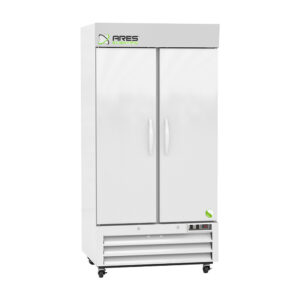
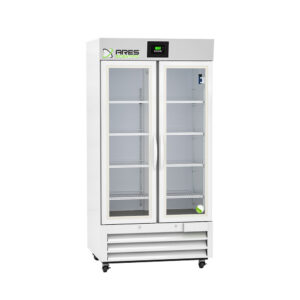
Upright Laboratory Refrigerators: Vertical Cold Storage for Organized Sample Management
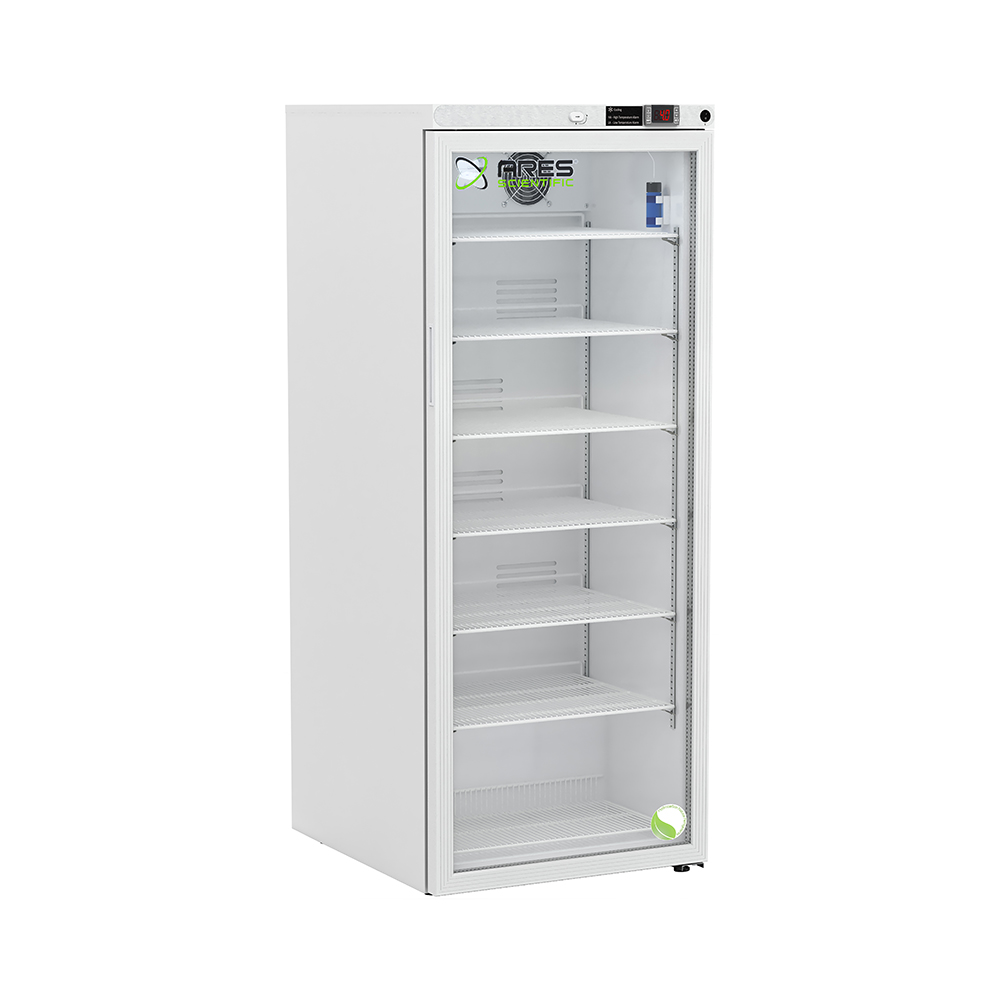
Upright laboratory refrigerators represent the most widely adopted cold storage configuration in research, clinical, and pharmaceutical settings. These vertical units combine space-efficient footprints with exceptional organizational capabilities, providing reliable refrigerated storage for vaccines, reagents, biological samples, and temperature-sensitive materials essential to scientific operations. With front-opening doors resembling oversized household refrigerators but incorporating professional-grade components, upright lab refrigerators deliver the precision temperature control, comprehensive monitoring, and regulatory compliance features demanded by modern laboratories.
The vertical design of upright laboratory refrigerators optimizes laboratory floor space while maximizing storage capacity through intelligent use of height rather than width. Capacities ranging from 10 to 80 cubic feet accommodate laboratories of all sizes—from small clinics maintaining modest vaccine inventories to large research facilities requiring extensive cold storage for diverse sample collections. Interior shelving systems support systematic organization, enabling researchers and technicians to categorize, label, and retrieve materials efficiently without the disorganization challenges associated with chest configurations. For facilities requiring reliable cold storage that integrates seamlessly with existing laboratory infrastructure while maintaining professional appearance and operational efficiency, upright refrigerators deliver proven performance.
Space-Efficient Vertical Design
The defining characteristic of upright laboratory refrigerators is their vertical orientation, utilizing height to maximize storage capacity while consuming minimal floor space. These units typically measure 24-36 inches in width and depth but extend 60-80 inches in height, creating substantial internal volumes within relatively compact footprints. This vertical proportion proves particularly valuable in laboratories where floor space commands premium pricing while ceiling heights remain underutilized.
Modern laboratory construction increasingly emphasizes equipment density, fitting more instrumentation and storage into constrained spaces. Upright refrigerators address this challenge by stacking storage vertically rather than spreading horizontally. A 20 cubic foot upright unit occupies approximately 6-8 square feet of floor space, while a chest refrigerator of equivalent capacity requires 15-20 square feet. For laboratories operating in expensive urban facilities or struggling with overcrowding, this space efficiency translates directly to operational flexibility and cost savings.
Optimizing Laboratory Layouts
Upright refrigerators integrate smoothly into laboratory bench arrangements, positioning cold storage near workstations without disrupting workflow patterns. Their vertical profiles align with standard laboratory furniture heights and depths, creating cohesive equipment arrays. Multiple upright units can be installed side-by-side, creating consolidated cold storage banks without consuming excessive floor area. This modularity supports laboratory growth—facilities can add capacity incrementally as needs expand rather than requiring major layout reorganizations.
Consider how upright configurations complement other laboratory equipment. Position refrigerators near centrifuges storing reagents and buffers for processing procedures, or adjacent to laboratory incubators maintaining media and supplements. This strategic placement minimizes time samples spend outside controlled temperatures while streamlining researcher workflows. The vertical design also facilitates installation in corners or against walls, utilizing spaces difficult to accommodate with chest models requiring top-opening clearances.
Superior Organization and Accessibility
Interior shelving systems distinguish upright laboratory refrigerators from chest alternatives, providing structured organization supporting efficient inventory management. Adjustable shelves accommodate varying container heights—from tall reagent bottles to shallow sample boxes—while maintaining logical arrangement. This structured storage eliminates the disorganization problems plaguing chest refrigerators, where items stack haphazardly and bottom contents become effectively inaccessible.
The front-opening design enables users to view entire refrigerator contents at a glance, quickly locating required materials without extensive searching. This visibility accelerates sample retrieval while reducing door-open time, minimizing temperature excursions and energy waste. For laboratories conducting frequent sample access—clinical testing facilities, active research programs, or quality control departments—the accessibility advantages of upright configurations prove invaluable. Staff can grab needed items within seconds, immediately closing doors to preserve temperatures.
Shelving Configurations and Accessories
Modern upright laboratory refrigerators offer versatile shelving options supporting diverse storage requirements. Solid epoxy-coated wire shelves provide durability and easy cleaning while supporting substantial weights. Perforated shelving enhances air circulation, improving temperature uniformity throughout the cabinet. Some models incorporate drawer-style pull-out racks, bringing back rows forward for convenient access to deeply stored items.
Door storage adds valuable capacity for frequently accessed materials. Interior door shelves hold bottles, vials, and small containers, maximizing usable volume while keeping commonly used items immediately accessible. Specialized accessories further enhance organization—dividers segregate different sample types, bins consolidate small items, and labeled sections support inventory tracking systems. This organizational infrastructure proves particularly valuable in shared laboratory environments where multiple research groups or clinical departments utilize common refrigerators.
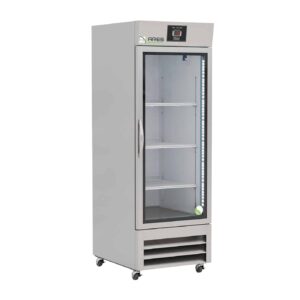
Glass Door Versus Solid Door Configurations
Upright laboratory refrigerators come with either glass or solid doors, each offering distinct advantages for specific applications. Understanding the trade-offs helps laboratories select configurations matching their operational requirements while optimizing both functionality and budget allocation.
Glass Door Advantages and Applications
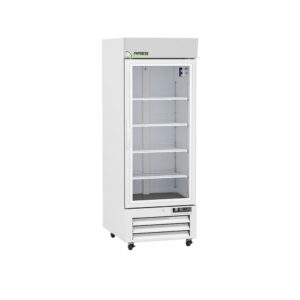
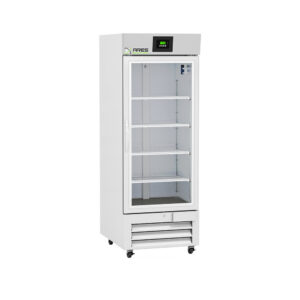
Glass door upright refrigerators provide instant visibility into stored contents without opening doors. This transparency enables staff to locate items, conduct inventory checks, and verify stock levels through visual inspection rather than physical access. The ability to see contents before opening reduces door-open time, minimizing cold air loss and temperature fluctuations. For high-traffic laboratories where refrigerators are accessed dozens of times daily, this reduced opening frequency improves energy efficiency and temperature stability.
Modern glass door designs incorporate double-pane or triple-pane construction with insulating gas fills minimizing thermal transfer. Low-emissivity coatings reflect interior cold while allowing visible light transmission, balancing visibility with energy efficiency. While glass doors inherently conduct more heat than solid constructions, advanced engineering has narrowed the performance gap substantially. Many contemporary glass door models achieve energy consumption comparable to solid door equivalents.
Glass door refrigerators excel in applications emphasizing convenience and workflow efficiency. Clinical vaccine storage benefits from visible inventory verification without temperature disruption. Research laboratories appreciate quick visual confirmation that samples remain properly stored. Pharmaceutical quality control departments value the ability to verify reference standard locations without physical access. The professional appearance also suits customer-facing environments—clinic medication storage visible to patients or educational laboratories demonstrating proper cold storage practices.
Solid Door Benefits and Considerations
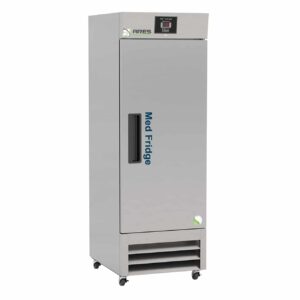
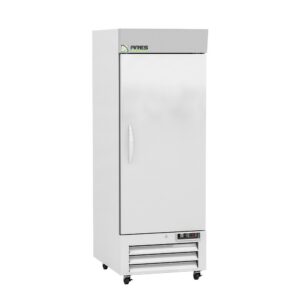
Solid door upright refrigerators prioritize maximum thermal insulation and energy efficiency. The opaque construction incorporates thick insulating foam providing superior temperature retention compared to glass alternatives. This enhanced insulation proves particularly valuable in facilities experiencing ambient temperature variations, power interruptions, or energy cost concerns. During electrical outages, solid door units maintain safe storage temperatures longer, providing additional safety margin for critical materials.
Light-sensitive materials require solid door protection. Certain reagents, vaccines, and biological samples degrade under continuous light exposure—even indirect laboratory illumination penetrating glass doors can compromise these materials over time. Solid doors eliminate light exposure entirely, ensuring photosensitive compounds remain stable throughout storage periods. Privacy considerations also favor solid doors in facilities storing controlled substances, expensive materials, or proprietary research samples where visible inventory might raise security concerns.
The primary disadvantage of solid doors is reduced visibility requiring physical opening to view contents. This potentially increases door-open frequency and duration as users search for needed items. However, proper organization with labeling systems and inventory management practices can minimize this drawback. For applications prioritizing maximum temperature stability, energy efficiency, and light protection over convenience, solid door configurations deliver superior performance.
Temperature Control and Monitoring Capabilities
Upright laboratory refrigerators maintain temperatures between +2°C and +8°C, the standard range for refrigerated storage of biological samples, vaccines, reagents, and pharmaceutical products. This narrow temperature window requires sophisticated control systems far exceeding household refrigerator capabilities. Modern units incorporate microprocessor-based controllers providing precise temperature management with continuous monitoring and automatic adjustment.
Digital temperature displays show real-time cabinet conditions, enabling staff to verify proper operation at a glance. Adjustable setpoints allow customization to specific storage requirements—vaccines often specify +2°C to +8°C, while some reagents tolerate slightly warmer temperatures. Temperature uniformity remains consistent throughout the cabinet despite varying load distributions, ensuring samples on upper shelves experience identical conditions to those near the bottom. This uniformity proves essential for regulatory compliance and quality assurance programs.
Advanced Monitoring and Alarm Systems
Comprehensive alarm packages protect valuable contents from temperature excursions threatening sample integrity. High and low temperature alarms activate when conditions deviate beyond acceptable ranges, providing immediate notification to laboratory staff. Visual LED indicators and audible alerts ensure alarms remain noticeable even in busy laboratory environments. Battery backup systems maintain alarm functions during power outages, guaranteeing continuous monitoring regardless of electrical service status.
Temperature probe failure alarms detect sensor malfunctions requiring attention, preventing situations where equipment failures go unnoticed. Door ajar warnings remind users to close refrigerators promptly, preventing unnecessary temperature drift. Remote alarm contacts enable integration with building management systems or laboratory monitoring platforms, ensuring appropriate personnel receive notifications 24/7. These monitoring capabilities support regulatory compliance while providing peace of mind that critical materials remain protected.
Data Logging and Documentation
Built-in data logging systems record temperature readings at configurable intervals, creating historical documentation supporting regulatory compliance and quality assurance. USB ports enable convenient data download for analysis, archival, and regulatory submission. Some advanced models offer Ethernet connectivity supporting real-time remote monitoring and automated data backup to secure servers. This documentation proves essential for facilities operating under FDA oversight, CAP accreditation, or CLIA regulations mandating continuous temperature monitoring.
Chart recorders provide analog temperature traces, creating permanent visual records of storage conditions. These graphical representations facilitate quick identification of temperature events and trend analysis revealing gradually degrading performance suggesting maintenance needs. Whether using digital logging, chart recorders, or both, comprehensive temperature documentation demonstrates due diligence in sample protection and regulatory compliance.
Energy Efficiency and Sustainability
Laboratory refrigerators represent significant energy consumers in research and clinical facilities. Upright models operating continuously draw substantial electricity—typically 300-600 kWh annually for general-purpose units. Over 10-15 year equipment lifespans, energy costs often equal or exceed initial purchase prices. Consequently, energy efficiency considerations prove critical when selecting refrigerators, with ENERGY STAR certification providing third-party validation of superior performance.
Modern upright laboratory refrigerators incorporate multiple technologies reducing energy consumption without compromising temperature performance. High-density polyurethane foam insulation minimizes thermal transfer between cabinet interiors and ambient environments. Variable-speed compressors adjust cooling capacity matching actual loads rather than cycling on/off at full capacity, reducing energy waste during light-load conditions. LED lighting consumes minimal electricity compared to incandescent or fluorescent alternatives while providing superior illumination.
Natural Refrigerants and Environmental Impact
Hydrocarbon refrigerants like R290 (propane) and R600a (isobutane) offer excellent thermodynamic properties with minimal environmental impact. These natural substances replace synthetic refrigerants with high global warming potential, supporting sustainability goals while maintaining or improving cooling performance. Manufacturers increasingly adopt natural refrigerants meeting EPA SNAP (Significant New Alternatives Policy) requirements and European F-Gas regulations.
ENERGY STAR certified upright refrigerators reduce electricity consumption by 20-30% versus standard models, potentially saving hundreds of dollars annually in energy costs. For facilities operating dozens of refrigerators, these savings accumulate substantially. Beyond direct cost benefits, reduced energy consumption decreases carbon footprints, supporting institutional sustainability commitments. When evaluating total cost of ownership, energy-efficient models typically justify higher purchase prices through operational savings within 3-5 years.
Capacity Selection and Sizing Guidance
Upright laboratory refrigerators range from compact 10 cubic foot models serving small clinics to large 80+ cubic foot units supporting major research programs. Selecting appropriate capacity requires assessing current storage needs while anticipating reasonable growth. Operating refrigerators at 70-80% capacity provides optimal performance—sufficient thermal mass for temperature stability without restricting airflow or complicating sample organization.
Small laboratories or specialized applications may require only 10-15 cubic feet—adequate for individual researcher groups, satellite facilities, or dedicated cold storage for specific projects. Mid-size units offering 20-30 cubic feet suit typical clinical laboratories, small research departments, or quality control operations. Large facilities conducting high-volume testing or extensive research programs often require 40-80 cubic feet or multiple refrigerators distributed across different laboratory areas.
Planning for Future Growth
Consider long-term operational projections when sizing refrigerators. Research programs expand, clinical volumes increase, and pharmaceutical operations diversify. Selecting refrigerators with modest excess capacity provides growth headroom without requiring premature equipment replacement. However, dramatically oversized units waste energy cooling empty space and may not achieve optimal temperature uniformity when sparsely loaded. Balance current needs against realistic 5-10 year projections.
Some laboratories employ tiered storage strategies using multiple refrigerator sizes. Frequently accessed materials reside in smaller, conveniently located units. Bulk storage or archived samples occupy larger shared refrigerators. This distributed approach balances accessibility, capacity, and cost-effectiveness while accommodating diverse operational requirements. Strategic planning integrating upright refrigerators with other cold storage solutions optimizes overall laboratory infrastructure.
Upright Versus Chest Refrigerator Comparison
While both configurations provide reliable refrigerated storage, upright and chest refrigerators serve different operational needs and spatial constraints. Understanding these differences helps laboratories select equipment matching their specific requirements while optimizing both performance and workflow efficiency.
Accessibility and Organization
Upright refrigerators dramatically outperform chest models in accessibility and organization. Front-opening doors combined with adjustable shelving enable systematic arrangement with immediate visibility to all contents. Users retrieve needed items quickly without disturbing other materials. Chest refrigerators require top-opening access, with items stacked vertically. Retrieving bottom contents necessitates removing upper layers, disrupting organization and extending access time.
For laboratories requiring frequent sample access—clinical testing facilities conducting dozens of procedures daily, active research programs retrieving reagents multiple times hourly—upright configurations prove vastly superior. The organizational advantages reduce staff time spent locating materials while improving inventory accuracy. Conversely, chest refrigerators suit applications emphasizing bulk storage with infrequent access, such as archived samples or long-term material reserves.
Energy Efficiency Considerations
Chest refrigerators inherently consume less energy than upright equivalents of similar capacity. The top-opening design retains cold air when doors open—cold air being denser than ambient air sinks rather than escaping. Upright front-opening doors allow significant cold air loss during each opening, requiring additional cooling to restore temperatures. This fundamental physical principle gives chest models 15-25% energy efficiency advantages.
However, modern upright refrigerator engineering has narrowed this gap substantially. Advanced insulation, optimized airflow patterns, and rapid temperature recovery systems minimize the inherent efficiency disadvantage. ENERGY STAR certified upright models achieve energy consumption competitive with many chest alternatives. For laboratories prioritizing organization and accessibility over maximum energy efficiency, upright refrigerators deliver acceptable operational costs with far superior usability.
Space Utilization
Upright refrigerators excel in floor space efficiency, particularly valuable in space-constrained laboratories. A 30 cubic foot upright unit occupies approximately 8-10 square feet, while an equivalent chest model requires 18-25 square feet. This difference proves critical in expensive urban facilities or overcrowded laboratories where floor space limitations constrain operations. The vertical design also integrates smoothly with standard laboratory furniture and equipment arrangements.
Chest refrigerators demand not only greater floor space but also clearance above for lid opening. This requirement complicates placement beneath overhead cabinets or in areas with restricted ceiling heights. For laboratories with ample floor area but limited vertical space, chest models may work well. However, most modern laboratories prioritize upright configurations for their superior space efficiency and operational convenience.
Installation Requirements and Considerations
Proper installation ensures upright laboratory refrigerators achieve optimal performance and longevity. Freestanding models require adequate clearance for air circulation—typically 2-4 inches on sides and back. Insufficient ventilation forces compressors to work harder, increasing energy consumption and accelerating component wear. Built-in models feature front-breathing designs exhausting heat through front grilles, enabling installation flush against walls without compromising cooling performance.
Level installation on stable, solid surfaces proves essential. Uneven placement causes doors to swing open or closed improperly, potentially compromising seals and allowing temperature drift. Adjustable leveling feet enable compensation for minor floor irregularities. Verify floors can support fully loaded weights—a 30 cubic foot refrigerator fully stocked can exceed 800 pounds. Inadequate structural support risks equipment damage or floor failure.
Electrical and Ventilation Requirements
Most upright laboratory refrigerators operate on standard 115V circuits, simplifying installation without requiring specialized electrical infrastructure. Verify circuit capacity supports refrigerator electrical draw—typically 5-8 amps for standard models. Avoid overloading circuits shared with other equipment. Some facilities provide dedicated circuits for cold storage units, ensuring reliable power and facilitating emergency backup connections.
Adequate ventilation clearances support efficient heat rejection, extending compressor lifespans and minimizing energy consumption. Condenser coils mounted on backs or bottoms require unobstructed air circulation. Position refrigerators away from heat sources like autoclaves, ovens, or direct sunlight, which increase cooling demands and reduce efficiency. Ambient temperatures exceeding 32°C can compromise performance—ensure laboratory HVAC systems maintain appropriate conditions.
Regulatory Compliance and Vaccine Storage
Many upright laboratory refrigerator applications involve regulatory oversight or quality standards mandating specific features, monitoring protocols, and operational procedures. Understanding these requirements ensures facilities select compliant equipment while implementing appropriate management practices.
CDC Vaccine Storage Guidelines
The Centers for Disease Control and Prevention provides comprehensive guidelines for vaccine storage and handling. Acceptable refrigerators must maintain +2°C to +8°C temperatures consistently, incorporate continuous temperature monitoring with data logging, and provide immediate alarm notifications when temperatures deviate beyond acceptable limits. Household combination refrigerator-freezers are explicitly prohibited due to inadequate temperature stability and control.
CDC guidelines recommend purpose-built medical-grade refrigerators for vaccine storage. These units should feature digital temperature displays showing current readings, independent temperature monitoring devices placed in glycerin bottles mimicking vaccine thermal mass, and comprehensive alarm systems alerting staff to temperature excursions. Many upright laboratory refrigerators meet these specifications, with NSF/ANSI 456 certification providing third-party validation of compliance.
Clinical Laboratory Standards
Facilities operating under CLIA (Clinical Laboratory Improvement Amendments) must implement quality systems including equipment monitoring and maintenance. CAP (College of American Pathologists) accreditation standards specify temperature monitoring frequencies, acceptable temperature ranges, and required alarm systems for refrigerated storage equipment. Documentation supporting these requirements proves essential during inspections and accreditation surveys.
Equipment qualification protocols—Installation Qualification (IQ), Operational Qualification (OQ), and Performance Qualification (PQ)—demonstrate refrigerators perform as intended throughout their lifecycles. This documentation satisfies FDA regulations for pharmaceutical manufacturers and clinical testing laboratories. Systematic approaches to refrigerator management protect samples while supporting regulatory compliance and accreditation maintenance.
Maintenance for Long-Term Performance
Routine maintenance extends upright laboratory refrigerator lifespans while ensuring consistent sample protection. Quarterly condenser coil cleaning using vacuum attachments or soft brushes removes dust accumulation impeding heat transfer. This simple task significantly impacts energy efficiency and equipment reliability. Monthly door gasket inspections identify wear, cracks, or deformation requiring replacement. Compromised seals allow cold air escape and moisture infiltration, reducing efficiency and potentially causing frost problems.
Annual interior cleaning during scheduled maintenance windows maintains hygienic conditions. Remove all contents, shelves, and accessories. Clean surfaces with mild detergent and water—avoid harsh chemicals potentially damaging protective coatings. Inspect door hinges, latches, and handles, lubricating or adjusting as necessary. Document maintenance activities creating historical records supporting equipment qualification and demonstrating due diligence.
Calibration and Performance Verification
Annual temperature calibration using NIST-traceable reference thermometers verifies displayed temperatures accurately reflect actual storage conditions. Place reference devices in glycerin bottles mimicking sample thermal mass at multiple locations throughout the cabinet. Significant deviations between displayed and measured temperatures suggest calibration needs or control system problems requiring attention. Document calibration activities including measurements, adjustments, and verification results.
Alarm system testing monthly ensures protective functions operate correctly. Simulate alarm conditions by adjusting setpoints or disconnecting power briefly, verifying visual and audible notifications activate properly. Test remote alarm contacts ensuring notifications reach appropriate personnel. Regular verification provides confidence that alarms will function when needed, protecting samples from equipment failures or temperature excursions.
Applications Across Scientific Disciplines
Upright laboratory refrigerators serve diverse roles across research, clinical, pharmaceutical, and educational sectors. Understanding these applications helps facilities select equipment with features matching their specific operational requirements.
Clinical and Diagnostic Laboratories
Clinical laboratories store patient samples, quality control materials, reagents, and calibrators requiring refrigerated conditions. Upright configurations enable organized storage supporting efficient workflow. Labeled shelves designate areas for different sample types, preventing cross-contamination and supporting traceability. Glass door models facilitate visual inventory verification without temperature disruption, valuable in high-volume testing environments.
Vaccine refrigerators in clinics and pharmacies require NSF/ANSI 456 certification demonstrating compliance with CDC guidelines. Upright models predominate in these applications, offering the organized storage essential for vaccine inventory management. Separate storage for different vaccine types prevents confusion while maintaining proper cold chain protocols. Integration with pathology equipment and diagnostic systems creates comprehensive clinical laboratory infrastructure.
Research Laboratory Applications
Research laboratories maintain diverse reagent collections, cell culture media, antibodies, enzymes, and experimental samples. Upright refrigerators provide the organizational infrastructure supporting these varied materials. Multiple research groups sharing common refrigerators benefit from shelf assignments preventing sample mixing and clarifying responsibility. Adjustable shelving accommodates varying container sizes from microcentrifuge tubes to liter bottles.
Temperature-sensitive research materials demand reliable storage protecting months or years of scientific investment. Failed refrigerators potentially compromise entire research programs, making equipment reliability paramount. Modern upright models deliver the performance and monitoring capabilities research applications demand, integrated with broader laboratory infrastructure including analytical instruments and sample preparation equipment.
Pharmaceutical and Regulatory Applications
Pharmaceutical operations utilize laboratory refrigerators for stability studies, reference standards, quality control samples, and investigational compounds. Regulatory compliance requirements mandate comprehensive temperature monitoring, alarm systems, and documentation. Upright refrigerators incorporating data logging, remote monitoring, and equipment qualification protocols support FDA inspections and cGMP compliance.
Blood bank refrigerators storing blood components require specialized features meeting FDA and AABB (American Association of Blood Banks) standards. These applications often specify particular alarm configurations, monitoring frequencies, and documentation practices. Upright models designed for blood bank applications incorporate the necessary features while providing the organizational capabilities essential for managing blood product inventories.
Selecting Optimal Upright Laboratory Refrigerators
Choosing appropriate equipment requires systematic evaluation of temperature requirements, capacity needs, monitoring capabilities, and regulatory compliance demands. Begin by cataloging materials requiring refrigerated storage and their specific temperature ranges. Most general laboratory applications tolerate +2°C to +8°C adequately. Specialized materials may require narrower temperature windows or setpoint adjustments supporting specific storage protocols.
Assess capacity requirements accounting for current needs plus reasonable 5-10 year growth. Review door configuration preferences—glass doors for visibility and convenience versus solid doors for maximum insulation and light protection. Evaluate monitoring and alarm capabilities against regulatory requirements and internal quality standards. Consider energy efficiency, warranty coverage, and manufacturer support infrastructure.
Compare total cost of ownership including purchase price, installation costs, energy consumption over equipment lifespan, and anticipated maintenance expenses. ENERGY STAR certified models justify higher initial costs through operational savings. Reputable manufacturers offer superior reliability, readily available parts, and established service networks worth premium pricing. Systematic evaluation ensures selected refrigerators deliver necessary performance while optimizing value.
Enhancing Your Laboratory Cold Storage Infrastructure
Upright laboratory refrigerators provide versatile, space-efficient refrigerated storage supporting diverse scientific applications. Their vertical designs maximize storage capacity while minimizing floor space consumption, making them ideal for space-constrained laboratories. Superior organization through adjustable shelving and front-opening access streamlines workflows and improves inventory management. From small clinics storing vaccines to large research facilities maintaining extensive reagent collections, upright refrigerators deliver the reliable temperature control, monitoring capabilities, and regulatory compliance features modern laboratories demand.
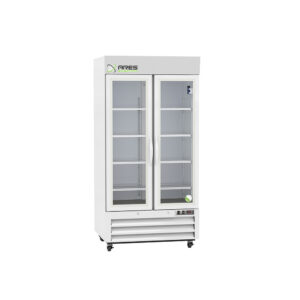
Ready to optimize your laboratory's refrigerated storage with professional-grade upright refrigerators? Explore our comprehensive selection engineered for precision temperature control, organized sample management, and regulatory compliance. From compact single-door models to large multi-door configurations, find the perfect upright refrigerator matching your specific capacity, monitoring, and application requirements. Our units incorporate advanced microprocessor controls, comprehensive alarm systems, and energy-efficient designs supporting sustainable laboratory operations while ensuring your temperature-sensitive materials remain protected under precisely controlled conditions.