
- Shop Products
- Animal/Vivarium Equipment & Supplies
- Anesthesia Systems
- Animal Transport
- Animal Watering
- Automated Cage Wash Systems
- Bedding Fill and Disposal Systems
- Bulk Trucks
- Cage Change and Transfer Stations
- Cage, Rack and Bottle Washers
- Dry Heat Sterilizers
- Euthanasia Systems
- Ferret Caging
- Large Animal Caging
- Isolators
- Marmoset Caging
- Material Handling
- Necropsy Tables and Procedure Hoods
- Procedure Lights
- Rabbit Caging
- Rodent Caging
- Steam Sterilizers
- Tree Shrew Caging
- Vivarium Dry Heat Sterilizers
- Zebrafish and Aquatics Washers
- Benchtop Instruments
- Cannabis Processing
- Clean Air & Containment
- Cold Storage
- Decontamination
- Environmental Monitoring
- Environmental Test Chambers
- cGMP
- Incubators
- Ovens
- Pathology & Mortuary Equipment
- Personal Protective Equipment
- Sterilizers and Autoclaves
- Tables, Storage and Carts
- Washers and Dryers
- X-Rays and Irradiators
- Animal/Vivarium Equipment & Supplies
- Featured
- Industries
- Manufacturers
- Animal Care Systems
- Avante Animal Health
- Baker
- Benchmark Scientific
- Caron Scientific
- Consolidated Sterilizer Systems
- Corepoint Scientific
- DeNovix
- Envisys
- Euthanex
- Flow Sciences, Inc.
- Gruenberg
- Haier
- Hettich
- KUBTEC Scientific
- Lenderking
- Metro
- Miele
- Mopec
- Mortech Manufacturing
- Ohaus
- Park Bio
- SE Lab Group Inc.
- Sentry Air Systems
- SPOT Imaging
- Steelco
- Sychem
- TOMI Environmental Solutions, Inc.
- Visron
- Resources
- About
- Contact
- Quote
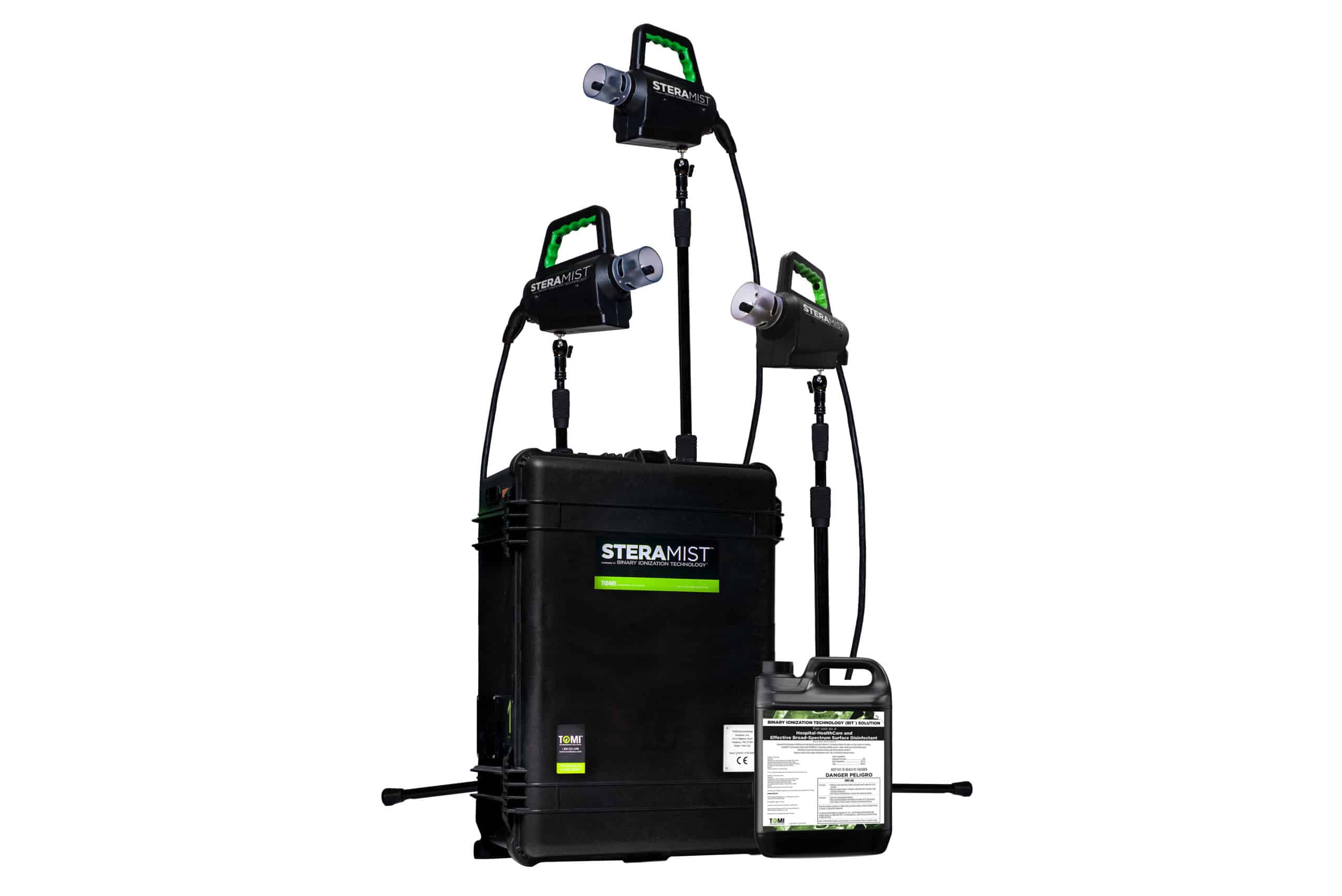
Environment Decontamination Systems

Environment Decontamination Systems for Labs, Cleanrooms & Vivariums
ARES Scientific provides advanced environment decontamination systems, commonly known as laboratory decontamination systems, cleanroom decontamination systems, or room sterilization systems, specifically designed to deliver validated, whole-space bio-decontamination.
Comprehensive Bio-Decontamination Solutions
Our systems offer complete area disinfection and support a range of critical applications, including:
- Whole-room decontamination (WHRD) for complete space reset between projects or after incidents.
- Biosafety cabinet (BSC) and isolator decontamination for enclosure-level sterilization.
- Equipment and enclosure decontamination for incubators, racks, and other complex devices.
- Area reconditioning after spills, construction, or changes in room use.
Technology: Fogging and Vaporized Disinfection
We utilize state-of-the-art fogging and vaporized disinfection platforms that reliably reach surfaces, crevices, and hard-to-access areas that manual wipe-downs cannot effectively treat. Our core technologies include:
- Vaporized hydrogen peroxide (VHP/iHP): For deep, dry bio-decontamination and sterilization cycles with validated performance.
- Dry-mist / fogging systems: Environmental room fogging sterilizer solutions that use specialized decontamination agents to achieve uniform coverage, rapid turnaround, and scalable room sterilization.
Decontamination Equipment for Regulated Environments
Environment decontamination equipment from ARES Scientific is engineered for complete bio-decontamination across the most regulated facilities, including:
- Biomedical research labs
- GMP cleanrooms and pharmaceutical production suites
- Vivariums and animal rooms
- Microbiology and virology labs
- Hospital and clinical facilities
- Core labs and contract research organizations (CROs)
We supply everything from portable, mobile decontamination units to fully integrated room decontamination platforms that interface seamlessly with your facility's HVAC and containment infrastructure.
Building Your Decontamination Strategy
At ARES Scientific, we don't just supply equipment; we help facilities evaluate and specify room and equipment decontamination systems based on critical factors such as target organisms, biosafety level, room volume, material compatibility, cycle time, documentation needs, and facility integration.
Whether you are decontaminating BSL-2/BSL-3 spaces, vivarium rooms, cleanrooms, biosafety cabinets, incubators, or surgical suites, we help develop a decontamination strategy that ensures regulatory compliance, risk reduction, and efficient room turnover between studies or production runs.
Key Applications & Industries
| Industry | Application Focus |
|---|---|
| Research & Academic Labs | Whole-room decontamination between projects, after spills, or before lab decommissioning or renovation. |
| Pharma & Biotech Cleanrooms | Routine, validated decontamination cycles in GMP suites to support sterility, quality systems, and audit readiness. |
| Vivaria & Animal Facilities | Animal facility / vivarium decontamination to control bioburden, prevent cross-contamination, and support animal welfare. |
| Microbiology & Virology Labs | Decontaminating biosafety cabinets, high-containment areas, and CO₂ incubators handling infectious agents and high-risk materials. |
| Clinical & Hospital Environments | Decontaminating procedure rooms, diagnostic labs, quarantine spaces, and high-risk treatment areas. |
| Shared Core Labs & CROs | Fast, reproducible environmental sterilization between clients or studies in multi-user and contract facilities. |
Selecting the Right Bio-Decontamination System
- Technology & chemistry: Evaluate vaporized hydrogen peroxide (VHP/iHP), UV, or dry-mist/fogging chemistries to achieve your bioburden reduction goals. Our room fogging sterilizer options are ideal for rapid, comprehensive treatment of large volumes.
- Room volume & coverage: Confirm that the system can effectively treat your largest target spaces, including complex geometries and equipment-dense rooms.
- Validation & documentation: For GMP/GLP environments, look for systems that offer cycle validation support, biological/chemical indicator compatibility, and electronic records for audits.
- Cycle time & turnaround: Compare decontamination and aeration times to ensure rooms and equipment can be quickly returned to service with minimal downtime.
- Mobility & integration: Select between a portable room decontamination system for multi-room flexibility or integrated systems that connect directly to HVAC and fixed cleanroom infrastructure.
- Material compatibility & safety: Ensure chemistries and cycles are compatible with stainless steel, plastics, elastomers, electronics, and finishes, and verify sensors, interlocks, and aeration controls for safe re-entry.
Frequently Asked Questions About Environment Decontamination Systems
1. What is an environment decontamination system?
An environment decontamination system is a dedicated platform for disinfecting or sterilizing laboratory rooms, cleanrooms, vivaria, and contained equipment using fogging, vapor, gas, or other validated chemistries. Unlike manual wipe-downs, these systems are designed to treat the entire space—including hard-to-reach areas, high surfaces, and equipment crevices—for consistent, reproducible bio-decontamination.
2. Where are environment decontamination systems typically used?
These systems are widely used in biomedical research labs, GMP pharmaceutical and biotech cleanrooms, vivaria and animal research facilities, microbiology and virology labs, hospital and clinical environments, and device or diagnostic manufacturing suites where contamination control and biosafety are critical.
3. How do vaporized hydrogen peroxide (VHP/iHP) systems work?
VHP/iHP systems convert liquid hydrogen peroxide into a controlled vapor or ionized mist that disperses throughout the treated area. The vapor contacts exposed surfaces and inactivates microorganisms, including bacteria, spores, fungi, and many viruses. After the cycle, the vapor is decomposed into oxygen and water, leaving minimal residue when used according to validated protocols.
4. What is the difference between fogging and manual disinfection?
Manual disinfection relies on staff to wipe or spray surfaces, which can miss shadowed areas, high surfaces, and tight crevices. Fogging systems generate a fine dry-mist or aerosol that fills the space and coats surfaces uniformly, improving coverage, reducing labor, and enhancing consistency for whole-room decontamination when properly validated.
5. Are environment decontamination systems safe for sensitive equipment?
Many systems are specifically designed for use around laboratory equipment, electronics, and cleanroom infrastructure. Selecting the right chemistry and cycle parameters is key. ARES Scientific helps ensure material compatibility with stainless steel, plastics, coatings, seals, and electronic devices present in your environment.
6. How often should a lab or vivarium be decontaminated?
Frequency depends on biosafety level, workload, risk profile, and regulatory requirements. Some facilities run routine decontamination on a monthly or quarterly basis, while others trigger decontamination before new studies, after contamination events, or prior to renovation and decommissioning. We can help align decontamination frequency with your institutional risk management plan.
7. Can these systems decontaminate biosafety cabinets and isolators?
Yes. Many environment decontamination platforms support enclosure-level decontamination for biosafety cabinets, isolators, pass-through chambers, incubators, and other contained equipment. Proper interfaces and cycle controls allow these volumes to be treated with validated bio-decontamination processes.
8. What kind of validation and documentation should I expect?
For regulated environments, look for systems that support installation qualification (IQ), operational qualification (OQ), and performance qualification (PQ), as well as routine monitoring with biological and chemical indicators. Electronic records and detailed cycle reports provide the documentation needed for GMP, GLP, and accreditation audits.
9. Are environment decontamination systems mobile or permanently installed?
Both are available. Mobile, cart-based systems are ideal for facilities needing to treat multiple rooms using a single unit. Permanently installed or integrated systems are well suited for dedicated cleanrooms, isolators, and high-containment facilities that require frequent, automated decontamination cycles.
10. How do I choose the right decontamination system for my facility?
Start by assessing your biosafety level, typical organisms handled, room sizes, and equipment mix. Then evaluate technology type (VHP, fogging, UV, gas), cycle times, validation needs, material compatibility, and how the system integrates with HVAC and containment. ARES Scientific can help compare options and design a tailored solution for your lab, cleanroom, or vivarium.
Related Decontamination & Contamination Control Equipment
- Decontamination Chambers – Pass-through and cabinet systems for material transfer decontamination into controlled environments
- Surface Decontamination Systems – Portable handheld units for targeted surface treatment and daily maintenance disinfection
- Biological Safety Cabinets – HEPA-filtered containment requiring routine decontamination before filter changes and certifications
- Sterilizers and Autoclaves – Steam sterilization complementing environmental decontamination for heat-stable items
- Compounding Aseptic Containment Isolators – Sterile compounding environments requiring validated decontamination protocols
- Environmental Monitoring Systems – Continuous monitoring documenting decontamination effectiveness and contamination control
- Cage Change and Transfer Stations – Controlled environment workstations for vivarium operations requiring routine decontamination
- cGMP Equipment & Solutions – Comprehensive pharmaceutical manufacturing equipment requiring validated environmental control
Request a Quote for Environment Decontamination Systems
ARES Scientific provides expert consultation and competitive pricing for whole-room environmental decontamination systems supporting research laboratories, pharmaceutical cleanrooms, animal facilities, and healthcare institutions requiring validated pathogen elimination. Our team assists with technology selection, cycle development, validation protocol design, and facility integration ensuring comprehensive contamination control.
Get started with environment decontamination solutions:
- Request a Custom Quote: Contact us with your facility requirements, room volumes, biosafety levels, and validation needs for tailored system recommendations
- Speak with Decontamination Specialists: Call 720-283-0177 ext 2 to discuss technology options, cycle parameters, and regulatory compliance requirements
- Schedule Site Assessment: Arrange facility evaluation for room characterization, equipment inventory, and integration planning
- Access Validation Support: Receive comprehensive IQ/OQ/PQ protocols, biological indicator programs, and compliance documentation assistance
- Explore Complete Portfolio: Browse our full decontamination systems catalog including environmental systems, chambers, and surface units
Whether you're establishing routine decontamination protocols for pharmaceutical cleanrooms, responding to laboratory contamination events, implementing vivarium bioexclusion programs, or replacing formaldehyde with safer alternatives, ARES Scientific delivers proven environmental decontamination technology protecting your facility operations, personnel safety, and research integrity.