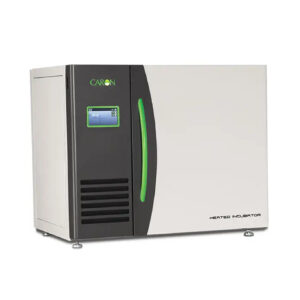
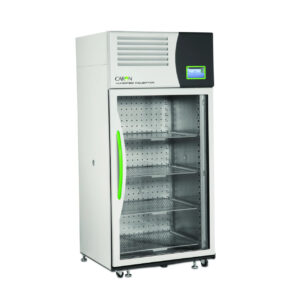
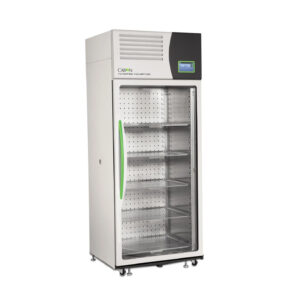
General Purpose Incubators for Laboratory & Tissue Culture Work
Reliable temperature control, uniform heating and a contamination-resistant environment are essential for many types of laboratory incubations — from bacterial plates and microbial cultures to tissue slices, enzyme reactions, and more. ARES Scientific offers a robust selection of general purpose incubators engineered for consistent temperature uniformity, flexible chamber configurations, and long-term reliability within our broader laboratory incubator portfolio.
Our general purpose incubators provide stable, uniform heating, precise temperature regulation, and solid insulation to ensure reproducible results across experiments. Their design supports a wide variety of applications including microbiology, molecular biology, enzyme kinetics, tissue incubation, and general lab storage under controlled temperature conditions.
Built with quality materials and engineered for lab reliability, these incubators feature corrosion-resistant interiors, adjustable shelving, optional humidity control, digital temperature displays, and safety alarms. Many are configurable for specialized workflows — from basic heating tasks to incubation of microbial or cell-based assays not requiring CO₂ control.
For labs that run diverse workflows — from DNA extraction to microbial culture, histology work, or incubation of reagents — a general purpose incubator provides the necessary flexibility. When paired with complementary lab tools (e.g., water baths, shakers, biological safety cabinets), these incubators become a cornerstone of efficient, reliable lab operation.
For more specialized workflows, ARES Scientific also offers CO₂ incubators for live-cell culture, heated and cooled incubators for sub-ambient or dual-range control, heated & humidified incubators for humidity-sensitive applications, mini incubators for space-limited labs, and shaking incubators for temperature-controlled workflows requiring continuous agitation.
Key Selection Criteria for General Purpose Incubators
- Temperature range & stability: Accurate, stable temperature control across the incubator’s operating range; minimal fluctuation even with repeated door openings.
- Chamber uniformity & insulation: Even heat distribution throughout the chamber to avoid hot or cold spots; reliable insulation for energy efficiency and temperature consistency.
- Interior design & durability: Corrosion-resistant interiors, adjustable shelving, and materials that withstand repeated cleaning and sterilization cycles.
- Humidity or ventilation control (if required): For certain applications, optional humidity control or gentle air circulation may improve consistency or prevent dehydration of samples.
- Safety and usability: Digital temperature controls, alarms for over/under-temperature, clear viewing windows (if applicable), and easy maintenance routines.
- Flexibility for different applications: Ability to accommodate plates, culture dishes, reagent vessels, tissue containers, or molecular assay tubes depending on experimental needs.
Recommended Use Cases for General Purpose Incubators
- Bacterial or microbial culture
- Yeast, fungal, or other microbial-based experiments
- Enzyme reactions and biochemical assays requiring controlled temperature
- Tissue incubation or histology workflows
- Pre-warming media, buffers, or reagents
- General lab processes requiring consistent temperature (e.g., sample storage, reagent preparation)
- Workflows that don’t require CO₂ control but benefit from temperature uniformity and stability
Frequently Asked Questions About General Purpose Incubators
What is a general purpose incubator?
A general purpose incubator is a laboratory device that provides a stable, controlled temperature environment for various applications including microbial culture, biochemical assays, tissue incubation, and reagent preparation. Unlike CO₂ incubators, they do not actively regulate gas composition or humidity (unless specifically equipped to do so).
When should I choose a general purpose incubator instead of a CO₂ incubator?
Choose a general purpose incubator when your work does not involve live mammalian cell culture that requires CO₂ and pH buffering. For tasks like microbial culture, enzymatic reactions, reagent warming, or non-CO₂ tissue incubation, a general purpose incubator is often more cost-effective and simpler to maintain. If your work may expand to cell culture in the future, you may instead consider a CO₂ incubator for more flexibility.
Can general purpose incubators support humidity or ventilation?
Some general purpose incubators offer optional humidity control or gentle air circulation to maintain uniform conditions, reduce sample dehydration, or support specific workflows requiring ventilation. Always verify the specifications if humidity or airflow is necessary for your application.
How do I choose the right general purpose incubator for my lab?
Consider your typical application: are you growing microbes, incubating reagents, warming solutions, or performing tissue incubation? Then match the incubator’s temperature range, chamber uniformity, shelving flexibility, and safety features to those needs. If your work may expand to cell culture in the future, you may instead consider a CO₂ incubator for more flexibility.