Rodent Anesthesia Systems
Rodent anesthesia systems are essential tools for delivering consistent, controlled inhalation anesthesia to mice and rats during surgical procedures, imaging workflows, and routine research interventions. A well-designed small animal anesthesia setup helps maintain stable anesthetic depth while supporting animal welfare and improving procedural repeatability across technicians, studies, and facilities. Whether you are supporting survival surgery, stereotaxic work, perfusions, or short-duration procedures, selecting the right rodent anesthesia system can reduce variability and streamline daily operations in the vivarium or core lab.
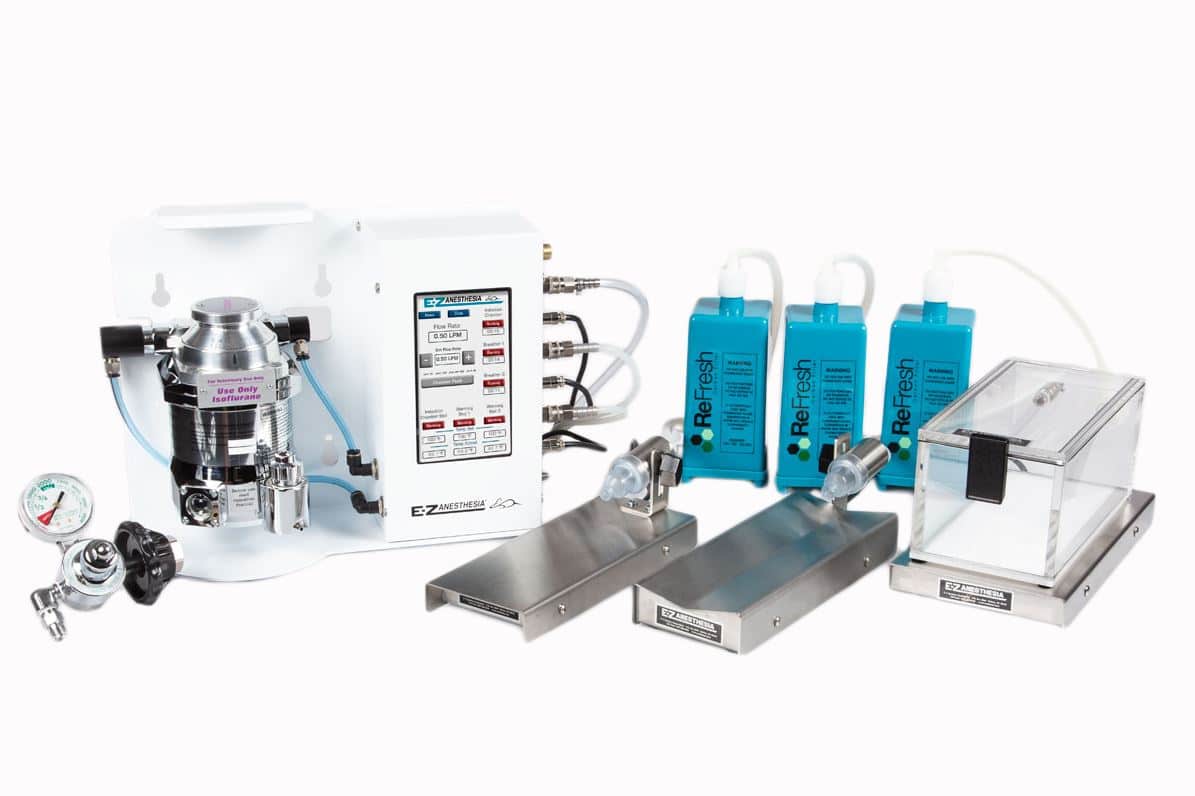
Most modern rodent anesthesia systems are built around precision vaporization of isoflurane (or other approved agents) with regulated oxygen or medical air flow, paired with induction chambers and nose cone delivery for maintenance. Many labs also integrate scavenging and charcoal filtration to reduce occupational exposure, along with heated platforms and physiological support accessories to help maintain body temperature and recovery outcomes. From single-station benchtop units to multi-position manifolds for higher throughput, rodent anesthesia systems can be configured to match your species, cage density, SOPs, and compliance requirements.
Key Selection Factors for Rodent Anesthesia Systems
- Species and case type compatibility: Confirm the system supports mouse vs. rat workflows (nose cones, induction chamber volume, tubing, connectors) and aligns with survival surgery, imaging, or brief procedures.
- Vaporizer accuracy and agent support: Prioritize precision vaporizers with clear dial settings and stable output; verify compatibility with your anesthetic agent and service/calibration expectations.
- Flow control and stability: Look for dependable flowmeters/regulators and the ability to fine-tune low-flow delivery for small animals without drift.
- Scavenging and exposure control: Select an appropriate scavenging approach (active or passive) and ensure it matches room ventilation, EHS policy, and institutional requirements.
- Throughput and expandability: Consider single vs. multi-port manifolds, quick-change fittings, and add-on positions to support increasing study volume.
- Ergonomics and workflow integration: Evaluate footprint, cart/bench mounting, easy-clean surfaces, and compatibility with heated platforms, stereotaxic frames, imaging stages, and monitoring accessories.
Frequently Asked Questions About Rodent Anesthesia Systems
What is a rodent anesthesia system used for?
A rodent anesthesia system is used to safely induce and maintain inhalation anesthesia in mice or rats for procedures such as survival surgery, terminal procedures, imaging, perfusions, and other interventions that require stable anesthetic depth and repeatable delivery.
What is included in a typical mouse or rat anesthesia setup?
Most systems include a precision vaporizer, oxygen or medical air flow control, an induction chamber, maintenance delivery (nose cone), and a scavenging solution (charcoal canister or active vacuum interface). Many labs also add heated surfaces and basic physiological monitoring accessories.
Do I need scavenging for isoflurane in a vivarium or lab?
In most facilities, scavenging is strongly recommended (and often required by EHS policy) to help reduce occupational exposure to waste anesthetic gases. Your choice of passive or active scavenging should align with room ventilation and institutional safety requirements.
Should I choose a single-station or multi-station rodent anesthesia system?
Single-station systems are typically best for lower procedure volume or specialized work. Multi-station manifolds are often preferred for higher throughput workflows, multiple surgical bays, or training environments where multiple animals may be maintained concurrently.
Can one system work for both mice and rats?
Yes, many platforms can support both species with the correct induction chamber size, appropriately sized nose cones, and adjustable flow control. Confirm the available accessories and ensure your SOPs specify species-appropriate settings.
How do I maintain and calibrate a rodent anesthesia system?
Maintenance typically involves routine leak checks, replacing consumables (filters, charcoal canisters, tubing), and periodic vaporizer service/calibration per manufacturer guidance and institutional policy. A consistent maintenance schedule helps protect accuracy, safety, and uptime.