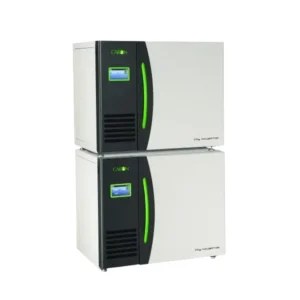
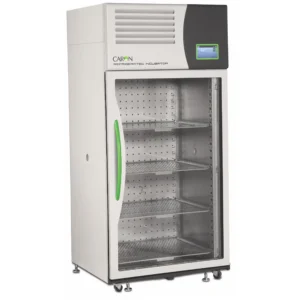
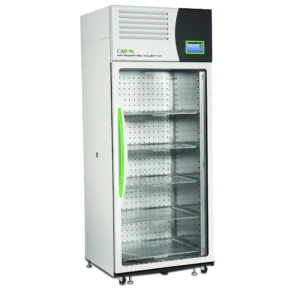
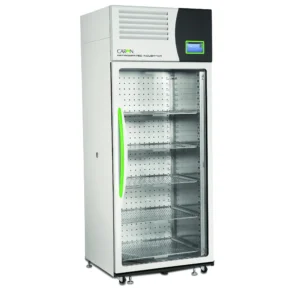
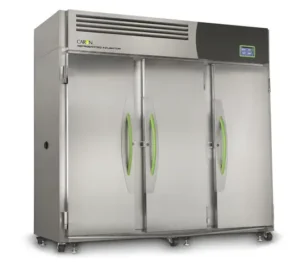
Heated & Cooled Laboratory Incubators for Flexible Temperature Control
While standard laboratory incubators are designed primarily for heating, many advanced biological and chemical workflows require precise regulation both above and below ambient room temperature. ARES Scientific offers a specialized line of heated & cooled incubators (also known as refrigerated incubators) engineered to provide active cooling and controlled heating—offering the thermal flexibility required for complex research, quality control, and BOD testing.
Our heated & cooled incubators feature high-stability temperature control across a broad range, typically allowing for setpoints from -10°C to +60°C. This dual-function capability is essential for applications such as cold-temperature enzyme kinetics, the storage of temperature-sensitive reagents, and delicate microbial or tissue incubations. For workflows requiring even more extreme environmental control, including humidity and light regulation, explore our high-performance environmental test chambers.
Whether utilizing traditional compressor-based cooling or vibration-free Peltier technology, these units ensure a stable, uniform environment throughout the chamber. This makes them ideal for gel-based assays and protocols requiring rapid temperature shifts. If your lab also requires rapid thermal transfer in a liquid medium, consider our range of digital water baths.
For laboratories running diverse workflows—from protein crystallization to reagent conditioning—a refrigerated incubator provides versatility that static general purpose incubators cannot match. By consolidating heating and cooling into a single footprint, these units complement your existing cold storage infrastructure, providing a controlled workspace rather than just a storage environment.
Key Selection Criteria for Refrigerated Incubators
- Temperature Range & Pull-down Speed: Evaluate how quickly the unit can shift between thermal setpoints, especially for protocols involving heat-shock or seasonal cycling simulations.
- Cooling Technology: Choose between powerful compressor-based systems for high-load applications or Peltier-cooled models for energy efficiency and vibration-sensitive samples such as those requiring precision analytical balances nearby.
- Uniformity & Stability: Advanced airflow systems ensure consistent conditions across all shelves, preventing "cold spots" that can skew results in temperature-sensitive assays.
- Safety & Monitoring: Integrated alarms for over/under-temperature protection and connectivity for laboratory monitoring systems documenting compliance and performance.
- Chamber Configuration: Adjustable, corrosion-resistant shelving to accommodate everything from orbital shakers to large BOD bottle loads.
Recommended Use Cases for Heated & Cooled Incubators
- BOD (Biochemical Oxygen Demand) Testing: Maintaining the standard 20°C environment required for wastewater analysis and environmental monitoring.
- Enzyme Kinetics: Conducting assays at sub-ambient temperatures to slow reaction rates for precise measurement using spectrophotometers and analytical instruments.
- Plant & Drosophila Research: Simulating diurnal temperature cycles for botanical or entomological studies requiring controlled environmental conditions.
- Reagent Stabilization: Safe storage of volatile chemicals or temperature-labile reagents prior to centrifugation or analysis.
- Crystallization Studies: Maintaining steady, vibration-free low temperatures for protein crystal growth and structural biology applications.
- Microbiology: Culturing psychrophilic organisms or performing fermentation at specific cool temperatures below standard incubation ranges.
- Sample Conditioning: Pre-incubating samples at specific temperatures before processing in microplate readers or other analytical equipment.
- Pharmaceutical Stability Testing: Accelerated and long-term stability studies requiring precise temperature control for cGMP compliance.
Frequently Asked Questions About Heated & Cooled Incubators
What is the difference between a heated & cooled incubator and a lab refrigerator?
A laboratory refrigerator is designed for storage and lacks the precise heating elements and sophisticated PID controllers found in an incubator. A heated & cooled incubator provides active thermal regulation in both directions, allowing you to maintain a precise temperature (e.g., exactly 20.0°C) regardless of external room conditions. Refrigerators typically maintain temperatures between 2-8°C for storage, while heated & cooled incubators offer programmable setpoints across a much broader range (-10°C to +60°C typical) with superior uniformity and stability.
Are these units suitable for BOD testing?
Yes. Our refrigerated incubators are ideal for BOD applications, as they reliably maintain the 20°C setpoint required by environmental testing standards. For high-volume labs, we recommend pairing these with our automated glassware washers to maintain a high-throughput testing cycle.
Do you offer Peltier-cooled models?
We carry both compressor-based and Peltier-cooled units. Peltier models are excellent for labs looking for energy efficiency and a vibration-free environment, which is often required when using sensitive analytical balances nearby or conducting vibration-sensitive protocols like crystallization studies.
How do I choose the right size?
Assess the volume of your samples and the footprint of any internal equipment, such as platform shakers or orbital rotators. For larger volumes, a floor-standing model is best; for personal use or limited space, our mini incubators may offer the cooling capabilities you need in a benchtop format.
Can heated & cooled incubators be used for cell culture?
While standard CO₂ incubators are optimized for mammalian cell culture at 37°C with CO₂ regulation, heated & cooled incubators excel at non-standard temperature cell culture applications, cold-adapted cell lines, and temperature-shift experiments. For traditional mammalian cell culture requiring CO₂ control, we recommend dedicated CO₂ incubation systems.
What temperature ranges are available?
Most heated & cooled incubators offer temperature ranges from ambient -15°C to +60°C or +70°C. Some models provide extended low-temperature capability reaching -10°C or colder, while high-temperature models can reach up to +100°C. For applications requiring temperatures below -20°C, consider our laboratory freezers or ultra-low temperature freezers.
How do refrigerated incubators maintain temperature uniformity?
Advanced forced-air circulation systems ensure uniform temperature distribution throughout the chamber, preventing hot or cold spots that can affect sample integrity. Models with programmable ramp rates and multi-point temperature sensors provide additional control and monitoring capabilities. Pair with environmental monitoring systems for continuous documentation and compliance.
Are heated & cooled incubators suitable for pharmaceutical applications?
Absolutely. Many models meet cGMP requirements for pharmaceutical stability testing, including IQ/OQ/PQ qualification, 21 CFR Part 11 compliant data logging, and validation support. These features make them ideal for pharmaceutical manufacturing and quality control applications.
Related Incubator Solutions & Laboratory Equipment
- Laboratory Incubators – Complete portfolio of temperature-controlled incubation solutions for diverse research applications
- CO₂ Incubators – Mammalian cell culture systems with CO₂ and humidity control for 37°C applications
- General Purpose Incubators – Heating-only units for standard bacterial culture and general warming applications
- Shaking Incubators – Combined temperature control and orbital shaking for suspension culture and microbial applications
- Mini Incubators – Compact benchtop units with heating and cooling in space-saving configurations
- Environmental Test Chambers – Advanced chambers with temperature, humidity, and light control for stability testing and environmental simulation
- Cold Storage Equipment – Refrigerators, freezers, and ultra-low temperature systems for sample storage and preservation
- Laboratory Refrigerators – Storage-focused cooling systems for reagents, media, and samples at 2-8°C
- Laboratory Freezers – -20°C to -30°C storage solutions for long-term sample preservation
- Laboratory Ovens – Heating-only chambers for drying, curing, and high-temperature applications
- Laboratory Shakers – Orbital, platform, and rocking shakers integrating with incubator chambers
- Water Baths – Liquid-medium temperature control for rapid thermal transfer applications
- Environmental Monitoring Systems – Temperature, humidity, and alarm systems documenting incubator performance and compliance
- cGMP Equipment & Solutions – Validated systems supporting pharmaceutical development and regulatory compliance
Request a Quote for Heated & Cooled Incubators
ARES Scientific provides expert consultation and competitive pricing for heated & cooled incubators supporting research laboratories, environmental testing facilities, pharmaceutical development, quality control operations, and testing laboratories requiring precise bi-directional temperature control. Our team assists with capacity planning, technology selection (Peltier vs. compressor cooling), workflow integration, and equipment validation ensuring successful implementation.
Get started with refrigerated incubator solutions:
- Request a Custom Quote: Contact us with your temperature requirements, capacity needs, and application details for tailored system recommendations
- Speak with Temperature Control Specialists: Call 720-283-0177 ext 2 to discuss cooling technology options, uniformity specifications, and monitoring capabilities
- Schedule Equipment Demonstrations: Arrange on-site or facility demonstrations showcasing temperature control, pull-down speed, and programming features
- Access Validation Support: Receive IQ/OQ/PQ protocols, temperature mapping services, and compliance documentation assistance for regulated applications
- Explore Complete Portfolio: Browse our full incubator catalog including refrigerated systems, CO₂ units, shaking incubators, and general purpose models
Whether you're conducting BOD testing, performing enzyme kinetics studies at controlled low temperatures, establishing pharmaceutical stability programs, running temperature-shift cell culture experiments, or maintaining psychrophilic microbial cultures, ARES Scientific delivers proven heated & cooled incubation technology protecting your temperature-sensitive samples, research integrity, and regulatory compliance.