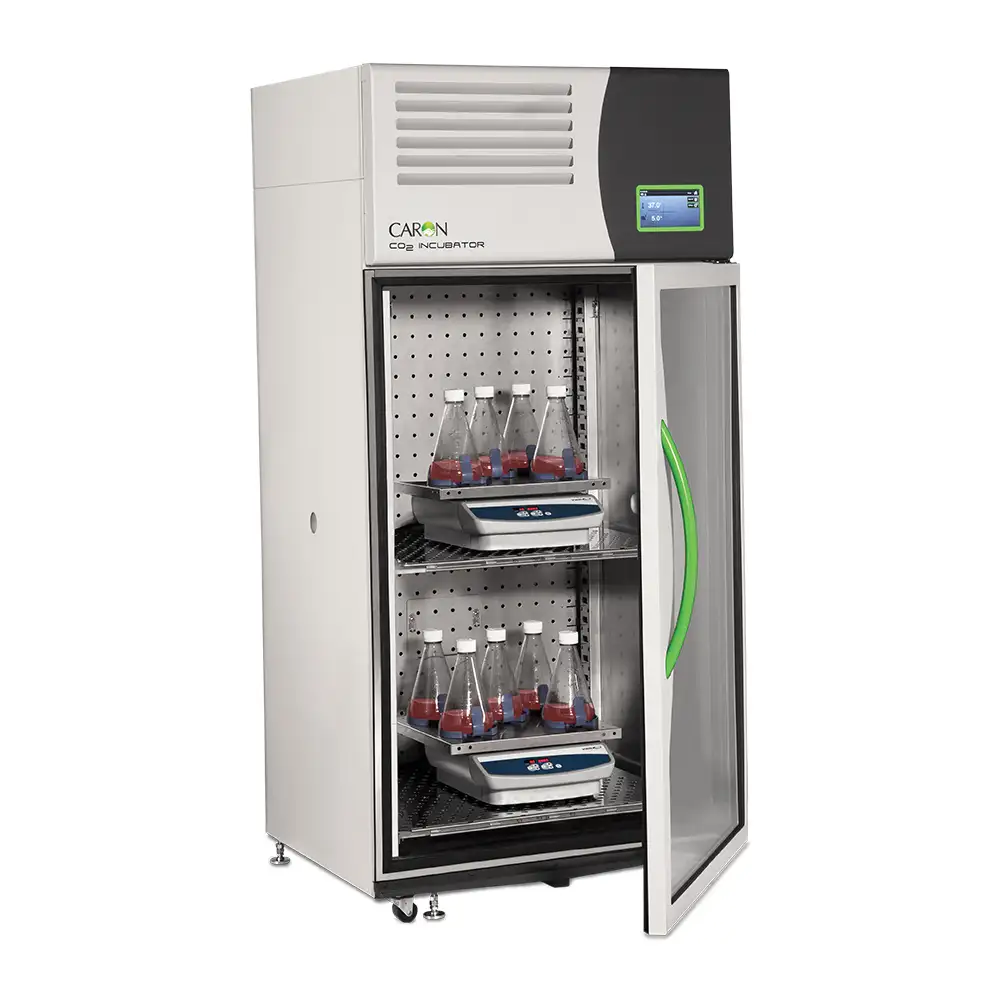
Shaking Incubators for Microbiology, Biochemistry & Tissue Applications
Many biological protocols require constant mixing or gentle agitation while maintaining stable temperature and atmospheric conditions. ARES Scientific’s line of shaking incubators delivers reliable temperature control combined with gentle or vigorous shaking — ideal for microbial cultures, bacterial culture growth, cell suspensions, tissue washes, and antibody production. These units are often the first step in a workflow that follows with laboratory centrifugation for sample harvesting.
Our shaking incubators offer adjustable temperature settings, precise digital controls, and variable shaking speeds with options for orbital or platform motion. Built for consistent performance, they ensure uniform mixing, oxygenation, and temperature — improving reproducibility and growth rates for microbial, cell-based, or biochemical workflows. If your research involves adherent cells rather than suspensions, explore our CO₂ incubators for specialized atmospheric control.
Durable construction, corrosion-resistant interiors, robust sealing, and safety features (over-temperature protection, secure door locking) make our shaking incubators suitable for daily lab use. Their design supports flasks, culture tubes, or multiwell plates — enabling flexible use in labs focused on microbiology, recombinant protein expression, or tissue culture maintenance. To ensure the purity of your cultures, all media preparation should be conducted within our biological safety cabinets.
For labs running workflows such as microbial expansion, bacterial or yeast fermentation, cell suspension growth, antibody or protein expression, or enzymatic assays needing constant mixing — a shaking incubator provides unsurpassed convenience, consistency, and scalability. After incubation, sensitive protein products can be safely stored in our laboratory refrigerators.
Key Selection Criteria for Shaking Incubators
- Temperature Control & Stability: Uniform, accurate temperature regulation across the chamber—even during high-speed shaking cycles.
- Shaking Speed & Motion Type: Adjustable shaking speed (RPM) and orbital motion options for varying oxygenation requirements.
- Load Capacity & Vessel Compatibility: Ability to secure flasks, tubes, or multiwell plates; adjustable shelves and universal platforms to hold different vessel types.
- Construction & Sealing: Corrosion-resistant stainless steel interiors, airtight doors, and vibration-dampening mounts to minimize impact on other analytical balances or sensitive equipment nearby.
- Digital Controls & Safety: Reliable user interface with alarm systems for over-temperature, speed imbalance, and door-open alerts.
Recommended Use Cases for Shaking Incubators
- Microbial Culture: Optimal growth for bacteria, yeast, and fungi requiring high oxygen transfer.
- Protein Expression: Recombinant protein expression in microbes or suspension cell lines.
- Cell Suspension Culture: Maintenance of hybridomas, lymphocytes, and other non-adherent cells.
- Fermentation: Small-scale yeast fermentation and metabolite production studies.
- Biochemical Assays: Enzyme kinetics and assays requiring simultaneous mixing and thermal incubation.
- Sample Conditioning: Preparing starter cultures for downstream scale-up or ultracentrifugation.
Frequently Asked Questions About Shaking Incubators
What is a shaking incubator?
A shaking incubator (also known as an environmental shaker) is a lab device combining temperature-controlled incubation with mechanical agitation (shaking or orbital motion). It is specifically designed to support aerobic microbial growth and suspension-based workflows.
Why use a shaking incubator instead of static incubation?
Static incubation can limit oxygenation and cause nutrient gradients. A shaking incubator ensures constant aeration and nutrient distribution, resulting in significantly higher growth rates and more homogeneous cultures. For workflows not requiring agitation, a general purpose incubator may be more suitable.
How do I choose the right shaking incubator for my lab?
Consider the volume of your cultures, required RPM range, and whether you need a benchtop unit or a floor-standing model for high-throughput flask capacity. If you are working with heat-sensitive proteins post-incubation, ensure you have adequate cold storage solutions ready for sample transfer.