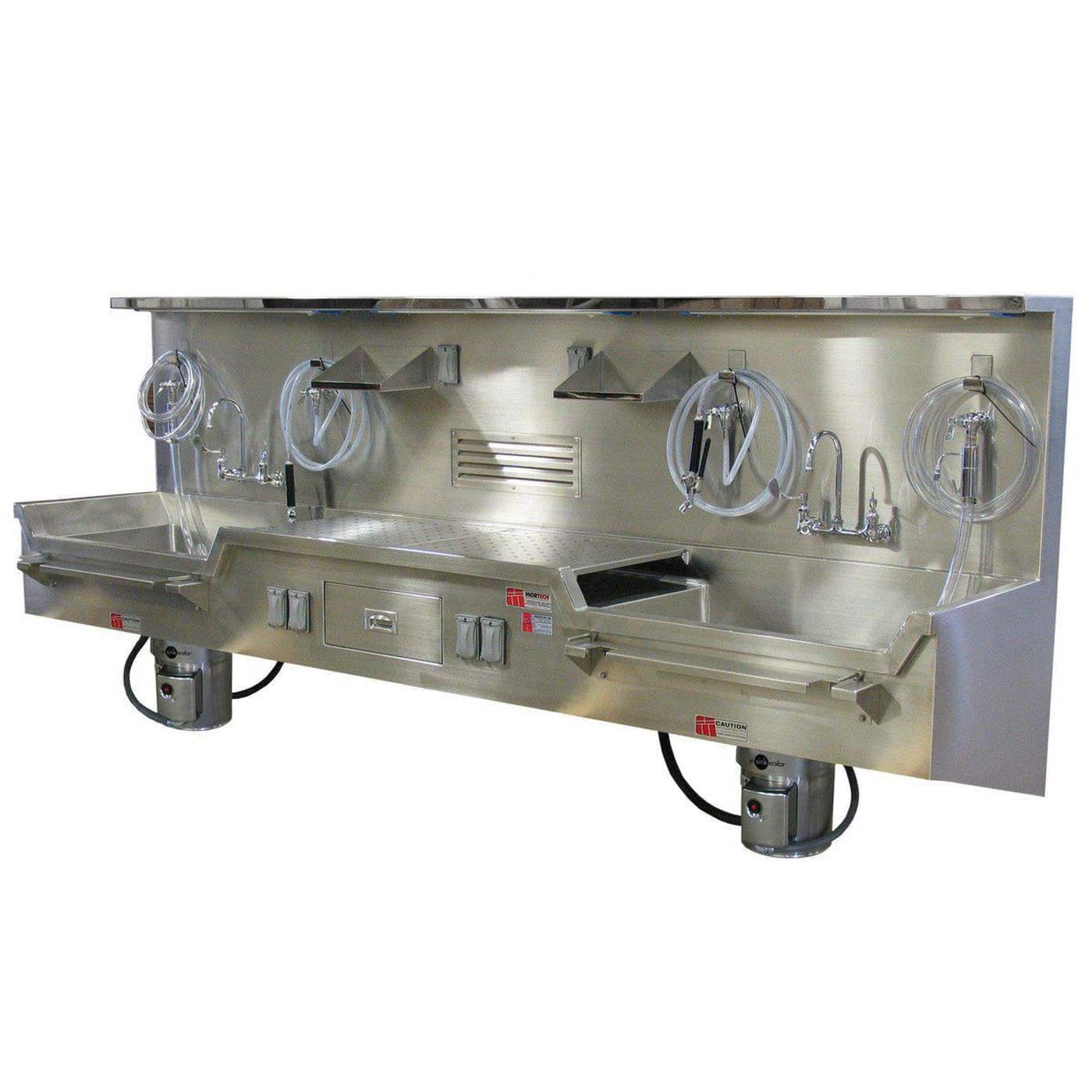
Professional Autopsy and Embalming Sinks for Pathology and Mortuary Facilities
Autopsy and embalming sinks are specialized fixtures designed to meet the unique demands of pathology laboratories, medical examiners' offices, funeral homes, and mortuary facilities. These purpose-built sinks provide critical functionality for body preparation, tissue examination, instrument cleaning, and fluid management during postmortem procedures. Unlike standard commercial sinks, autopsy and embalming sinks feature heavy-gauge stainless steel construction, specialized drainage systems, integrated spray capabilities, and ergonomic designs that support both forensic pathology workflows and embalming preparation procedures.
ARES Scientific offers a comprehensive selection of autopsy sinks and embalming sinks engineered to meet the rigorous standards of pathology and mortuary equipment. Our portfolio includes wall-mounted autopsy sinks, freestanding embalming stations, center-approach autopsy sinks for dual-sided work, and specialized necropsy sinks for veterinary and research applications. Each unit is designed with infection control, durability, and workflow efficiency in mind, supporting facilities from high-volume medical examiner offices to small funeral home preparation rooms.
Common Applications and Use Cases
Autopsy and embalming sinks serve essential functions across multiple facility types and procedures:
- Forensic autopsy procedures: Body washing, organ examination, evidence collection, and instrument rinsing in medical examiner and coroner facilities
- Clinical autopsy workflows: Hospital pathology departments conducting postmortem examinations for clinical correlation and quality assurance
- Embalming preparation: Arterial embalming, cavity treatment, body washing, and cosmetic preparation in funeral homes and mortuary facilities
- Anatomical dissection: Medical school gross anatomy laboratories and donated body programs requiring specialized washing and preparation stations
- Veterinary necropsy: Large animal pathology, diagnostic necropsy services, and veterinary medical education facilities
- Research necropsy: Biomedical research institutions conducting animal studies requiring dedicated necropsy and tissue processing areas
- Instrument and equipment cleaning: Decontamination and cleaning of autopsy instruments, dissection tables, and preparation tools between cases
- Personal protective equipment decontamination: Washing and rinsing of protective gear, aprons, and gloves after postmortem procedures
- Facility sanitation: General cleaning of autopsy suites, preparation rooms, and morgue areas
Types of Autopsy and Embalming Sinks
Selecting the appropriate sink configuration depends on facility layout, procedure types, volume, and workflow requirements. Understanding the distinctions between sink types helps optimize both functionality and space utilization.
Wall-Mounted Autopsy Sinks
Wall-mounted autopsy sinks attach directly to facility walls and are ideal for space-constrained autopsy suites or as auxiliary washing stations. These compact units typically feature deep basins with integrated backsplashes, multiple spray heads, and instrument hanging rails. Wall-mounted configurations work well in facilities where floor space is dedicated to autopsy tables and autopsy carts, providing convenient access for hand washing, instrument rinsing, and specimen preparation without occupying valuable floor area.
Center-Approach Autopsy Sinks
Center-approach autopsy sinks allow access from multiple sides, supporting collaborative procedures and high-volume workflows. These freestanding units typically feature large-capacity basins, dual spray systems, and work surfaces on multiple sides. The Mopec CC300 Center Approach Autopsy Sink exemplifies this design, providing efficient access for multiple personnel during complex forensic examinations or teaching demonstrations.
Embalming Sinks and Preparation Stations
Embalming sinks are specifically designed for funeral home preparation rooms, featuring configurations that accommodate embalming equipment, chemical storage, and body positioning needs. These stations often include integrated cabinets, multiple compartments for instruments and supplies, and specialized drainage systems designed for embalming fluids. The Mopec CF Series Embalming Sinks offers various sizes and configurations to match different preparation room layouts and caseload volumes.
Necropsy Sinks for Veterinary and Research Applications
Veterinary necropsy sinks accommodate larger specimens and feature reinforced construction to handle the demands of large animal pathology. These specialized units often include adjustable height features, heavy-duty drainage systems, and larger basin dimensions. Facilities conducting animal research may pair necropsy sinks with specialized necropsy tables and procedure hoods to create comprehensive examination stations.
Embalming Carts and Mobile Stations
For facilities requiring flexibility or serving multiple locations, embalming carts with integrated washing capabilities provide mobility while maintaining essential functionality. These mobile units are particularly valuable for removal services, multiple preparation room facilities, or locations with space constraints.
How to Choose the Right Autopsy or Embalming Sink
Selecting the optimal sink configuration requires careful consideration of multiple factors specific to your facility's needs, procedures, and constraints:
- Facility type and procedures: Medical examiner offices require different configurations than funeral homes; forensic autopsy demands differ from embalming preparation needs
- Case volume and workflow: High-volume facilities benefit from larger basins, multiple spray heads, and center-approach configurations that support multiple personnel
- Available space and layout: Wall-mounted units conserve floor space in compact autopsy suites; freestanding sinks work better in larger preparation rooms with flexible layouts
- Plumbing infrastructure: Existing drain locations, water supply positions, and facility plumbing capacity may dictate sink placement and configuration options
- Specimen size requirements: Large animal necropsy requires deeper, wider basins than human autopsy; consider maximum specimen dimensions you'll routinely handle
- Drainage and trap requirements: Facilities handling biological materials need appropriate trap configurations and may require specialized plumbing to meet local codes
- Spray and faucet features: Consider needs for multiple spray heads, pull-out hoses, foot-operated controls, and temperature-mixing capabilities
- Work surface integration: Some procedures benefit from integrated work surfaces, instrument trays, or specimen staging areas adjacent to sink basins
- Storage and organization: Evaluate needs for integrated cabinets, chemical storage, instrument holders, and accessory mounting capabilities
- Budget and total cost of ownership: Balance initial equipment costs against long-term durability, maintenance requirements, and replacement cycles
- Compliance requirements: Ensure selected equipment meets applicable local health department, OSHA, and facility accreditation standards
- Future facility expansion: Consider whether mobile or modular configurations provide flexibility for changing facility needs
Key Features to Compare
When evaluating autopsy and embalming sinks, focus on features that directly impact workflow efficiency, infection control, durability, and user comfort:
- Basin depth and capacity: Deeper basins (10-14 inches) contain splashing better and accommodate larger specimens; consider basin volume relative to your typical procedures
- Stainless steel gauge and finish: 14-gauge or heavier stainless steel provides superior durability; brushed or satin finishes resist staining and simplify cleaning compared to polished surfaces
- Integrated backsplash and coved corners: Seamless backsplashes prevent water infiltration into walls; coved corners eliminate hard-to-clean joints where contamination can harbor
- Multiple spray head configurations: Pull-out spray hoses, wall-mounted spray heads, and adjustable spray patterns provide flexibility for different washing and rinsing tasks
- Foot-operated or hands-free controls: Foot pedals or sensor-activated faucets maintain sterile technique and reduce cross-contamination during procedures
- Drain size and placement: Large-diameter drains (3-4 inches) prevent clogging from tissue debris; central drain placement supports efficient water flow from all basin areas
- Removable trap and strainer systems: Easy-access traps simplify routine cleaning and maintenance; removable strainers capture debris before it enters drainage systems
- Integrated work surfaces and shelving: Adjacent stainless steel work surfaces provide staging areas for instruments, specimens, and supplies without requiring separate furniture
- Instrument hanging systems: Built-in rails, hooks, or magnetic strips keep frequently used tools accessible and organized during procedures
- Chemical-resistant construction: Stainless steel resists corrosion from embalming chemicals, disinfectants, and biological materials far better than other materials
- Ergonomic height and accessibility: Appropriate working height reduces back strain during extended procedures; consider whether adjustable height features benefit your workflow
- Modular and expandable designs: Some systems allow addition of accessories, extension surfaces, or integration with grossing stations as needs evolve
Maintenance and Best Practices
Proper maintenance of autopsy and embalming sinks ensures longevity, maintains infection control standards, and prevents costly repairs. Implement these practices to optimize performance and compliance:
- Daily cleaning protocols: Rinse sinks thoroughly after each use; clean with appropriate disinfectants at end of day; remove all tissue debris from basins and traps
- Weekly deep cleaning: Remove and clean trap assemblies; inspect and clean spray heads for mineral deposits; wipe down all surfaces including backsplashes and adjacent work areas
- Drain maintenance: Flush drains regularly with enzymatic cleaners designed for biological material; avoid chemical drain cleaners that may corrode stainless steel or damage plumbing
- Spray head inspection: Check for mineral buildup, reduced water pressure, or leaking connections; descale spray heads monthly in hard water areas
- Seal and caulk inspection: Inspect caulking around backsplashes and mounting points quarterly; replace deteriorated seals to prevent water damage to walls and floors
- Stainless steel care: Use stainless steel cleaners and polish periodically to maintain appearance; avoid abrasive scrubbers that can scratch surfaces and create harbors for bacteria
- Foot pedal maintenance: Clean and lubricate foot-operated controls quarterly; replace worn pedals or sticking mechanisms promptly to maintain hands-free operation
- Documentation and logs: Maintain cleaning logs to demonstrate compliance with facility protocols; document any repairs or replacements for equipment lifecycle tracking
- Staff training: Ensure all users understand proper cleaning procedures, appropriate disinfectants, and maintenance requirements for your specific equipment
- Preventive inspection: Schedule annual professional inspection of plumbing connections, mounting integrity, and overall equipment condition
Integrating Sinks into Complete Autopsy and Preparation Suites
Autopsy and embalming sinks function as part of comprehensive facility systems. Consider how sinks integrate with other essential equipment to create efficient, compliant workflows.
Most facilities pair sinks with complementary equipment including autopsy tables for primary examination procedures, pathology grossing stations for specimen processing, and cadaver carriers for body transport. Facilities managing high volumes often require cadaver refrigeration systems and organized cadaver storage racks to maintain body integrity between procedures.
Modern pathology suites increasingly incorporate digital imaging systems for documentation, and many facilities reference the evolution of pathology from microscopes to digital platforms when planning suite upgrades. For facilities handling both human and animal specimens, reviewing guidance on essential features for large animal necropsy tables helps ensure comprehensive facility planning.
Frequently Asked Questions
What is the difference between an autopsy sink and an embalming sink?
Autopsy sinks are designed primarily for forensic and clinical pathology procedures, emphasizing large basin capacity, multiple spray capabilities, and features that support body washing, organ examination, and instrument cleaning during postmortem examinations. Embalming sinks are configured for funeral home preparation rooms, often incorporating chemical storage, equipment positioning features, and drainage systems optimized for embalming fluids. While both are constructed from heavy-gauge stainless steel and share similar cleaning and sanitation requirements, embalming sinks typically include more integrated storage and staging areas for embalming equipment and supplies. Many facilities in medical examiner offices use autopsy-configured sinks, while funeral homes select embalming-specific designs, though the terms are sometimes used interchangeably for general-purpose mortuary sinks.
Can autopsy sinks be used for veterinary necropsy procedures?
Yes, autopsy sinks can be used for veterinary necropsy, though facilities conducting large animal pathology may require sinks with larger basin dimensions, reinforced construction, and higher weight capacities than standard human autopsy sinks. Small animal necropsy (companion animals, laboratory animals) works well with standard autopsy sink configurations. Large animal facilities (livestock, equine, exotic species) should consider sinks specifically designed for veterinary applications with basin depths of 12-14 inches, wider dimensions to accommodate larger specimens, and reinforced mounting to handle the additional weight. Many veterinary pathology facilities pair specialized necropsy sinks with dedicated necropsy tables and ventilation hoods to create complete examination stations that manage odor control and aerosol containment during animal postmortem procedures.
What maintenance is required for autopsy and embalming sink drainage systems?
Autopsy and embalming sink drains require regular attention to prevent clogs from tissue debris, hair, and biological materials. Remove and clean trap assemblies weekly, checking for accumulated debris and ensuring proper reassembly. Flush drains regularly with enzymatic cleaners specifically designed for biological material breakdown—avoid chemical drain cleaners that can corrode stainless steel or damage downstream plumbing. Large-diameter drains (3-4 inches) with properly sized traps minimize clogging, but facilities should still inspect strainers daily and remove any collected material. Monthly deep flushing with hot water helps prevent biofilm buildup inside drain lines. Some facilities install larger-capacity grease traps or biological material separators in drain lines to capture debris before it enters main facility plumbing. Facilities processing high volumes should schedule annual professional drain inspection and cleaning. Proper maintenance documentation supports facility accreditation and demonstrates compliance with infection control standards.
Do autopsy sinks require special plumbing or drainage configurations?
Autopsy and embalming sinks often require plumbing configurations that differ from standard commercial sinks due to the nature of materials being handled. Most jurisdictions require minimum 3-inch drain lines to handle tissue debris and prevent clogs, with some codes mandating 4-inch drains for high-volume facilities. Trap configurations must prevent sewer gas backup while remaining accessible for regular cleaning—many facilities use oversized P-traps or specialized biological material traps. Local health departments may require air gaps, backflow preventers, or indirect drainage connections to protect municipal water supplies. Water supply lines should provide adequate volume and pressure for multiple spray heads operating simultaneously—consider 3/4-inch supply lines rather than standard 1/2-inch residential sizing. Some facilities install mixing valves to provide temperature-controlled water without requiring users to manually adjust hot and cold supplies during procedures. Consult with experienced plumbing contractors familiar with mortuary facility codes during planning phases, as requirements vary by jurisdiction and facility type. ARES Scientific can provide technical specifications and reference drawings to support facility planning and contractor coordination.
Can autopsy sinks be installed in facilities that were not originally designed as morgues?
Yes, autopsy sinks can be retrofitted into facilities not originally designed for mortuary use, though several infrastructure considerations affect installation feasibility and cost. Adequate floor drainage must exist or be installed to handle water volume and potential spills—many codes require floor drains with minimum capacity specifications in autopsy and preparation areas. Plumbing infrastructure must support large-diameter waste lines (3-4 inches) and sufficient water supply capacity. Walls must have appropriate structural support for wall-mounted sinks or meet moisture-resistance requirements if freestanding sinks are positioned against them. Electrical supply for any integrated equipment, hot water systems, or auxiliary features must be properly sized and positioned. HVAC systems should provide adequate air changes per hour (many codes require 12-20 ACH for autopsy suites) and negative pressure relative to adjacent areas. Facilities converting spaces for autopsy or preparation use should consult local health departments early in planning, as requirements for wastewater handling, ventilation, and infection control vary significantly by jurisdiction. ARES Scientific works with facilities on retrofit projects regularly and can provide guidance on equipment selection that optimizes functionality within existing infrastructure constraints.
What are the typical dimensions and clearance requirements for autopsy sinks?
Standard autopsy sink basins range from 24-36 inches wide, 20-30 inches deep (front to back), and 10-14 inches in basin depth, though dimensions vary by model and intended use. Wall-mounted sinks typically project 24-30 inches from the wall and require mounting on walls with adequate structural support—many units weigh 100-200 pounds when filled. Freestanding and center-approach sinks occupy floor space ranging from 4-8 feet in length and 2.5-4 feet in width depending on configuration. Plan for adequate clearance around sinks—most ergonomic guidelines recommend 36-48 inches of clear workspace in front of primary access sides. If sinks are positioned adjacent to autopsy tables, ensure sufficient space for personnel movement between stations (minimum 42-48 inches in main traffic paths). Overhead clearance should account for spray head operation and any storage or equipment mounted above sinks. For facilities planning new construction or major renovations, providing equipment specifications to architects early in the design process ensures adequate space allocation and proper infrastructure placement. ARES Scientific provides detailed dimensional drawings and installation requirements for all sink models to support facility planning and contractor coordination.
Are there specific infection control standards that apply to autopsy and embalming sinks?
While no single universal standard governs autopsy sink design, multiple agencies and accreditation bodies establish requirements that affect sink selection and use. OSHA Bloodborne Pathogens Standard (29 CFR 1910.1030) requires appropriate hand washing facilities and decontamination capabilities in areas where exposure to blood and other potentially infectious materials occurs. CDC guidelines for safe handling of human remains emphasize appropriate decontamination and cleaning procedures. The College of American Pathologists (CAP) laboratory accreditation checklist includes requirements for autopsy suite facilities and equipment. Many state and local health departments have specific codes governing mortuary facility design, drainage, and sanitation. Funeral service regulatory boards in most states establish standards for preparation room equipment and safety. While these standards rarely mandate specific sink models or configurations, they collectively establish functional requirements that inform appropriate equipment selection—stainless steel construction, adequate capacity, appropriate drainage, and cleanability are consistent themes across regulatory frameworks. Facilities pursuing accreditation or licensure should review applicable standards early in equipment selection to ensure compliance. ARES Scientific equipment meets or exceeds typical requirements and can provide documentation to support facility compliance efforts.
Related Pathology and Mortuary Equipment
Autopsy and embalming sinks work in conjunction with other essential pathology and mortuary equipment. Explore these related categories to create complete, efficient facility solutions:
Request a Quote for Autopsy and Embalming Sinks
ARES Scientific provides expert guidance on selecting autopsy sinks and embalming sinks that meet your facility's specific requirements, workflow needs, and budget constraints. Our team understands the unique demands of pathology laboratories, medical examiner offices, funeral homes, and veterinary facilities.
Whether you're planning a new facility, renovating existing spaces, or replacing aging equipment, we can help you select the optimal configuration and provide detailed specifications for facility planning. Our autopsy and embalming sink portfolio includes solutions from trusted manufacturers with proven performance in demanding mortuary applications.
Contact ARES Scientific to discuss your autopsy sink or embalming sink requirements:
Our pathology equipment specialists can provide product recommendations, dimensional drawings, installation requirements, and budget estimates to support your facility planning process. We work with architects, facility planners, and procurement teams to ensure equipment selections meet both functional requirements and project timelines.
Explore our related resources on pathology facility planning: