

Other Autopsy Carts Products


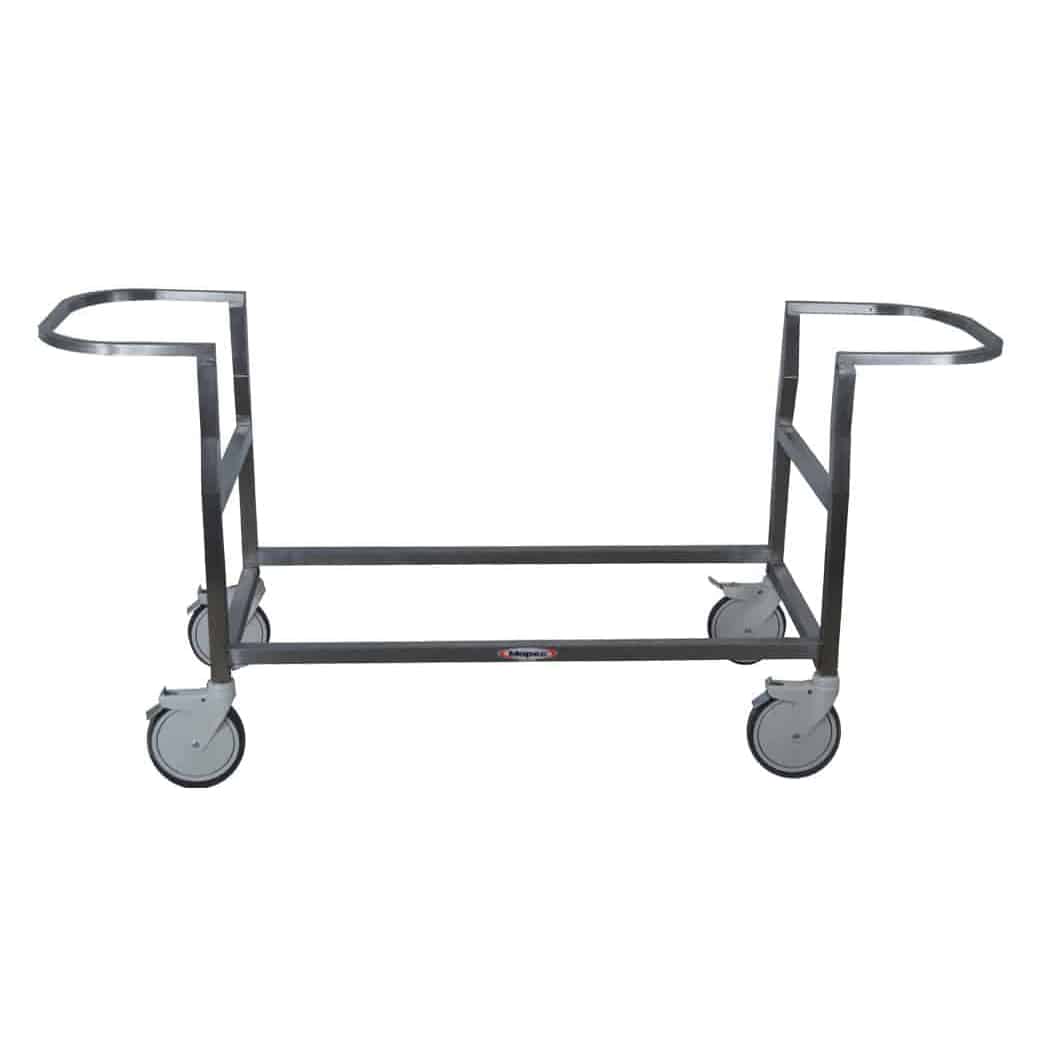
Mopec DD Series Body Tray Saddle Autopsy Cart
Quote Add to Quote This product has multiple variants. The options may be chosen on the product page

Autopsy carts are essential workflow equipment in any morgue, forensic pathology suite, or hospital pathology department, providing the stable, mobile platform that supports safe and efficient body transfer, positioning, and examination. ARES Scientific sources autopsy carts from Mopec, a recognized manufacturer of mortuary and pathology equipment, offering a range of configurations — from standard fixed-top carts to C-arm x-ray compatible trolleys — designed to meet the demands of anatomy, morgue, and pathology facilities across the United States. Whether the priority is fluoroscopic imaging capability, ergonomic body transfer, or straightforward postmortem examination support, the right cart configuration plays a direct role in both procedural efficiency and staff safety. ARES Scientific's broader pathology and mortuary equipment catalog spans autopsy tables, cadaver lifts, embalming sinks, and grossing stations, providing procurement teams with a coordinated approach to outfitting the complete postmortem suite.
Standard Fixed-Top and Grid Plate Autopsy Carts
The foundational autopsy cart configuration uses an all-stainless-steel fixed or removable-top surface mounted on a heavy-duty tubular frame. The Mopec DF100 is a representative example: it measures 80.5″ long by 30″ wide and features a 60-degree slope from front (35″) to back (36.5″) to direct fluids toward the drainage point during postmortem procedures. The top incorporates a removable grid plate that allows for improved drainage clearance and simplified cleaning between cases. The frame uses 1.5″ stainless steel tubing throughout, providing the structural rigidity needed to safely support adult remains during examination. These carts serve as the workhorses of the autopsy suite, appropriate for medical examiner offices, hospital morgues, and academic pathology departments where standard postmortem workflows predominate. Procurement teams evaluating this class of cart should confirm that the cart's drainage slope and grid system are compatible with their existing autopsy and embalming sinks to ensure efficient fluid management across the procedural workflow.
C-Arm X-Ray Compatible Autopsy Carts
When radiographic imaging is a routine component of postmortem examination — as it is in forensic pathology, gunshot wound cases, and pediatric death investigations — a standard cart top obstructs fluoroscopic access. The Mopec HL200 C-arm x-ray autopsy cart addresses this by providing a chassis specifically engineered for compatibility with portable x-ray fluoroscopy machines using electronic image detectors. The chassis measures 79.5″ long by 26.75″ wide at a height of 37″, with an optional top available when imaging is not required. The open frame design allows the C-arm to pass beneath and around the cart without repositioning the body, preserving image quality and reducing examination time. This configuration is particularly valuable in medical examiner offices and forensic suites where multi-modal examination — combining gross pathology with real-time imaging — is standard practice. Facilities considering this cart should verify C-arm model clearance dimensions against the cart chassis before specifying.
Roller-Style and Saddle-Mount Body Transfer Carts
The Mopec DE Series roller-style and DD Series body tray saddle carts are designed primarily around the body transfer function — moving remains from storage to the examination table with minimal manual lifting. Roller-style carts use a smooth cylindrical roller surface to allow the body to be slid laterally onto the autopsy table with reduced staff effort. The DD Series saddle cart uses a tray-and-saddle mounting system that interfaces directly with compatible Mopec autopsy tables, enabling a controlled, low-lift transfer. Both designs address OSHA bloodborne pathogen and ergonomic handling considerations by reducing manual lifting from the floor. These carts are particularly relevant in high-volume facilities where staff repetitive-motion injury risk is an operational concern.
Tilting Add-On Autopsy Carts
The Mopec HE100 tilting add-on cart provides height adjustment and tilt capability as a supplemental cart for facilities that already have a primary autopsy table. It measures 48″ long by 24″ wide with a height range of 38.5″ to 41.5″ adjustable in 1″ increments, and one end adjusts to create a tilt for drainage or positioning. This cart is often used alongside a primary fixed autopsy table to handle organ examination, specimen staging, or as an overflow surface during multi-decedent cases. The 5″ heavy-duty swivel-lock casters on this and other Mopec carts allow controlled repositioning within the suite and secure locking during examination.
All-Stainless-Steel Construction and Corrosion Resistance
Every cart in the Mopec autopsy cart line uses all-stainless-steel construction throughout the frame, top, and hardware. Stainless steel — typically 304 grade in mortuary equipment — resists the corrosive effects of blood, embalming chemicals, and the broad-spectrum disinfectants required for postmortem infection control compliance. Fully welded seam construction eliminates crevices where biological material and cleaning agents could accumulate, which is a direct infection prevention concern under OSHA's bloodborne pathogen standard (29 CFR 1910.1030). Smooth, crevice-free surfaces are a fundamental requirement for any surface in contact with postmortem remains, since pitted or creviced materials cannot be reliably decontaminated between cases. Facilities with high case volumes or those handling infectious-risk decedents will find fully welded all-stainless construction the most defensible specification from an infection control standpoint. For complementary surface and room decontamination considerations, the decontamination equipment category covers applicable technologies for the postmortem suite.
Drainage Engineering and Slope Design
Effective fluid management during autopsy depends on the physical geometry of the cart surface. A properly engineered cart top — such as the 60-degree slope on the Mopec DF100 — directs postmortem fluids continuously toward the drain without pooling on the work surface. Removable grid plate designs allow the pathologist or diener to lift and clean the grid separately, accessing the drainage channel beneath and removing accumulated material that a fixed surface would trap. This design detail directly reduces the cleaning time between cases and supports the CDC's standard precautions framework for handling potentially infectious biological material. Facilities should evaluate slope angle, drain compatibility, and grid plate accessibility together rather than in isolation when specifying a cart for a new or renovated autopsy suite.
Caster Systems and Mobility
Autopsy carts operate in wet environments with floor-level drainage and frequent repositioning, which makes caster specification more consequential than in dry laboratory settings. The Mopec carts use 5″ heavy-duty swivel casters with locking mechanisms that hold the cart firmly in position during examination and release for repositioning. The swivel design allows the cart to be maneuvered in the confined spaces typical of existing morgue layouts without requiring wide turning arcs. Facilities planning a new morgue build or renovation should evaluate cart dimensions — including caster-to-caster footprint — against door clearances, corridor widths, and the layout of cadaver refrigeration units and storage areas to ensure unobstructed workflow between storage, examination, and processing zones.
Medical Examiner and Coroner Offices
Medical examiner and coroner offices operate under jurisdictional mandates to conduct medicolegal death investigations with documented chain-of-custody and procedural integrity. Autopsy carts in these facilities must support multi-modal examination workflows that may include gross pathology, radiographic imaging, toxicological specimen collection, and evidence handling — sometimes simultaneously. C-arm compatible carts such as the Mopec HL200 serve this environment particularly well, since forensic cases involving suspected trauma, projectile wounds, or undetermined manner of death frequently require intraoperative fluoroscopy before the gross dissection begins. The open chassis design allows the radiologist or forensic pathologist to obtain complete skeletal surveys without body repositioning, preserving the integrity of physical evidence. These offices also benefit from coordinated mortuary equipment that includes cadaver lifts and cadaver carriers for complete body handling workflow from intake to examination.
Hospital Morgues and Pathology Departments
Hospital-based pathology departments perform clinical autopsies to establish cause of death, support quality improvement processes, and provide postmortem diagnoses that inform surviving family members and treating physicians. These facilities typically handle a lower case volume than medical examiner offices but require the same standards for infection control and ergonomic body handling. Fixed-top and grid-plate carts serve the hospital autopsy suite effectively, providing a stable, cleanable work surface that integrates with adjacent grossing stations for organ examination and specimen preparation. CAP (College of American Pathologists) laboratory accreditation standards apply to hospital pathology departments, and equipment specifications that support documentation of cleaning and decontamination protocols are increasingly important for accreditation compliance.
Academic Anatomy Departments and Willed Body Programs
University anatomy programs and willed body programs use autopsy carts as multi-purpose dissection and specimen support surfaces for anatomical education. These environments differ from medicolegal or clinical autopsy in that the emphasis is on prolonged, methodical dissection rather than rapid case throughput. Saddle-mount and roller-style carts are well suited to the transfer workflows common in anatomy labs, where remains may move between cold storage, preparation areas, and dissection tables multiple times over the course of an academic term. The durable stainless steel construction withstands the repeated cleaning cycles required in multi-student environments, and the mobility of the cart allows instructors to reposition specimens within the teaching space. Facilities planning a new anatomy suite should consider the full range of pathology and mortuary equipment — including dissection tables and imaging systems — to develop a coordinated space plan.
Matching Cart Configuration to Primary Workflow
The single most important selection criterion for an autopsy cart is the primary workflow the cart must support. Facilities where radiographic imaging is routine — forensic suites, pediatric death investigation programs, medical examiner offices with high trauma caseloads — should evaluate C-arm compatible configurations first, since retrofitting a standard cart for fluoroscopic access is not feasible after purchase. Facilities focused on efficient body transfer between storage and the examination table benefit most from saddle-mount or roller-style designs that reduce manual lifting. General-purpose clinical autopsy suites performing a moderate volume of hospital cases typically find the fixed or grid-plate cart the most versatile and cost-effective configuration. When a facility performs a mix of these workflows, specifying multiple cart types — one C-arm compatible, one transfer-optimized — is a common and practical approach rather than seeking a single cart to satisfy every use case.
Dimensional Compatibility and Floor Plan Considerations
Autopsy carts span roughly 48″ to 82″ in length and 24″ to 32″ in width depending on configuration, and these dimensions must be evaluated against the actual floor plan of the morgue or examination suite. Door clearances between the refrigeration room and the autopsy suite, the turning radius available in the corridor, and the spatial relationship between the cart and the autopsy sink drainage system all determine whether a given cart will function as intended in a specific facility. Facilities undergoing new construction or renovation have the opportunity to specify cart dimensions during the architectural planning phase, ensuring that doorways, drains, and table clearances are coordinated from the outset. For existing facilities, on-site measurement and cart dimension verification before purchase avoids costly installation problems. The Mopec manufacturer page provides additional product-level specifications that support detailed facility planning.
Long-Term Durability and Maintenance Planning
Autopsy carts represent a long-term capital investment in a facility's postmortem infrastructure. All-stainless-steel carts with welded frames and corrosion-resistant hardware will typically outlast painted or coated alternatives in the wet, chemical-intensive morgue environment by a significant margin. Procurement teams should evaluate caster replaceability — since casters are the highest-wear component on any cart — and confirm that replacement casters are available from the manufacturer. Grid plate tops should be inspected for ease of removal and reinstallation, since a grid that is difficult to remove will be cleaned less thoroughly in practice. Surface finish — brushed vs. polished stainless — affects both cleanability and the appearance of surface wear over time, with brushed finishes generally more forgiving of minor scratching than mirror-polished alternatives.
ARES Scientific provides access to Mopec's full range of autopsy carts alongside complementary mortuary and pathology equipment, supporting procurement teams and facility planners in outfitting complete postmortem examination suites for medical examiner offices, hospital pathology departments, and academic anatomy programs.