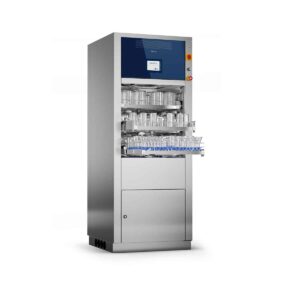
Professional Freestanding Glassware Washers for High-Capacity Laboratory Environments
When laboratory operations demand efficient cleaning of substantial glassware volumes, freestanding glassware washers deliver the capacity and performance that undercounter models cannot match. These upright laboratory washers combine powerful cleaning technology with flexible configurations to handle everything from routine beakers and flasks to specialized equipment used in pharmaceutical research, clinical diagnostics, and industrial testing facilities.
Unlike compact undercounter units, stand-alone lab washers provide multiple washing levels, expanded chamber capacity, and enhanced drying systems that significantly reduce turnaround time. Research institutions, centralized washing facilities, and high-throughput laboratories rely on these floor-standing systems to maintain workflow efficiency while ensuring spotless, contamination-free results.
What Makes Freestanding Laboratory Washers Essential for Your Facility?
Selecting between undercounter and freestanding configurations represents a critical decision for laboratory managers. Freestanding models excel when daily glassware processing exceeds what compact washers can accommodate, offering distinct advantages that justify their footprint.
Superior Capacity Through Multi-Level Washing
Modern upright glassware washers feature two to six washing levels with telescopic rails that enable simultaneous processing of diverse glassware types. This vertical design maximizes chamber volume without requiring excessive floor space. Facilities transitioning from manual washing or upgrading from smaller units immediately notice improved throughput—what previously required multiple cycles now completes in a single run.
The ability to configure large-capacity laboratory washers with specialized racks means everything from narrow-neck volumetric flasks to wide-mouth beakers processes efficiently. Injection washing systems deliver pressurized water directly into glassware interiors, eliminating manual pre-rinsing and ensuring thorough cleaning of difficult items.
Advanced Drying Technology for Immediate Use
Pharmaceutical and clinical laboratories cannot afford to wait hours for glassware to air dry. Professional freestanding washers incorporate HEPA-filtered forced air drying systems that circulate heated air through both the chamber and injection spindles. This dual-path approach thoroughly dries both exterior and interior surfaces, delivering ready-to-use glassware at cycle completion.
The integrated drying capability eliminates the need for separate laboratory glassware dryers, saving valuable laboratory space and reducing overall equipment costs. Temperature and time settings adjust based on load composition, preventing thermal shock to delicate glassware while ensuring complete moisture removal.
Key Features That Distinguish Quality Freestanding Washers
Not all laboratory dishwashers deliver equivalent performance. Understanding which specifications matter most helps facilities invest in equipment that serves them reliably for years.
Robust Hydraulic Systems and Spray Technology
Premium floor-standing washers utilize dedicated pumps for each washing level, ensuring consistent water pressure and flow regardless of load configuration. Direct hydraulic connections to rack positions guarantee that every item receives adequate spray coverage. Stainless steel spray arms positioned above and below each level combine with injector washing to provide comprehensive cleaning action.
High-pressure dual pump systems prove particularly valuable in specialized applications—cosmetic testing labs, pharmaceutical quality control, and forensic laboratories benefit from the enhanced cleaning power that removes stubborn residues. Variable cycle programs accommodate everything from lightly soiled daily labware to heavily contaminated research glassware.
Precision Chemical Dosing and Cycle Control
Accurate detergent and neutralizer delivery ensures optimal cleaning without chemical waste or residue. Peristaltic pumps meter precisely calibrated amounts throughout each cycle phase. Laboratory-grade detergents formulated specifically for automated washers work synergistically with programmed wash sequences to eliminate proteins, oils, biological contaminants, and chemical residues.
Microprocessor controls with digital interfaces offer 20 or more preset programs plus user-definable cycles. This flexibility allows facilities to optimize washing parameters for specific glassware types and contamination levels. Conductivity sensors monitor final rinse quality, providing documented assurance that processed items meet cleanliness standards.
How to Choose the Right Freestanding Washer for Your Application
Laboratory requirements vary significantly across research, clinical, and industrial settings. Matching washer capabilities to operational needs prevents both over-investment in unnecessary features and underperformance from inadequate capacity.
Assessing Daily Volume and Throughput Needs
Calculate typical daily glassware volume and consider peak demand periods. A facility processing 200-300 items daily requires different capacity than one handling 1,000+ pieces. Multi-level washers with four to five rack positions suit medium to large laboratories, while facilities serving multiple research groups benefit from maximum-capacity models offering six levels.
Consider future growth when selecting equipment. Expanding research programs or increased testing volume may strain initially adequate capacity. Choosing a slightly larger model than current needs suggest provides headroom for growth without requiring premature replacement.
Space Planning and Infrastructure Requirements
While glassware washers come in various sizes, freestanding models require dedicated floor space and proper utilities. Measure available area carefully, accounting for door swing clearance, service access, and operator workspace. Most upright units need standard 208V power and both hot/cold water connections, though some models accept deionized water for final rinse.
Facilities with limited space might explore vertical "space saver" configurations or consider whether an undercounter model better fits physical constraints. However, remember that cramming large volumes into undersized equipment inevitably reduces efficiency and extends processing time.
Maintenance Best Practices for Long-Term Performance
Quality freestanding laboratory washers deliver years of reliable service when properly maintained. Establishing routine care protocols prevents costly downtime and preserves wash quality.
Daily and Weekly Maintenance Tasks
Inspect spray arms for blockages and clean filters after each use. Remove any debris from the chamber and wipe door gaskets to maintain proper sealing. Weekly tasks include checking detergent levels, examining drain lines for obstructions, and verifying that all rack connections seat properly.
For detailed maintenance guidance, consult our comprehensive laboratory glassware washer maintenance guide, which covers everything from troubleshooting common issues to optimizing wash programs.
Professional Service and Validation
Schedule annual professional service to verify pump performance, calibrate temperature sensors, and confirm cycle parameters. Pharmaceutical and clinical laboratories must document washer validation to demonstrate consistent cleaning efficacy. Many manufacturers provide validation protocols and certification services.
Replace consumable components like gaskets, filters, and spray arms according to manufacturer recommendations. Using genuine replacement parts ensures continued performance and maintains warranty coverage.
Applications Across Laboratory Disciplines
Freestanding glassware washers serve diverse scientific and industrial applications, each with unique cleaning requirements.
Pharmaceutical and Biotechnology Research
Drug development laboratories process culture vessels, fermentation equipment, and analytical glassware contaminated with cell cultures, growth media, and pharmaceutical compounds. High-temperature cycles with validated cleaning programs ensure sterile, residue-free results that meet FDA requirements. Injection washing reaches into narrow-neck flasks and bottles that manual cleaning cannot adequately address.
Clinical Diagnostics and Healthcare Facilities
Hospital laboratories, blood banks, and diagnostic centers wash test tubes, specimen containers, and analytical glassware exposed to biological samples. Thermal disinfection cycles achieve temperatures sufficient to deactivate pathogens while protecting delicate glassware. Quick turnaround supports high-volume testing demands without maintaining excessive glassware inventory.
University Research and Teaching Laboratories
Academic institutions benefit from versatile freestanding washers that accommodate varied research disciplines and teaching lab requirements. Flexible rack configurations handle chemistry glassware one day and biology culture vessels the next. User-friendly controls with preset programs simplify operation for students and research staff with varying experience levels.
Comparing Leading Freestanding Washer Technologies
Several manufacturers dominate the professional laboratory washer market, each offering distinct advantages. Understanding these differences helps identify the best fit for specific needs.
German Engineering Precision
European manufacturers emphasize robust construction, sophisticated controls, and energy efficiency. Premium models feature dual drying systems, maintenance-free conductivity measurement, and extensive program options. While initial costs run higher, superior build quality and lower operating costs deliver long-term value.
North American Versatility
Domestic manufacturers focus on flexible configurations and straightforward operation. Models designed for pharmaceutical and industrial applications offer high-pressure washing systems and extensive chemical resistance. These washers excel in demanding environments where heavy contamination requires aggressive cleaning action.
Investment Considerations and Total Cost of Ownership
Evaluating laboratory equipment solely on purchase price overlooks significant ongoing costs. Comprehensive analysis reveals the true investment required.
Operational Expenses Beyond Initial Cost
Energy consumption, water usage, and chemical costs accumulate over equipment lifespan. Energy-efficient models with optimized wash cycles reduce utility bills substantially. Water-saving features like recirculating final rinse and conductivity-based rinse termination cut consumption without compromising results.
Factor in service costs, replacement parts, and potential downtime. Equipment with readily available parts and strong manufacturer support minimizes disruption. Extended warranties provide budget predictability for facilities with tight maintenance budgets.
Productivity Gains and Labor Savings
Automated washing eliminates manual labor while delivering consistent, documentable results. Staff freed from washing duties contribute to more valuable laboratory activities. Reduced glassware breakage from gentler automated handling provides additional savings. When calculating ROI, include these productivity benefits alongside direct cost reductions.
Making the Right Choice for Your Laboratory
Selecting appropriate freestanding glassware washing equipment requires balancing multiple factors—capacity needs, available space, budget constraints, and application-specific requirements. Start by accurately assessing current and projected glassware volumes. Consult with equipment specialists who understand laboratory workflows and can recommend configurations that optimize both performance and value.
Whether your facility needs a compact two-level washer for a growing research group or a maximum-capacity six-level system for a centralized washing facility, the right freestanding washer transforms glassware processing from a time-consuming chore into an efficient, automated operation that supports research excellence.
Explore our complete selection of laboratory washers and dryers to find the perfect solution for your specific requirements. Our team provides expert guidance on equipment selection, installation planning, and ongoing support to ensure your investment delivers optimal performance for years to come.