
Understanding the Key Differences Between Undercounter and Freestanding Laboratory Washers
Choosing between an undercounter and freestanding laboratory washer is one of the most important equipment decisions you’ll make for your facility. While both washer types deliver thorough, validated cleaning of laboratory glassware, they serve distinctly different operational needs and laboratory environments.
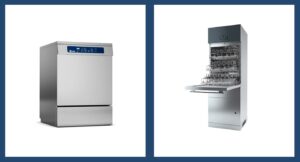
Undercounter laboratory washers are compact units designed to fit beneath standard lab benches, making them ideal for individual labs, teaching facilities, and research spaces with limited square footage. These space-saving washers typically offer two-level washing with capacities suitable for daily glassware processing needs in smaller operations.
Freestanding laboratory washers, by contrast, are larger standalone units built for high-volume washing demands. These large capacity laboratory washers often feature multiple wash levels, increased chamber capacity, and are designed for centralized washing facilities, pharmaceutical operations, and multi-lab environments where throughput is critical.
Which Laboratory Washer Type Is Right for Your Facility?
The choice between undercounter and freestanding models depends on several operational factors. Laboratory managers should evaluate their specific requirements across four key dimensions: available space, daily washing volume, budget constraints, and workflow integration needs.
Space Requirements and Laboratory Layout
Undercounter washers excel in space-constrained environments. These units fit seamlessly within existing cabinetry, preserving valuable floor space for other laboratory equipment. With typical dimensions allowing installation beneath standard 36-inch countertops, undercounter models integrate directly into lab workstations without requiring dedicated floor area.
Freestanding washers require dedicated floor space but offer flexibility in placement. Their standalone design allows positioning anywhere with proper utility connections, making them suitable for centralized glassware prep rooms or designated washing stations. Many freestanding models include locking casters, enabling repositioning as laboratory layouts evolve over time.
Processing Capacity and Throughput Comparison
Undercounter laboratory washers typically process smaller loads across two washing levels. These units handle daily glassware needs for individual research groups, teaching labs, or quality control departments. While chamber capacity varies by model, most undercounter units accommodate standard beakers, flasks, pipettes, and narrow-neck glassware sufficient for small to medium laboratory operations.
Freestanding units deliver significantly higher throughput with chamber configurations supporting three to six washing levels. This expanded capacity makes freestanding washers the preferred choice for high-volume operations, centralized facilities serving multiple laboratories, pharmaceutical manufacturing environments, and any application requiring processing of large glassware batches in single cycles.
Installation Requirements and Utility Connections
Both washer types require hot water, cold water, deionized water (for final rinse), electrical power, and drainage connections. However, installation complexity differs considerably between configurations.
Undercounter laboratory washers typically operate on standard 115V electrical service, though cycle times decrease significantly with 208V three-phase power. Installation involves integrating the unit within existing casework, which may require modifications to plumbing and electrical infrastructure beneath laboratory benches.
Freestanding washers often require 208V three-phase electrical service to support their larger heating elements and circulation pumps. Their standalone installation provides easier access for service and maintenance, though some facilities may need electrical upgrades to accommodate power requirements. Many freestanding models include integrated chemical storage drawers, reducing the need for separate detergent storage solutions.
Performance Features: How the Configurations Compare
Washing Technology and Cleaning Effectiveness
Modern laboratory washers employ direct injection washing technology that delivers high-pressure spray directly into narrow-neck vessels. Both undercounter and freestanding models from reputable manufacturers incorporate this critical feature, ensuring thorough cleaning of volumetric flasks, graduated cylinders, and other narrow-opening glassware.
The primary performance difference lies in wash chamber design and spray arm coverage. Freestanding models with multiple levels require more sophisticated hydraulic systems to ensure consistent pressure and temperature across all washing zones. Premium freestanding units feature independent circulation pumps for each level, optimizing cleaning performance regardless of load configuration.
Both configurations offer programmable wash cycles with customizable parameters including temperature settings, cycle duration, rinse stages, and drying options. Laboratory glassware washers designed for GMP environments provide validation capabilities, detailed cycle documentation, and 21 CFR Part 11 compliance features regardless of size classification. For facilities requiring both washing and sterilization capabilities, exploring comprehensive wash and sterilization solutions ensures integrated laboratory processing workflows.
Drying Systems and Options
Effective drying is critical for preventing water spots, eliminating bacterial growth, and ensuring glassware readiness for immediate use. Both washer types offer chamber drying and injection drying capabilities, though implementation differs between configurations.
Undercounter models typically provide chamber drying as standard, with HEPA-filtered injection drying available on higher-specification units. The compact chamber size of undercounter washers can actually enhance drying efficiency, as heated air circulates through a smaller volume, potentially reducing overall cycle times.
Freestanding washers frequently include dual drying systems that combine chamber heating with HEPA-filtered forced air through injection nozzles. This comprehensive approach ensures thorough drying of both wide-mouth and narrow-neck glassware, critical for high-volume operations where incomplete drying could create bottlenecks in laboratory workflows.
Cost Considerations: Initial Investment and Long-Term Operating Expenses
Purchase Price and Budget Impact
Undercounter laboratory washers present lower upfront costs, making them accessible for laboratories with limited capital budgets, educational institutions, and startup research facilities. Entry-level undercounter models begin in the mid-price range, with premium units featuring advanced drying systems and validation capabilities commanding higher prices.
Freestanding washers represent significant capital investments, with pricing reflecting their larger chamber capacity, advanced features, and higher throughput capabilities. However, for centralized facilities serving multiple laboratories, the cost per glassware item washed often favors freestanding units due to their superior processing efficiency.
Operating Costs and Resource Consumption
Water and energy consumption directly impact long-term operating costs. Undercounter washers use less water per cycle due to smaller chamber volumes, with typical consumption ranging from 8-12 gallons per complete wash cycle including all rinse stages. This efficiency appeals to sustainability-focused facilities and laboratories operating in regions with high water costs.
Freestanding models consume more resources per cycle but process significantly more glassware, often resulting in better efficiency when calculated on a per-item basis. Advanced freestanding washers incorporate variable-speed circulation pumps, optimized sump designs, and efficient heating systems that minimize energy waste while maximizing throughput.
Facilities should also consider chemical costs, with larger freestanding units requiring greater detergent volumes but benefiting from automated chemical dispensing systems that prevent waste from manual dosing errors. Integration with laboratory glassware dryers can further optimize operational efficiency for high-volume environments. For comprehensive laboratory processing solutions, coordinating washer selection with laboratory sterilizers and autoclaves ensures complete instrument reprocessing capabilities.
Workflow Integration and Operational Flexibility
Loading and Unloading Ergonomics
Undercounter washers offer convenient loading at standard working height, reducing strain associated with bending or lifting heavy racks. The drop-down door design common to undercounter models provides stable support for loading operations, though users must work around existing cabinetry when accessing the chamber.
Freestanding units typically feature drop-down doors that create stable loading platforms, with telescopic rack runners allowing partial rack extension for safer, more ergonomic loading and unloading. Higher-end freestanding models position the chamber at optimal working height, reducing the physical demands of repetitive loading operations in high-throughput facilities.
Rack Compatibility and Future Expansion
One often-overlooked advantage of freestanding washers is rack interchangeability across model lines. Many manufacturers design rack systems compatible with both undercounter and freestanding configurations, allowing laboratories to standardize loading equipment as their capacity needs grow. This compatibility reduces costs when upgrading from undercounter to freestanding washers and maintains operational consistency across mixed washer fleets.
Facilities planning future expansion should consider this interoperability advantage, as investment in specialized rack systems, inserts, and accessories remains protected when transitioning between washer configurations. Understanding how to select your best laboratory glassware washer ensures long-term equipment satisfaction, while following proper maintenance procedures maximizes equipment lifespan and performance.
Applications and Best-Fit Scenarios
When Undercounter Washers Make Sense
Undercounter laboratory washers excel in several specific scenarios. Individual research laboratories, teaching facilities with multiple small labs, quality control departments, and satellite testing locations benefit most from undercounter configurations. These settings typically process moderate glassware volumes, value space efficiency, and require washing capabilities located near point of use.
Pharmaceutical pilot plants, biotechnology R&D labs, and clinical testing facilities often deploy undercounter washers in specialized work areas where proximity to experimental workflows reduces transportation time and contamination risk. The compact footprint allows installation in cleanrooms and controlled environments where floor space commands premium value.
Universities and teaching laboratories particularly benefit from undercounter washers, as multiple units distributed across teaching labs provide better student access than centralized washing facilities. This distributed model also reduces congestion during peak usage periods and provides backup capacity if individual units require maintenance.
When Freestanding Washers Are the Better Choice
Centralized washing facilities serving multiple laboratories achieve maximum efficiency with freestanding washers. The high-capacity chambers process entire departments’ daily glassware volumes in fewer cycles, reducing labor costs and improving turnaround times. Pharmaceutical manufacturing, contract research organizations, and large academic institutions benefit most from this centralized approach.
Industrial research facilities, environmental testing laboratories, and large-scale production environments requiring high throughput and validation capabilities overwhelmingly select freestanding configurations. The ability to process hundreds of items per cycle justifies the larger footprint and higher capital investment through labor savings and operational efficiency gains. Extraction laboratories and analytical testing facilities particularly benefit from the enhanced cleaning power that removes oils, residues, and prevents cross-contamination risks.
Maintenance, Service Access, and Long-Term Support
Routine Maintenance Requirements
Both configurations require similar routine maintenance including filter cleaning, spray arm inspection, door seal checks, and periodic chemical system cleaning. However, service accessibility differs significantly between undercounter and freestanding designs.
Undercounter washers present challenges for service access due to their installation within cabinetry. Technicians may require removal of adjacent cabinet components or the entire washer unit for certain repairs, potentially extending downtime. Facilities should consider whether casework modifications allow adequate service access during initial installation planning.
Freestanding washers offer superior service accessibility, with all major components reachable without dismantling surrounding infrastructure. This accessibility typically translates to faster repairs, reduced service costs, and minimized downtime during maintenance events. The standalone configuration also simplifies filter changes, pump inspection, and other routine service tasks that laboratory staff can perform without specialized tools or external support.
Upgradeability and Technology Refresh
Freestanding washers generally offer better upgrade paths as laboratory needs evolve. Adding features like HEPA-filtered drying, advanced validation packages, or enhanced chemical dispensing systems often proves easier with freestanding configurations due to available space for retrofits and better access to internal systems.
Undercounter washers may face limitations when attempting significant upgrades due to space constraints and integration within cabinetry. However, their lower initial cost may make replacement more feasible than upgrading when technology advances warrant new capabilities. Laboratories should weigh the long-term ownership strategy when selecting between configurations, considering whether upgrade flexibility or lower replacement costs better align with budgetary practices.
Special Considerations for Regulated Environments
GMP Compliance and Validation
Pharmaceutical facilities, clinical laboratories, and other regulated environments require washers meeting stringent validation requirements. Both undercounter and freestanding models from quality manufacturers offer IQ/OQ/PQ documentation, cycle validation capabilities, and compliance with relevant regulatory standards.
Freestanding washers designed for pharmaceutical manufacturing often include enhanced documentation features, automated cycle logging, and integration with laboratory information management systems (LIMS). These capabilities prove essential for facilities requiring detailed batch records and regulatory audit trails. Laboratory sterilizers and washers together create comprehensive validated cleaning systems for the most demanding applications.
Cleanroom and Controlled Environment Installation
Undercounter washers present advantages for cleanroom installation due to their compact profile and integration within existing cabinetry. The smaller chamber volume releases less heat and humidity into controlled environments, reducing HVAC load and maintaining environmental stability.
Freestanding washers in cleanrooms require careful planning for steam venting, heat dissipation, and space allocation. However, advanced models incorporate steam condensers and insulated chambers that minimize environmental impact, making them viable for controlled environments when proper ventilation systems are implemented.
Making Your Decision: A Practical Framework
Assessment Questions to Guide Your Choice
Before selecting between undercounter and freestanding configurations, laboratory managers should answer several critical questions:
Daily Volume: How many pieces of glassware require washing daily? If processing fewer than 100-150 items, undercounter capacity typically suffices. Higher volumes favor freestanding configurations.
Space Availability: Does your facility have dedicated floor space for a standalone washer, or must the unit integrate within existing cabinetry? Measure available space carefully, accounting for door swing clearance and service access requirements.
Workflow Model: Will glassware washing occur in a centralized facility or distributed across multiple locations? Centralized models favor larger freestanding units, while distributed workflows often benefit from multiple undercounter installations.
Budget Structure: Does your budget favor lower upfront costs with potential for future expansion, or can you invest in higher-capacity equipment that may exceed current needs but provides growth capacity?
Utility Infrastructure: What electrical service is available? If only 115V power exists, will cycle times of 2-3 hours for undercounter washers meet operational needs, or does your workflow require the faster cycles enabled by 208V three-phase power?
The Hybrid Approach: When Both Makes Sense
Many larger facilities adopt a hybrid strategy, deploying freestanding washers for centralized high-volume processing while maintaining undercounter units in specialized laboratories requiring dedicated washing capabilities. This approach balances efficiency with operational flexibility, providing backup capacity and reducing dependence on centralized facilities during peak demand periods or maintenance events.
Research institutions often place freestanding washers in central prep rooms for routine glassware processing, while installing undercounter units in specialized labs handling unique applications, contaminated materials, or requiring immediate wash capabilities for time-sensitive experiments.
Conclusion: Aligning Washer Selection with Laboratory Objectives
The choice between undercounter and freestanding laboratory washers fundamentally depends on your facility’s specific operational requirements, spatial constraints, and long-term strategic goals. Undercounter models deliver space efficiency and cost-effective solutions for smaller operations, while freestanding configurations provide the throughput and capacity essential for high-volume centralized facilities.
Successful washer selection requires careful evaluation of current and projected washing volumes, available laboratory space, utility infrastructure, budget parameters, and workflow integration needs. By systematically assessing these factors and consulting with experienced laboratory equipment specialists, you can confidently select the configuration that optimizes your facility’s glassware processing operations.
Whether you choose compact undercounter laboratory washers for distributed operations or invest in robust freestanding washers for centralized facilities, proper equipment selection directly impacts laboratory productivity, data quality, and operational costs for years to come. Take time to thoroughly evaluate your options, consider future expansion needs, and choose the configuration that best serves your laboratory’s mission.
Expert Guidance for Your Laboratory Washer Selection
ARES Scientific specializes in helping laboratories select the optimal glassware washing solutions for their specific requirements. As authorized distributors for Miele Professional and Steelco laboratory washers, we provide access to industry-leading equipment backed by comprehensive technical support and service expertise.
Our team works directly with facility managers, laboratory directors, and research professionals to assess washing volumes, space constraints, utility infrastructure, and workflow requirements. Whether you’re equipping a new laboratory, upgrading existing equipment, or expanding capacity, we provide objective recommendations aligned with your operational goals and budget parameters. For additional guidance, explore our comprehensive articles on how to clean laboratory glassware and selecting the right laboratory detergents for optimal results.
Contact ARES Scientific to discuss your laboratory glassware washer requirements. Our applications specialists can help you evaluate undercounter versus freestanding configurations, recommend specific models for your applications, and provide detailed quotes including installation support and validation services where required.