

ARES Scientific offers advanced cage change and transfer stations designed to streamline rodent and small-animal husbandry workflows. Our systems deliver containment, ergonomics, and hygiene in one integrated solution, helping you manage cage turnovers faster, safer, and more efficiently.
Overview (read more)
Whether you’re processing dozens or hundreds of cages per day, our change stations are engineered for workflow optimization and technician safety. Vertical laminar flow, sealed transfer bins, waste disposal modules, and ergonomic staging surfaces all work together to minimize animal stress, allergen escape, and contamination.Types of Cage Change & Transfer Stations
Laminar Flow Cage Change Stations
- Vertical laminar flow benches with HEPA-filtered downflow air to suppress allergens and maintain cage-level clean environments.
- Integrated weigh scale decks for quick body-weight checks during change-out.
- Waste chute and containment systems designed for seamless transfer of soiled cages to disposal without debris escape.
Transfer Stations & Pass-Throughs
- Sealed transfer bins with quick-open lids and smooth interiors, compatible with cage racks for easy movement.
- Pass-through enclosures between clean and dirty zones to enforce workflow separation and reduce cross-contamination.
- HEPA or carbon filtration for transfer areas adjacent to barrier or containment rooms.
Combined Workstations & Growth Carts
- Workstations with built-in carts to stage clean cages, exchange bedding, and prepare animals for procedural workflows.
- Growth-and-transfer carts that move directly from the change station to transfer areas, reducing handling time.
- Customizable shelving and rack layouts to adapt to your cage configurations and workflow volume.
Key Features & Benefits
Operator Safety & Sanitation
- Fully welded 304/316 stainless steel for corrosion resistance and wash-down readiness.
- HEPA-filtered laminar airflow to protect technicians and minimize allergen exposure.
- Rounded corners and nozzle-free surfaces for faster cleaning and inspection.
- Smooth material flow from clean to dirty zones to reduce cross-contamination risk.
Workflow Efficiency & Ergonomics
- Height-adjustable work surfaces to accommodate technician comfort and reduce strain.
- Integrated weigh scales, push-handles, and staging surfaces for streamlined cage setup and turnover.
- Push-button or foot-pedal controls for hands-free operation in change environments.
- Modular design allows for future workflow expansions or upgrades.
Why Choose ARES Scientific
Why Us
ARES Scientific partners with leading vivarium specialists to deliver change and transfer stations tailored to your workflow. With expert specification, layout guidance, and ongoing service support, we help you optimize throughput while maintaining containment and ergonomics.- Complete ecosystem: equipment specification, installation coordination, technician training, and lifecycle service.
- Compliance-driven: designs aligned with AAALAC, GLP/GMP, and institutional animal care standards.
- Custom configurations: shelf arrangements, drawer systems, containment bins, and transfer modules built to your room footprint.
Cage Change & Transfer FAQ
What is the difference between a change station and a transfer station?
A change station is where cages are swapped, bedding is replaced, and animals are staged post-procedure. A transfer station is a sealed device that moves animals or cages between rooms, zones, or clean/dirty sides while maintaining containment.Does the laminar flow station reduce allergens?
Yes—stations with HEPA-filtered vertical downflow air prevent cage dust and allergens from entering the technician’s breathing zone, improving air quality and reducing exposure risks.How do I integrate a change station with my existing rack system?
We recommend specifying the correct shelf heights, rack footprint, and integrated cart footprint so that cages slide seamlessly from rack to workstation to transfer cart with minimal handling and maximum automation.Can ARES customize the stations for specific cage types or protocols?
Yes. ARES can design shelving, cart footprints, airflow modules, and transfer bins to match your cage types (e.g., individually ventilated cages) and protocol requirements including barrier operation.Class II A2 Animal Transfer Stations

Baker SterilGARD® e3 Animal Transfer Station with Adjustable Mobile Lift Class II, Type A2
Quote• HEPA supply and exhaust filters protect animals, users and the environment.
• 10° slanted viewscreen permits enhanced product viewing.
• Adaptive ergonomic design combined with continuously adjustable mobile lift for work surface heights of ...
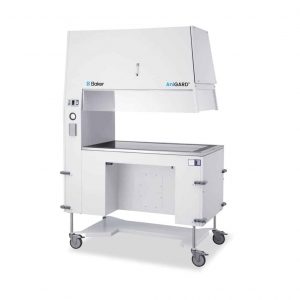
Baker AniGARD®e3 Animal Transfer Station
Quote• Slanted viewscreen on three sides of cabinet provides a direct line-of-sight panoramic view of the workspace.
• Well-lit workspace significantly reduces eyestrain.
• Low noise level improves operator comfort and reduces effect of ambient nois...
Other Cage Change and Transfer Stations Products
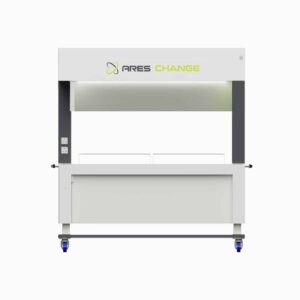

Baker AniGARD® VF Animal Transfer Station
Quote• 14" high access opening accommodates a variety of cage sizes, and offers a wide work area for multiple users.
• Flat, spacious work surface allows cages to be pulled in and out quickly.
• Hinged viewscreen opens to 30 3⁄8" allowing access t...