Cadaver carriers are the foundation of safe, dignified decedent transport throughout hospital morgues, medical examiner facilities, funeral homes, and anatomy programs. ARES Scientific supplies a comprehensive range of mortuary transport equipment from Mopec and Mortech Manufacturing — two manufacturers with deep expertise in pathology and mortuary workflow design. Whether the application calls for a covered carrier that conceals a deceased patient during hospital corridor transport or a hydraulic roller carrier that integrates with body tray systems and refrigeration loading, these units provide the structural integrity, ergonomic function, and infection-control compatibility required in modern morgue operations. Facilities evaluating their pathology and mortuary equipment programs will find cadaver carriers a critical link in the post-mortem handling chain, connecting autopsy suites, storage systems, and transport workflows into a cohesive operational sequence. Morgue coordinators, pathology technicians, and facility planners serving the anatomy, morgue, and pathology sector will find multiple configurations to match their specific capacity requirements and workflow constraints.
Types and Configurations of Cadaver Carriers
Standard and Covered Hydraulic Carriers
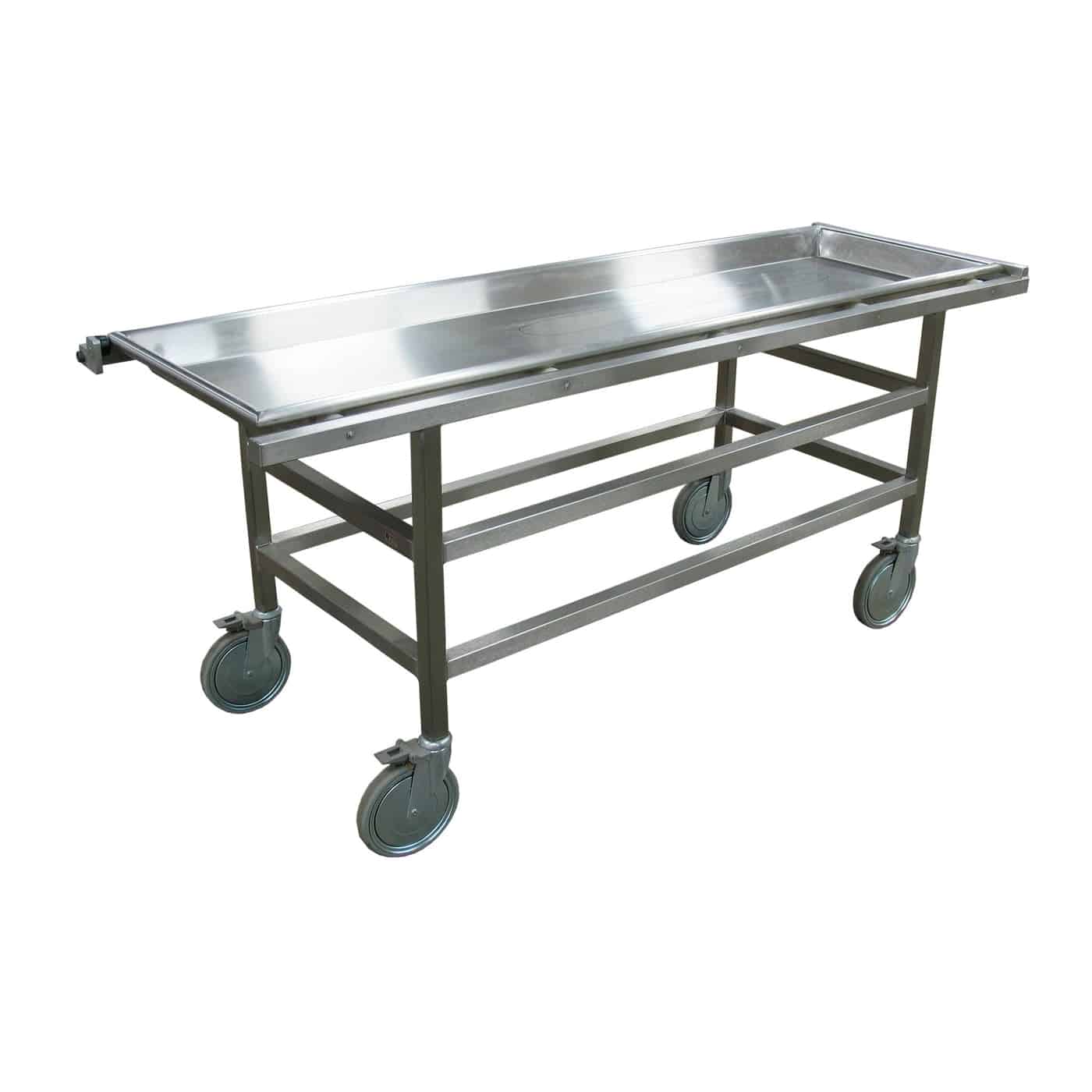
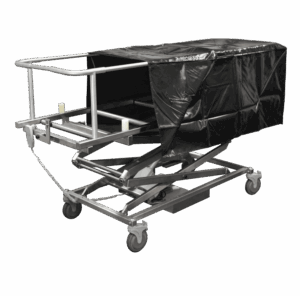
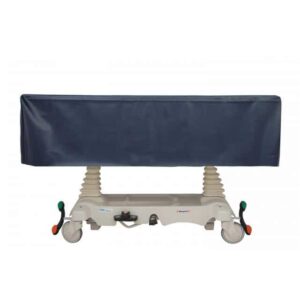
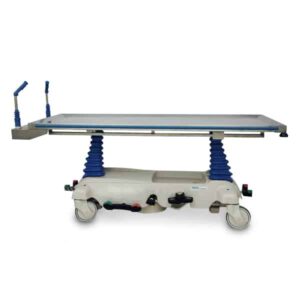
The most widely deployed class of cadaver carriers uses twin pedestal hydraulic systems with foot-activated elevation, enabling a single operator to adjust working height from approximately 26" to 39.5" without manual lifting effort. Mopec's hydraulic stainless steel top carriers — such as the Mopec hydraulic stainless steel top cadaver carrier — feature all-welded 304 stainless steel construction with four heavy-duty 8" total-lock casters and bumper guards to protect corridor walls and elevator interiors. Covered variants add a removable aluminum false frame with an opaque fabric cover in white or blue, creating the visual appearance of an empty gurney during transport through public hospital corridors. This design addresses dignity-of-care requirements and HIPAA-aligned privacy standards by preventing inadvertent identification of deceased patients during transit. Weight capacity on standard hydraulic models reaches approximately 700 lbs, making them suitable for the majority of adult decedents encountered in general hospital morgues and medical examiner facilities.
Bariatric Cadaver Carriers
Facilities managing a high volume of bariatric cases require carriers rated beyond standard capacity thresholds. The Mortech 600039-1K Bariatric Covered Cadaver Carrier is purpose-built for this application, with a 1,000 lb weight capacity and a frame fabricated from durable 304 stainless steel. The top tray is permanently attached and constructed from 14-gauge stainless steel, providing a rigid and cleanable surface suited to the demands of repeated use. The covered canopy design maintains concealment during transport even for oversized decedents, a consideration that becomes operationally important in hospital environments where public corridors are unavoidable during removal workflows. Facilities planning for bariatric patient populations should also assess their cadaver lifts and refrigeration loading capacities simultaneously, as the entire handling chain must be rated for consistent bariatric use to eliminate bottlenecks.
Roller and Scissor Carriers
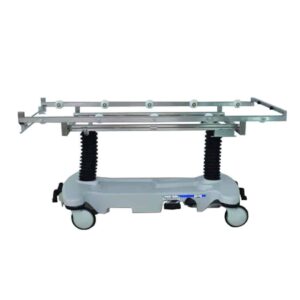
Roller cadaver carriers feature a conveyor-style transfer top that allows body trays to slide laterally onto refrigeration units, storage racks, and autopsy tables without repositioning the entire carrier. Mopec's hydraulic roller carriers are available in three tray widths — 23", 27", and 32" bariatric — ensuring compatibility with the body tray systems already in place at a given facility. A tray stop latch prevents unintended transfer during transit, while total-lock casters stabilize the carrier during loading and unloading sequences. Mortech's scissor carrier design uses a lightweight aluminum canopy frame with a top roller frame specifically engineered for easy transfer of the body tray to a cadaver refrigeration unit or lift system. Scissor-style geometry reduces the unit's folded footprint, making it a practical option for facilities with limited staging space adjacent to refrigeration banks.
Key Features and Construction Standards for Cadaver Carriers
Stainless Steel Construction and Cleanability
The predominant material of construction across the cadaver carrier category is 304 stainless steel, selected for its combination of tensile strength, corrosion resistance, and resistance to the disinfectants and biological fluids encountered in daily morgue operations. Frame members are typically fabricated from 1.5" square 16-gauge stainless steel tubing, which provides structural rigidity without excess mass. Permanently attached tray surfaces are frequently constructed from heavier 14-gauge stainless steel to resist deformation under repeated loading. All welded joints eliminate crevices where biological material could accumulate, an important feature for facilities following CDC universal precautions and internal infection control protocols. The smooth, non-porous surface of stainless steel supports effective terminal decontamination between uses, reducing cross-contamination risk in multi-use transport workflows that span autopsy suites and cadaver storage rack loading areas.
Hydraulic Systems and Ergonomic Height Adjustment
Twin pedestal hydraulic systems use foot-activated controls to raise and lower the carrier platform without requiring staff to exert spinal or upper-limb effort during height adjustment. This mechanism reduces cumulative musculoskeletal injury risk for mortuary technicians who transfer decedents multiple times per shift, aligning with OSHA ergonomic guidelines for occupational health in healthcare settings. The standard elevation range of 26" to 39.5" accommodates transfer from floor-level staging areas, standard-height refrigeration unit openings, and raised autopsy table surfaces. Mopec's powered hydraulic carrier adds a battery-assisted power system that removes entirely the physical effort of hydraulic actuation, an option well-suited to high-throughput facilities or environments where staff regularly handle heavier decedents. Bumper guards along the carrier perimeter protect both staff and facility infrastructure from contact damage during navigation through narrow corridors and doorways.
Caster Systems and Mobility
Total-lock caster systems on cadaver carriers provide three operational modes from a single control point: full lock to all casters preventing movement in any direction, directional lock to assist in straight-line steering, and neutral position for free-rolling transport. This design minimizes the number of individual caster adjustments required during a transfer sequence, reducing workflow interruption and operator fatigue. Heavy-duty casters — 8" diameter on most Mopec hydraulic models and 5" on non-hydraulic single-body carriers — are sized to roll smoothly over typical hospital floor transitions, elevator thresholds, and morgue facility surfaces. Facilities that also use autopsy carts and embalming carts will find that standardized caster specifications across their equipment fleet simplify maintenance scheduling and replacement parts procurement.
Applications and Facility Use Cases
Hospital Morgues and Medical Examiner Offices
In hospital morgue settings, cadaver carriers serve the primary function of moving deceased patients from patient care floors to the morgue intake area, and subsequently positioning them for cadaver refrigeration unit loading or autopsy suite intake. Covered carrier configurations are especially important in hospitals where transport routes pass through semi-public corridors, lobbies, or elevator banks, as they allow discreet removal without visual disturbance to other patients, visitors, or staff. Medical examiner offices handling forensic cases may prioritize roller-top carriers that integrate directly with the body tray systems used across their refrigeration banks and autopsy tables, reducing the number of decedent repositioning events per workflow cycle. The ability to transfer a body tray without lifting — using the roller transfer mechanism — directly reduces injury risk for staff performing multiple transfers in a single shift.
Anatomy Programs and Research Facilities
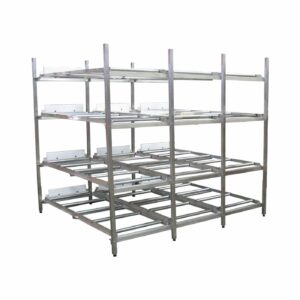
University anatomy programs and research facilities that manage donated body inventories place particular emphasis on long-term durability, tray compatibility, and the ability to move specimens between storage and dissection areas without additional lifting equipment. All-stainless-steel construction supports the rigorous disinfection protocols common in these environments, and roller carriers facilitate loading onto the dissection tables used in anatomical study. Facilities that maintain larger inventories often pair carriers with dedicated cadaver storage rack systems, creating a continuous handling chain from storage retrieval through transport to the dissection suite. Where body volumes are high, Mopec's powered hydraulic carrier can reduce cumulative staff effort across repeated daily transfer sequences, making it a practical option for programs with consistent throughput demands.
Funeral Homes and Cremation Facilities
Funeral home operations require cadaver carriers that can perform removal transport from hospital or residential settings, integrate with embalming suite workflows, and in cremation-focused operations, provide staging for cremation containers. Mortech's portable cremation storage rack with full rollers addresses a specific need in this segment by combining mobile storage with roller bay assemblies that allow easy loading and unloading of cadaver trays or cremation containers. The unit is fabricated from .120-thick stainless steel with heavy-duty 6" casters and a brake mechanism for secure positioning. Facilities that handle preparation and embalming workflows benefit from carriers whose height range is compatible with the working surfaces of their embalming and preparation tables, reducing lifting requirements during the embalming intake sequence. Funeral homes evaluating their full equipment suite should also review complementary autopsy tables and cadaver lifts to ensure compatible working heights throughout their preparation area.
Selecting the Right Cadaver Carrier for Your Facility
Weight Capacity and Bariatric Planning
The single most important technical parameter when selecting a cadaver carrier is weight capacity relative to the patient population the facility serves. Standard hydraulic carriers rated at approximately 700 lbs cover the majority of cases in general hospital and funeral home environments, but facilities regularly encountering bariatric patients should evaluate units rated at 1,000 lbs or greater. It is worth noting that weight capacity must be matched across the entire handling chain — a bariatric-rated carrier provides limited benefit if the associated cadaver lift or refrigeration loading system has a lower capacity threshold. Facility planners should audit all equipment involved in the decedent transport sequence simultaneously, referencing compatible Mopec and Mortech Manufacturing model specifications to confirm a consistent capacity rating from carrier through storage.
Tray Compatibility and Roller Top Selection
Facilities that operate body tray systems must verify dimensional compatibility before selecting a roller cadaver carrier. Mopec's roller carrier line is available in three tray widths — 23", 27", and 32" — corresponding to the standard and bariatric body tray widths used across their refrigeration and storage equipment lines. Mismatched tray and carrier dimensions create transfer difficulties that negate the ergonomic benefits the roller mechanism provides. Facilities that are standardizing new morgue equipment across carriers, refrigeration, and storage should work from a single tray width specification applied consistently across all units. Roller-top carriers also require adequate clearance at the receiving unit — whether a refrigeration bank, storage rack, or autopsy table — so that the tray stop latch can disengage cleanly and the tray can slide fully onto the receiving surface without obstruction.
Concealment and Facility-Specific Transport Requirements
The decision between an open-frame carrier and a covered carrier with a false frame depends primarily on the transport routes used within a given facility. Hospitals and medical facilities where transport occurs through shared public corridors almost universally require covered carriers to meet dignity-of-care expectations and minimize distress to other patients and visitors. The removable false frame design used on Mopec covered models allows the cover system to be removed when not needed — for example, within the morgue itself — giving the unit operational flexibility. Facilities operating entirely within controlled-access spaces, such as dedicated forensic buildings or isolated loading areas, may find open-frame carriers adequate for their workflow requirements, particularly where cost and storage simplicity are prioritized over concealment features.
ARES Scientific maintains an active inventory of cadaver carriers from Mopec and Mortech Manufacturing, supported by manufacturer relationships that enable facilities to configure equipment to their specific tray dimensions, capacity requirements, and workflow constraints. The broader pathology and mortuary equipment catalog at ARES Scientific supports end-to-end morgue and autopsy facility outfitting, from transport and storage through dissection and documentation.