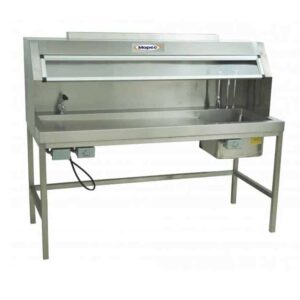

Autopsy and Embalming Sinks


Mopec Wall Mount Autopsy Station, Center, Right, or Left Sink
Quote• All stainless steel construction with heliarc-welded seams and joints, ground and polished to a smooth finish
• Exhaust duct with 8 in./20 cm. X 10 in./25 cm. grill
• Full length specimen shelf (12 in./30 cm. wide x "length of the unit")
• ...

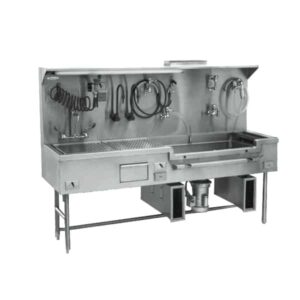
Mopec CF Series Embalming Sinks
Quote Add to Quote This product has multiple variants. The options may be chosen on the product page
Mopec C 100 Series Autopsy Sinks Wall Mounted
Quote Add to Quote This product has multiple variants. The options may be chosen on the product page
Mopec C 200 Series Autopsy Sinks Wall Mounted
Quote Add to Quote This product has multiple variants. The options may be chosen on the product pageAutopsy Carts


Mopec DD Series Body Tray Saddle Autopsy Cart
Quote Add to Quote This product has multiple variants. The options may be chosen on the product page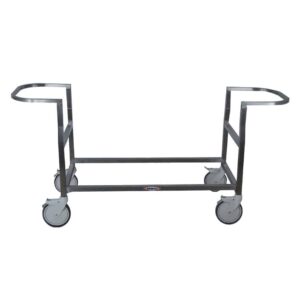


Mopec DE Series Autopsy Cart Roller Style
Quote Add to Quote This product has multiple variants. The options may be chosen on the product pageAutopsy Tables
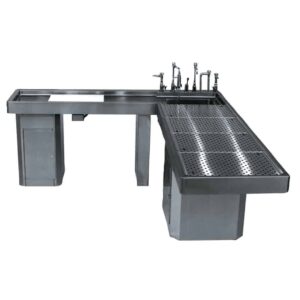
Mopec CE600 & CE700 Series Autopsy Tables with Integral Wing And Elevating Option
QuoteMopec CE600 & CE700 Series Autopsy Tables with Integral Wing and Elevating Option -- Product Highlights
L-shaped integral wing configuration with right-hand and left-hand options — the perpendicular wing extends...
Add to Quote
This product has multiple variants. The options may be chosen on the product page

Mopec CE200 Series Pedestal Style Autopsy Table, Freestanding and Elevating
QuoteDescription:
• Material: Tabletop is 14 gauge stainless steel with #4 satin finish, built-in large Integral sink
• Electricals:(2) GFCI Receptacles positioned on each side of table
• Hydro aspirator: Designed to drain into sink, plumbed w...
Add to Quote
This product has multiple variants. The options may be chosen on the product page
• Material: Tabletop is 14 gauge stainless steel with #4 satin finish, built-in large Integral sink
• Electricals:(2) GFCI Receptacles positioned on each side of table
• Hydro aspirator: Designed to drain into sink, plumbed w...
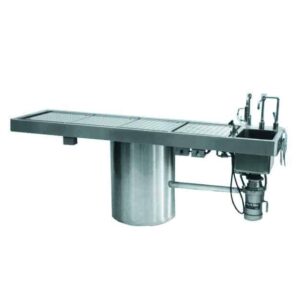
Mopec CE300 Series Autopsy Table, Rotating with Elevating and Self Contained Exhaust Options
QuoteDescription:
• Material: All stainless steel construction. 14 gauge table top, sink and grid plates. 11 gauge pedestal. All type 304 stainless steel with #4 finish.
• Rotation: 180 degrees of total table rotation.
• Ventilation: Down draft v...
Add to Quote
This product has multiple variants. The options may be chosen on the product page
• Material: All stainless steel construction. 14 gauge table top, sink and grid plates. 11 gauge pedestal. All type 304 stainless steel with #4 finish.
• Rotation: 180 degrees of total table rotation.
• Ventilation: Down draft v...

Mopec CE400 & CE900 Autopsy Tables, Pediatric Pedestal Style With Various Lengths
QuoteDescription:
• Material: Stainless steel pedestal autopsy table with down draft ventilation. Tabletop is 14 gauge stainless steel with #4 satin finish.
• Built-in large integral sink
• Electricals: (2) GFCI receptacles positioned on each si...
Add to Quote
This product has multiple variants. The options may be chosen on the product page
• Material: Stainless steel pedestal autopsy table with down draft ventilation. Tabletop is 14 gauge stainless steel with #4 satin finish.
• Built-in large integral sink
• Electricals: (2) GFCI receptacles positioned on each si...

Mopec CE100 Series Pedestal Style Autopsy Table, Freestanding and Non-Elevating
QuoteDescription:
• Material: Tabletop is 14 gauge stainless steel with #4 satin finish, built-in large Integral sink
• Electricals:(2) GFCI Receptacles positioned on each side of table
• Hydro aspirator: Designed to drain into sink, plumbed with...
Add to Quote
This product has multiple variants. The options may be chosen on the product page
• Material: Tabletop is 14 gauge stainless steel with #4 satin finish, built-in large Integral sink
• Electricals:(2) GFCI Receptacles positioned on each side of table
• Hydro aspirator: Designed to drain into sink, plumbed with...
Cadaver Carriers
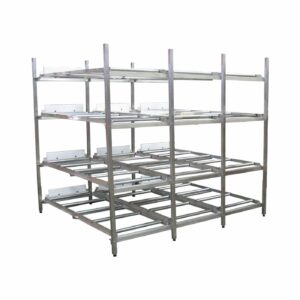
Mopec Mortuary Rack System with Full Rollers
Quote• Fabrication based solely on customer needs and requirements
• Available in various heights, lengths, and widths
• Roller assemblies in each bay for easy loading and unloading
• Cadaver lifts can be fitted with a roller carriage Series M601 ...

Mopec Portable Cremation Storage Rack with Full Rollers
QuoteSTANDARD DESIGN FEATURES
• Fabricated from .120 thick stainless steel
• Heavy-duty 6 in./15 cm. casters with brake mechanism for easy movement
• 5 roller assemblies in each bay for easy loading and unloading of cadaver tray/cremation container
...
Add to Quote
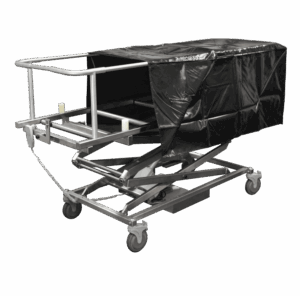
Mopec 600040-DS Covered Cadaver Scissor Carrier
Quote• Discreet and efficient solution for the removal and transport of a decedent
• Canopy frame made of strong and lightweight aluminum
• Top roller frame for easy transfer of body tray to lift or refrigerator
• Full stainless steel construction...
Add to Quote

Mopec 600039-C Covered Cadaver Carrier
Quote• The unit allows for a concealed removal and transport of a deceased patient from the hospital room to the morgue.
• The carrier gives the illusion of being a standard empty gurney while hiding the cadaver beneath a specially fabricated top cove...
Add to Quote

Mopec 600039-1K Bariatric Covered Cadaver Carrier 1000lB Capacity
Quote• Concealed removal and transport of deceased patients
• Specially designed for oversize patients
• Frame fabricated from durable 304 stainless steel
• Top tray is permanently attached and fabricated from 14 gauge stainless steel
• Lightwei...
Add to Quote

Mopec 600038 Autopsy Carrier Line with Rollers
Quote• TOTAL LOCKING MECHANISM: Enables the carrier with "ONE LOCATION" locking to all casters, "ONE LOCATION" directional locking to assist in the steering of the carrier and "ONE LOCATION" locking release or neutral position.
• 600038-TL: Total Lock...
Add to Quote
This product has multiple variants. The options may be chosen on the product page

Mopec Single Body Cadaver Carrier for 27” Trays
QuoteConstruction:
• All welded stainless steel frame, type 304 1.5” SQ. 16 gauge
• Four heavy duty 5” casters with total lock
• Body tray saddles Performance:
• Weight capacity: approximately 375 lbs Compatibility:
• 27” Body tray: JC10...
Add to Quote
• All welded stainless steel frame, type 304 1.5” SQ. 16 gauge
• Four heavy duty 5” casters with total lock
• Body tray saddles Performance:
• Weight capacity: approximately 375 lbs Compatibility:
• 27” Body tray: JC10...

Mopec Hydraulic Stainless Steel Top Cadaver Carrier with False Frame & White Cover
QuoteStandard Features:
• All stainless steel fixed top
• Twin pedestal hydraulics for easy foot activated elevation
• Four heavy duty 8” casters with total lock
• Bumper guards
• Removable aluminum false frame with heavy duty blue opaque...
Add to Quote
• All stainless steel fixed top
• Twin pedestal hydraulics for easy foot activated elevation
• Four heavy duty 8” casters with total lock
• Bumper guards
• Removable aluminum false frame with heavy duty blue opaque...
Cadaver Lifts
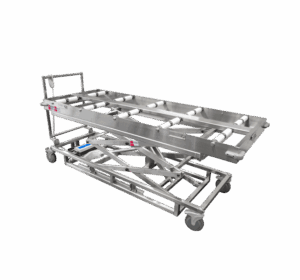
Mopec M690-ES End/Side Load Scissor Cadaver Lift with Optional Scale
Quote• Lift control system incorporates a scissor action, electromechanical actuator power-lifting system, and an integral battery charger
• Battery-operated lifting system is activated by two control switches for raising and lowering body-laden trays...
Add to Quote
This product has multiple variants. The options may be chosen on the product page
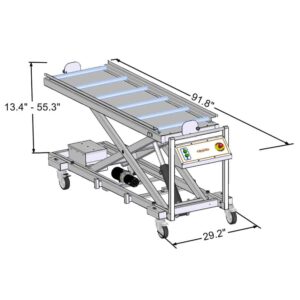
Mopec Economy Three Tier Red Wing Solid Roller Lift, Perfect for Funeral Homes
QuoteConstruction:
• Powder-coated steel
• Single scissor operation
• Fixed front handle for steering
• Four swivel casters with steering functionality on one Elevation:
• Suitable for most three tier racks
• Range of 13.4” – 55.3...
Add to Quote
• Powder-coated steel
• Single scissor operation
• Fixed front handle for steering
• Four swivel casters with steering functionality on one Elevation:
• Suitable for most three tier racks
• Range of 13.4” – 55.3...
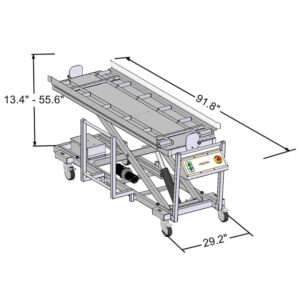

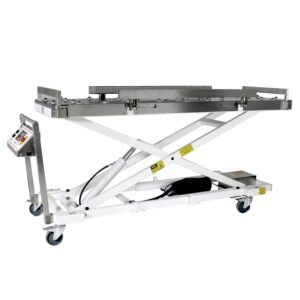
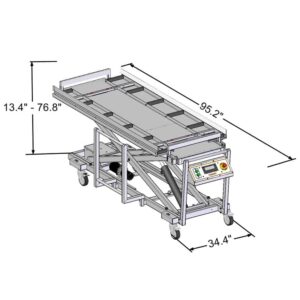
Mopec Red Wing Five Tier Split Roller Bariatric Lift
QuoteConstruction:
• Powder-coated steel
• Single scissor operation
• Fixed front handle & removable side handle for steering
• Four swivel casters with steering functionality in two Elevation:
• Suitable for most five tier racks
• Range ...
Add to Quote
• Powder-coated steel
• Single scissor operation
• Fixed front handle & removable side handle for steering
• Four swivel casters with steering functionality in two Elevation:
• Suitable for most five tier racks
• Range ...
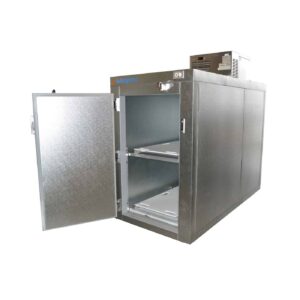
Cadaver Refrigeration Units
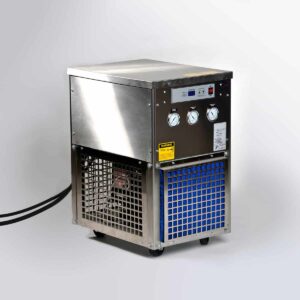
Mopec MERC System
Quote Add to Quote This product has multiple variants. The options may be chosen on the product pageCadaver Storage Racks
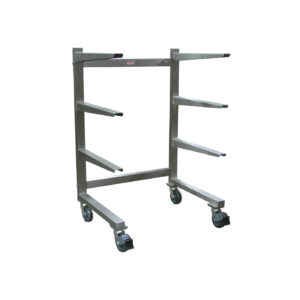
Mopec Cantilever Cadaver Storage System with Casters
Quote• Cantilever arms are .120 thick steel and are welded to the vertical columns
• Each tier supports more than 300 lbs./136 kg.
• Available finishes: rust and corrosion resistant powder coated or stainless steel
• Equipped with heavy-duty 6 in....
Add to Quote
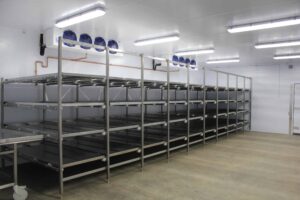
Mopec Roller Mortuary Rack for 32” Trays IE32 Series
QuoteConstruction:
• Type 304 stainless steel 11 gauge 1.5” SQ tube
• Nylon roller wheel assembly
• Modular construction
• (2) Body tray bumpers per bay
• Includes (1) GA100 32” body tray per bay
• Heavy duty adjustable levelling pad...
Add to Quote
• Type 304 stainless steel 11 gauge 1.5” SQ tube
• Nylon roller wheel assembly
• Modular construction
• (2) Body tray bumpers per bay
• Includes (1) GA100 32” body tray per bay
• Heavy duty adjustable levelling pad...
Mopec Single Body Cadaver Carrier for 23” Trays
QuoteConstruction:
• All welded stainless steel frame, type 304 1.5” SQ. 16 gauge
• Four heavy duty 5” casters with total lock
• Body tray saddles Performance:
• Weight capacity: approximately 375 lbs Compatibility:
• 23” Body tray: JC10...
Add to Quote
• All welded stainless steel frame, type 304 1.5” SQ. 16 gauge
• Four heavy duty 5” casters with total lock
• Body tray saddles Performance:
• Weight capacity: approximately 375 lbs Compatibility:
• 23” Body tray: JC10...
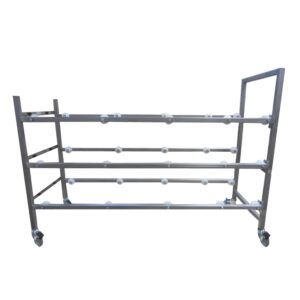
Mopec Portable Cadaver Storage Rack With Casters For 23” Trays
QuoteConstruction:
• All stainless steel construction
• Polymer roller assembly
• Four heavy duty 5” casters, 3 total lock and 1 directional lock
• Rear bars with bumpers for loading the body tray
• Tray latch at each tier Compatibilit...
Add to Quote
This product has multiple variants. The options may be chosen on the product page
• All stainless steel construction
• Polymer roller assembly
• Four heavy duty 5” casters, 3 total lock and 1 directional lock
• Rear bars with bumpers for loading the body tray
• Tray latch at each tier Compatibilit...
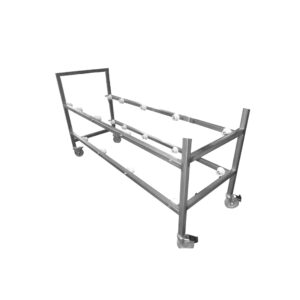
Mopec Portable Cadaver Storage Rack With Casters For 27” Trays
QuoteConstruction:
• All stainless steel construction
• Polymer roller assembly
• Four heavy duty 5” casters, 3 total lock and 1 directional lock
• Rear bars with bumpers for loading the body tray
• Tray latch at each tier Compatibilit...
Add to Quote
This product has multiple variants. The options may be chosen on the product page
• All stainless steel construction
• Polymer roller assembly
• Four heavy duty 5” casters, 3 total lock and 1 directional lock
• Rear bars with bumpers for loading the body tray
• Tray latch at each tier Compatibilit...

Mopec Roller Mortuary Rack for 23” Trays IE23 Series
QuoteConstruction:
• Type 304 stainless steel 11 gauge 1.5” SQ tube
• Nylon roller wheel assembly
• Modular construction
• (2) Body tray bumpers per bay
• Includes (1) JC100 23” body tray per bay
• Heavy duty adjustable levelling pads Perf...
Add to Quote
• Type 304 stainless steel 11 gauge 1.5” SQ tube
• Nylon roller wheel assembly
• Modular construction
• (2) Body tray bumpers per bay
• Includes (1) JC100 23” body tray per bay
• Heavy duty adjustable levelling pads Perf...
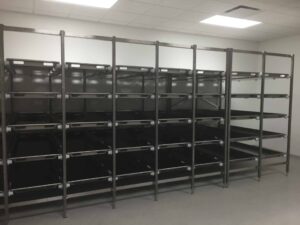
Mopec Roller Mortuary Rack for 27” Trays IE27 Series
QuoteConstruction:
• Type 304 stainless steel 11 gauge 1.5” SQ tube
• Nylon roller wheel assembly
• Modular construction
• (2) Body tray bumpers per bay
• Includes (1) JC101 27” body tray per bay
• Heavy duty adjustable levelling pad...
Add to Quote
• Type 304 stainless steel 11 gauge 1.5” SQ tube
• Nylon roller wheel assembly
• Modular construction
• (2) Body tray bumpers per bay
• Includes (1) JC101 27” body tray per bay
• Heavy duty adjustable levelling pad...
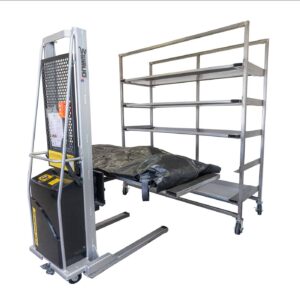
Mopec Guardian Rack Quick Deploy Morgue Rack & Body Tray System
Quote• Easily to assemble and disassemble using 8 bolts.
• Heavy duty construction that will support up to 1,500 lbs and will last for years through repetitive assembly and disassembly cycles.
• Ideal for refrigerated trailers and other cooled s...
Dissection Tables
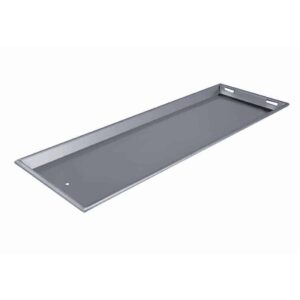


Mopec HB Series Covered Dissection Table with Lid Assist
Quote• Hoods cover cadaver approximately up to 250 lbs
• Weight capacity: Approximately 350 lbs
• Hinged covers with lid assist to safely and easily open and close
• All stainless steel construction
• Recessed, non-removable top
• Level ...


Mopec HC 300 Series Dissection Tables with Vented Hood
Quote Add to Quote This product has multiple variants. The options may be chosen on the product page
Embalming Carts
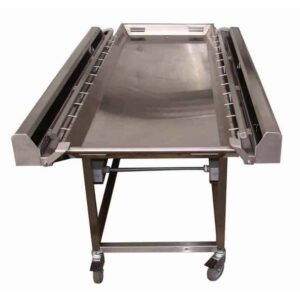
Mopec Embalming Cart With Various Tray Sizes
Quote Add to Quote This product has multiple variants. The options may be chosen on the product page
Pathology Consumables
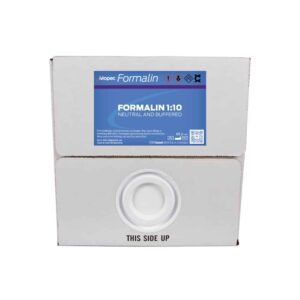
Mopec Prefilled Formalin Cube – 5 Gallons
QuoteProduct Highlights
• Ready-to-Use: Pre-filled with 10% neutral buffered formalin for immediate use.
• Convenient Design: 5-gallon cube format is easy to store and handle.
• Leak-Proof: Secure sealing mechanism ensures no spills or leaks. â€...
Add to Quote
• Ready-to-Use: Pre-filled with 10% neutral buffered formalin for immediate use.
• Convenient Design: 5-gallon cube format is easy to store and handle.
• Leak-Proof: Secure sealing mechanism ensures no spills or leaks. â€...
Mopec Prefilled Formalin Cube – 2.5 Gallons
QuoteProduct Highlights
• Ready for Immediate Use: Comes prefilled with 10% neutral buffered formalin.
• Compact Design: 2.5-gallon cube is easy to store and manage.
• Leak-Resistant: Features a secure seal to prevent spills.
• Sturdy Construc...
Add to Quote
• Ready for Immediate Use: Comes prefilled with 10% neutral buffered formalin.
• Compact Design: 2.5-gallon cube is easy to store and manage.
• Leak-Resistant: Features a secure seal to prevent spills.
• Sturdy Construc...


Other Pathology & Mortuary Equipment Products
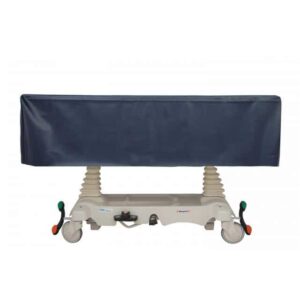
Mopec Hydraulic Stainless Steel Top Cadaver Carrier with False Frame & Blue Cover
QuoteStandard Features:
• All stainless steel fixed top
• Twin pedestal hydraulics for easy foot activated elevation
• Four heavy duty 8” casters with total lock
• Bumper guards
• Removable aluminum false frame with heavy duty blue opaque...
Add to Quote
• All stainless steel fixed top
• Twin pedestal hydraulics for easy foot activated elevation
• Four heavy duty 8” casters with total lock
• Bumper guards
• Removable aluminum false frame with heavy duty blue opaque...

Mopec Hydraulic Stainless Steel Top Cadaver Carrier
QuoteStandard Features:
• All stainless steel fixed top
• Twin pedestal hydraulics for easy foot activated elevation
• Four heavy duty 8” casters with total lock
• Bumper guards Performance:
• Weight capacity: Approximately 700 lbs ...
Add to Quote
• All stainless steel fixed top
• Twin pedestal hydraulics for easy foot activated elevation
• Four heavy duty 8” casters with total lock
• Bumper guards Performance:
• Weight capacity: Approximately 700 lbs ...

Mopec Hydraulic Roller Cadaver Carrier For 23” Body Trays
QuoteStandard Features:
• Conveyor roller transfer style top
• Twin pedestal hydraulics for easy foot activated elevation
• Four heavy duty 8” casters with total lock
• Tray stop latch Range of Motion:
• Elevates from 26” to 39.5” ...
Add to Quote
• Conveyor roller transfer style top
• Twin pedestal hydraulics for easy foot activated elevation
• Four heavy duty 8” casters with total lock
• Tray stop latch Range of Motion:
• Elevates from 26” to 39.5” ...
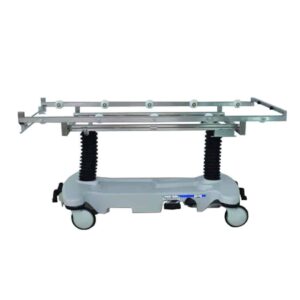
Mopec Hydraulic Roller Cadaver Carrier for 27” Body Trays
QuoteStandard Features:
• Conveyor roller transfer style top
• Twin pedestal hydraulics for easy foot activated elevation
• Four heavy duty 8” casters with total lock
• Tray stop latch Range of Motion:
• Elevates from 26” to 39.5” ...
Add to Quote
• Conveyor roller transfer style top
• Twin pedestal hydraulics for easy foot activated elevation
• Four heavy duty 8” casters with total lock
• Tray stop latch Range of Motion:
• Elevates from 26” to 39.5” ...

Mopec Hydraulic Roller Cadaver Carrier for 32” Bariatric Trays
QuoteStandard Features:
• Conveyor roller transfer style top
• Twin pedestal hydraulics for easy foot activated elevation
• Four heavy duty 8” casters with total lock
• Tray stop latch Range of Motion:
• Elevates from 26” to 39.5” ...
Add to Quote
• Conveyor roller transfer style top
• Twin pedestal hydraulics for easy foot activated elevation
• Four heavy duty 8” casters with total lock
• Tray stop latch Range of Motion:
• Elevates from 26” to 39.5” ...

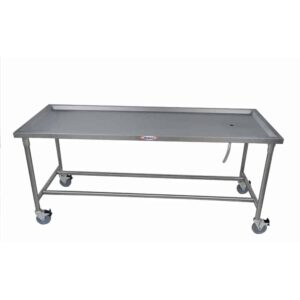

Mopec HC 100 Series Dissection Tables with Vented Hood
Quote Add to Quote This product has multiple variants. The options may be chosen on the product page